Table of Contents
- Why People Ask About Old and New Testament Salvation
- Salvation Has Always Begun With God's Grace
- How People Were Saved in the Old Testament
- Old vs New Covenant Salvation
- The Law Could Not Save
- Jesus Is the Center of Biblical Salvation Explained
- Salvation Through Faith in Both Testaments
- What Changed After Jesus Came?
- Common Misunderstandings About Salvation in the Old Testament vs New Testament
- Did Old Testament Believers Go to Heaven?
- Why This Matters for Christians Today
- The Final Answer About Salvation Across the Bible
- FAQs
Many people wonder about salvation in the Old Testament vs New Testament. Did people in the Old Testament get saved differently than believers today? Was salvation earned through sacrifices and law-keeping before Jesus came? Or has salvation always been by faith?
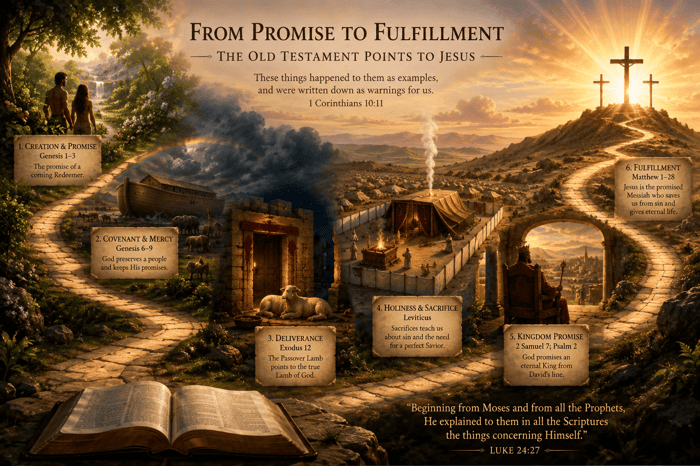
The Bible shows that God's plan of salvation has always centered on faith in Him. The difference explained in salvation in the Old Testament vs New Testament is not a different way of salvation, but a clearer revelation of God's saving plan through Jesus Christ. From Genesis to Revelation, the message points to God's grace and mankind's need for redemption.
Understanding salvation in the Old Testament vs New Testament helps believers see the unity of Scripture and the beauty of God's plan through Christ.
Why People Ask About Old and New Testament Salvation
The question often comes up because the Old Testament includes animal sacrifices, temple worship, priests, and the Law of Moses. In the New Testament, salvation is explained through Jesus' death and resurrection.
At first glance, these systems may seem completely different. Yet the Bible teaches that salvation has always come through faith in God.
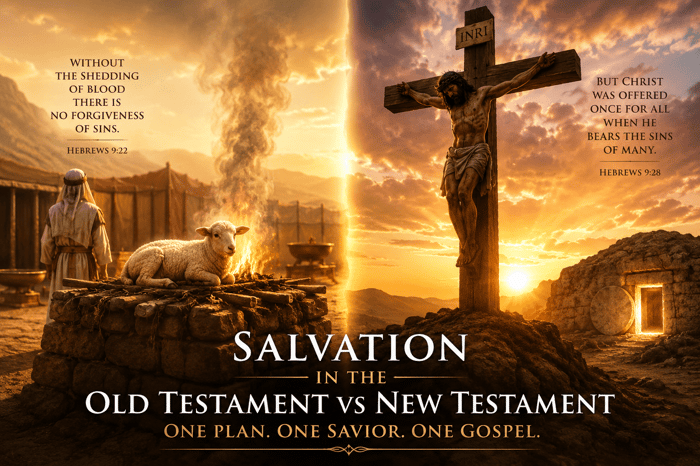
The sacrifices in the Old Testament pointed forward to Jesus. The New Testament reveals Jesus as the final and perfect sacrifice for sin.
- How people were saved in the Old Testament
- Whether Old Testament believers went to heaven
- If people were saved by keeping the law
- How grace through faith worked before Jesus came
- What changed under the New Covenant
Salvation Has Always Begun With God's Grace
The Bible teaches that mankind is sinful and separated from God because of sin.
“for all have sinned, and fall short of the glory of God;”
Romans 3:23
No person has ever been saved by personal goodness or perfect obedience. Salvation has always started with God's mercy and grace.
Even in the Old Testament, God showed grace toward sinners who trusted Him.
“But Noah found favor in the eyes of the Lord.”
Genesis 6:8 (ESV)
Noah was not saved because he was perfect. God showed grace to him, and Noah responded with faith and obedience.
This truth continues throughout Scripture. Abraham, Moses, David, and the prophets all depended on God's mercy rather than their own righteousness.
How People Were Saved in the Old Testament
One of the clearest answers to how people were saved in the Old Testament is found in Abraham's life.
“And he believed the Lord, and he counted it to him as righteousness.”
Genesis 15:6 (ESV)
Abraham was declared righteous because he believed God. This happened long before the Law of Moses was given.
The New Testament later points back to Abraham as an example of salvation through faith.
“For what does the Scripture say? ‘Abraham believed God, and it was accounted to him for righteousness.’”
Romans 4:3
Old Testament believers trusted God's promises, even though they did not fully understand how God would bring salvation through Christ.
Their faith looked forward to the coming Redeemer.
Important Truth About Old Testament Salvation
Old Testament sacrifices did not remove sin permanently. They pointed ahead to Jesus.
“For it is impossible that the blood of bulls and goats should take away sins.”
Hebrews 10:4
The sacrificial system reminded people of sin and taught them that sin required death and atonement.
Old vs New Covenant Salvation
One of the biggest themes in salvation in the Old Testament vs New Testament is the level of revelation God gave to His people.
Under the Old Covenant:
- People trusted God's promises
- Sacrifices symbolized atonement
- The Messiah had not yet come
- Salvation looked forward to Christ
Under the New Covenant:
- Jesus has come
- His death and resurrection are complete
- Salvation is fully revealed through the Gospel
- Believers look back to Christ's finished work
The way of salvation itself did not change. Faith remained central in both covenants.
| Old Covenant | New Covenant |
|---|---|
| Looked forward to the Messiah | Looks back to Jesus' finished work |
| Animal sacrifices pointed to Christ | Jesus became the final sacrifice |
| Faith in God's promises | Faith in Jesus Christ |
| Partial revelation | Full revelation through Christ |
| Temporary sacrificial system | Eternal redemption through Jesus |
The Law Could Not Save
Some people think Old Testament believers were saved by obeying the law. The Bible clearly says the law could not save sinners.
The law revealed God's holiness and exposed human sinfulness.
“For through the law comes the knowledge of sin.”
Romans 3:20
The law functioned like a mirror. It showed people their guilt before God.
“Therefore the law has become our tutor to bring us to Christ, that we might be justified by faith.”
Galatians 3:24
Even faithful people in the Old Testament failed to obey perfectly. David committed adultery and murder. Moses disobeyed God. Abraham struggled with doubt.
Their hope rested in God's mercy.
Jesus Is the Center of Biblical Salvation Explained
A proper understanding of biblical salvation explained must focus on Jesus Christ.
The Old Testament points toward Him through prophecies, sacrifices, and promises.
“Behold, the Lamb of God, who takes away the sin of the world!”
John 1:29
Jesus fulfilled what the Old Testament anticipated.
Isaiah prophesied about the suffering Savior hundreds of years before Jesus was born.
“But he was pierced for our transgressions. He was crushed for our iniquities.”
Isaiah 53:5
The New Testament explains that Jesus died once for all sins.
“For Christ also suffered for sins once, the righteous for the unrighteous, that he might bring you to God.”
1 Peter 3:18
This is why the sacrificial system ended after Christ's death and resurrection. Jesus completed what the sacrifices could only picture.
Salvation Through Faith in Both Testaments
The phrase salvation through faith is central to understanding salvation in the Old Testament vs New Testament because faith has always been the way people respond to God's grace.
The New Testament strongly teaches salvation by grace through faith.
“for by grace you have been saved through faith, and that not of yourselves; it is the gift of God,”
Ephesians 2:8
But this principle also appears throughout the Old Testament.
“But the righteous will live by his faith.”
Habakkuk 2:4
Paul later quoted this verse to explain the Gospel.
Faith does not mean people earn salvation by believing hard enough. Faith means trusting God instead of trusting ourselves.
Old Testament believers trusted the promises God gave them. New Testament believers trust the completed work of Christ.
What Changed After Jesus Came?
While the basis of salvation remained the same, understanding salvation in the Old Testament vs New Testament becomes clearer after Jesus came and fulfilled God's plan.
1. The Sacrificial System Was Fulfilled
Jesus became the perfect sacrifice for sin.
“It is finished.”
John 19:30
Animal sacrifices were no longer needed because Christ fully paid for sin.
2. The Holy Spirit Now Indwells Believers
In the Old Testament, the Holy Spirit worked in specific ways through certain people and events. Under the New Covenant, every true believer receives the Holy Spirit.
“Or don't you know that your body is a temple of the Holy Spirit who is in you?”
1 Corinthians 6:19
3. The Gospel Is Fully Revealed
Old Testament believers knew God would send a Redeemer, but they did not know all the details.
Today, believers know about Jesus' birth, death, resurrection, and promised return.
Common Misunderstandings About Salvation in the Old Testament vs New Testament
Several false ideas confuse people about this topic.
Misunderstanding #1: Old Testament People Earned Salvation
The Bible never teaches salvation by works. Even the law itself pointed people toward dependence on God.
Misunderstanding #2: The God of the Old Testament Was Different
God's character never changes. He is holy, loving, just, and merciful throughout all Scripture.
“Jesus Christ is the same yesterday, today, and forever.”
Hebrews 13:8
Misunderstanding #3: The Old Testament Is No Longer Important
The Old Testament helps believers understand sin, sacrifice, prophecy, and God's promises.
Jesus Himself taught from the Old Testament constantly.
“These are the words which I spoke to you while I was still with you, that all things which are written in the law of Moses, the prophets, and the psalms concerning me must be fulfilled.”
Luke 24:44
Did Old Testament Believers Go to Heaven?
One of the most important questions about salvation in the Old Testament vs New Testament is whether Old Testament believers went to heaven, and the Bible clearly answers yes. They were not saved because of animal sacrifices or perfect obedience, but because of faith in God's promise of redemption.
Jesus' sacrifice on the cross paid for sins across all time, including the sins of believers who lived before His earthly ministry.
“He is the mediator of a new covenant, since a death has occurred for the redemption of the transgressions that were under the first covenant...”
Hebrews 9:15
Old Testament believers did not know the full details about Jesus the way Christians do today, but they trusted the promises God revealed to them.
Hebrews 11 gives many examples of Old Testament men and women who lived by faith.
“These all died in faith, not having received the promises, but having seen them and embraced them from afar.”
Hebrews 11:13
The Bible also shows that Abraham, Isaac, Jacob, Moses, and David were considered righteous through faith.
One important moment appears during Jesus' transfiguration.
“Behold, two men were talking with him, who were Moses and Elijah,”
Luke 9:30
Moses and Elijah appeared with Christ in glory, showing that faithful Old Testament believers were alive in God's presence.
Jesus also spoke about Abraham being alive with God.
“He is not the God of the dead, but of the living, for all are alive to him.”
Luke 20:38
Some Christians discuss the exact details of what happened before Jesus' resurrection, including references to Sheol, Paradise, and Abraham's bosom in Luke 16. However, the Bible clearly teaches that Old Testament believers who trusted God belonged to Him and received eternal life through Christ's future work on the cross.
In simple terms:
- Old Testament believers were saved by faith
- Jesus' sacrifice covered their sins
- They looked forward to God's promised Redeemer
- Believers today look back to Christ's finished work
This keeps the message of salvation unified across the entire Bible.
Why This Matters for Christians Today
Understanding salvation in the Old Testament vs New Testament helps Christians trust the unity of God's Word.
The Bible tells one connected story:
- God created mankind
- Sin brought separation from God
- God promised a Savior
- Jesus fulfilled that promise
- Salvation comes through faith in Him
When believers understand this, they can better appreciate God's faithfulness across history.
The Old Testament is not disconnected from the Gospel. It prepares the way for it.
The Final Answer About Salvation Across the Bible
The clearest answer to salvation in the Old Testament vs New Testament is this: people have always been saved by God's grace through faith.
The difference is that Old Testament believers looked forward to the coming Savior, while New Testament believers look back to the finished work of Jesus Christ.
God's plan of redemption never changed. Jesus has always been the center of salvation.
“Nor is there salvation in any other, for there is no other name under heaven that is given among men by which we must be saved!”
Acts 4:12
FAQs
Were people saved differently in the Old Testament than in the New Testament?
No. The Bible teaches that people have always been saved by God's grace through faith. Old Testament believers trusted God's promises, while New Testament believers trust in Jesus Christ and His finished work on the cross.
“He believed in Yahweh, who credited it to him for righteousness.”
Genesis 15:6
“for by grace you have been saved through faith, and that not of yourselves; it is the gift of God,”
Ephesians 2:8
How people were saved in the Old Testament?
People in the Old Testament were saved by trusting God and believing His promises. Animal sacrifices did not save them. The sacrifices pointed forward to Jesus Christ, who would one day fully pay for sin.
“But the righteous will live by his faith.”
Habakkuk 2:4
“For it is impossible that the blood of bulls and goats should take away sins.”
Hebrews 10:4
Did Old Testament believers go to heaven?
Yes. Old Testament believers who trusted God were saved and went to be with Him. Jesus' future sacrifice covered their sins just as His death covers believers today.
“These all died in faith, not having received the promises, but having seen them and embraced them from afar.”
Hebrews 11:13
“He is not the God of the dead, but of the living, for all are alive to him.”
Luke 20:38
What is the difference between Old vs New Covenant salvation?
The main difference is not the way of salvation, but the clarity of God's revelation. The Old Covenant pointed forward to the coming Messiah through sacrifices and prophecy. The New Covenant reveals Jesus as the fulfillment of those promises.
“Behold, the Lamb of God, who takes away the sin of the world!”
John 1:29
“For Christ also suffered for sins once, the righteous for the unrighteous, that he might bring you to God.”
1 Peter 3:18
Could people be saved by obeying the Law of Moses?
No. The law revealed sin but could not remove sin. It showed people their need for God's mercy and pointed them toward faith in God's plan of redemption.
“For through the law comes the knowledge of sin.”
Romans 3:20
“Therefore the law has become our tutor to bring us to Christ, that we might be justified by faith.”
Galatians 3:24
Why were animal sacrifices required in the Old Testament?
The sacrifices showed that sin brings death and that forgiveness requires atonement. They were temporary pictures of Jesus Christ, the perfect sacrifice who would come later.
“without the shedding of blood there is no remission.”
Hebrews 9:22
“But he was pierced for our transgressions. He was crushed for our iniquities.”
Isaiah 53:5
How does salvation in the Old Testament vs New Testament point to the Gospel?
Understanding salvation in the Old Testament vs New Testament helps reveal the full Gospel message. The Old Testament shows mankind's sin, the need for sacrifice, and God's promise of a coming Savior. The New Testament reveals that Jesus fulfilled those promises through His death and resurrection. This shows that salvation has always depended on God's grace and not human effort.
“For God so loved the world, that he gave his one and only Son, that whoever believes in him should not perish, but have eternal life.”
John 3:16
“Nor is there salvation in any other, for there is no other name under heaven that is given among men by which we must be saved!”
Acts 4:12
Why is it important for Christians to understand biblical salvation explained across both Testaments?
Understanding the connection between the Old and New Testaments helps Christians trust the unity of God's Word. The Bible tells one complete story of creation, sin, redemption, and salvation through Jesus Christ.
“Jesus Christ is the same yesterday, today, and forever.”
Hebrews 13:8
“These are the words which I spoke to you while I was still with you, that all things which are written in the law of Moses, the prophets, and the psalms concerning me must be fulfilled.”
Luke 24:44