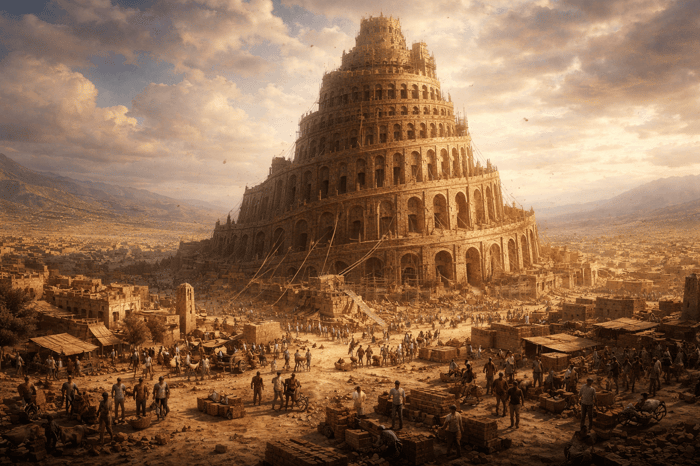
The Tower of Babel shows what happens when people seek greatness without God. The story sits in Genesis 11 and gives a clear picture of pride, unity, and God’s power to guide human history. Many readers see this event as a turning point between the early generations after the flood and the rise of nations across the earth.
1. The Tower of Babel Happens After the Flood
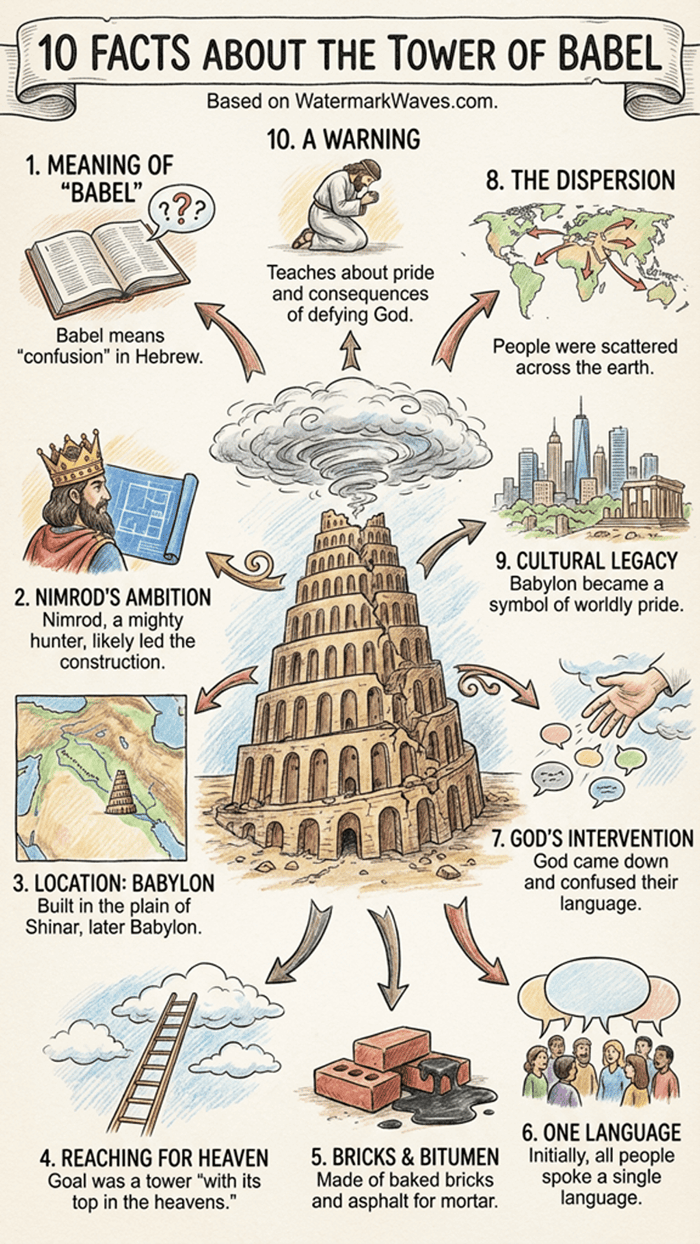
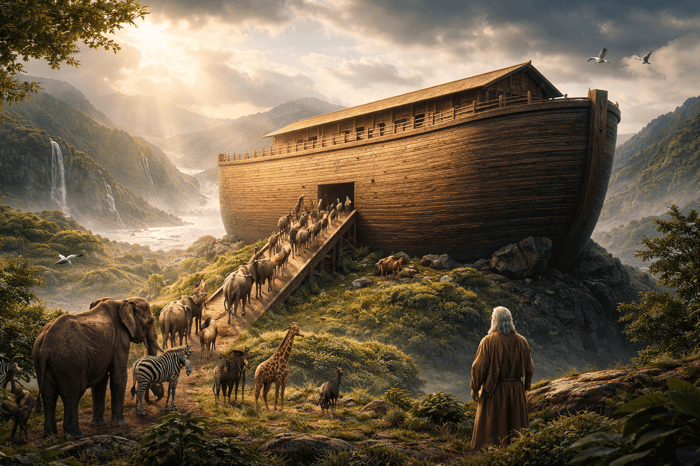
The story takes place only a few generations after Noah. People spoke the same language and moved east to settle in Shinar.
“Now the whole earth had one language and the same words.” (Genesis 11:1)
2. The People Wanted to Build More Than a Tower
They wanted a city, a tower, and a name for themselves. The tower was only part of a larger plan built on pride.
“Come, let us build ourselves a city and a tower with its top in the heavens.” (Genesis 11:4)
Goals of the People
| Goal | Meaning |
|---|---|
| Build a city | Create a strong central place |
| Build a tower | Reach the sky and show greatness |
| Make a name | Seek fame apart from God |
3. Their Fear Opposed God’s Command
Instead of spreading across the earth as God commanded in Genesis 9:1, they chose to stay in one place. This disobedience fueled their project.
“Be fruitful and multiply and fill the earth.” (Genesis 9:1)
4. The Tower Likely Looked Like a Ziggurat
Archaeologists note that ancient Mesopotamia was full of step-tower temples called ziggurats. The Babel tower may have looked like one. This gives physical context to the story and helps us picture what the people were building.
5. God Came Down to Look at the Project
The picture of God “coming down” shows His close care. It also shows that no human effort, no matter how tall, reaches His level.
“And the Lord came down to see the city and the tower.” (Genesis 11:5)
What God Noticed
- Their unity
- Their pride
- Their potential for greater rebellion
- Their need for redirection
6. God Confused Their Language
God chose to slow their plans by changing how they spoke. This act protected them from deeper sin and also set the stage for different nations and cultures.
“Come, let us go down and there confuse their language.” (Genesis 11:7)
7. The Name “Babel” Connects to Confusion
“Babel” sounds like the Hebrew word for “confuse.” The name marks the place where human pride broke unity and where God stepped in to limit their plans.
“Therefore its name was called Babel, because there the Lord confused the language of all the earth.” (Genesis 11:9)
Key Word Meanings
| Word | Meaning |
|---|---|
| Babel | Confusion |
| Shinar | Region in Mesopotamia |
8. Babel Explains the Origins of Nations
Genesis uses the story to show why people spread across the earth with different languages. The event becomes a bridge to the genealogy that leads to Abraham. The confusion at Babel sets the stage for God’s plan through one chosen family.
9. The Story Shows the Limits of Human Power
People could build bricks, towers, and cities, but they could not overcome God’s will. Human plans without God fall apart, no matter how strong they look.
“Unless the Lord builds the house, those who build it labor in vain.” (Psalm 127:1)
10. The Story Points Forward to Pentecost
At Babel, languages divided the people. In Acts 2, the Holy Spirit brought people together by allowing them to hear the gospel in their own languages. What was broken at Babel begins to be healed at Pentecost.
“Each one was hearing them speak in his own language.” (Acts 2:6)
Babel and Pentecost Compared
| Babel | Pentecost |
|---|---|
| Language scattered people | Language brought people together |
| Human pride | God’s power |
| Confusion | Clarity |
| Division | Unity through the Spirit |
The Tower of Babel stands as a warning and a reminder. When people chase their own name, they end in confusion. When they seek God’s name, they find purpose, unity, and hope through His plan.
Infographic