Table of Contents
- What Was the Tabernacle?
- The Tabernacle Meaning and God's Presence
- Why Did God Require Separation?
- The Layout of the Tabernacle
- The Holy Place and Most Holy Place
- The Veil in the Tabernacle
- Tabernacle Symbolism and the Need for a Mediator
- God's Presence in the Tabernacle and the Gospel
- How Jesus Fulfilled the Tabernacle
- The Torn Veil and Access to God
- What the Tabernacle Teaches Christians Today
- Why the Tabernacle and God's Holiness Still Matter
- FAQs
The relationship between the tabernacle and God's holiness reveals one of the most important truths in the Bible. God desired to dwell among His people, yet His perfect holiness meant that sinful people could not freely approach Him.
The tabernacle was more than a tent used for worship. It was a visual lesson about God's character, humanity's sinfulness, and the need for a way into God's presence.
Every curtain, sacrifice, and restricted area taught Israel that God is holy. The tabernacle showed both God's desire to be near His people and the barriers that existed because of sin.
Understanding the tabernacle meaning helps us better understand the relationship between tabernacle and God's holiness and the work of Jesus Christ.
What Was the Tabernacle?
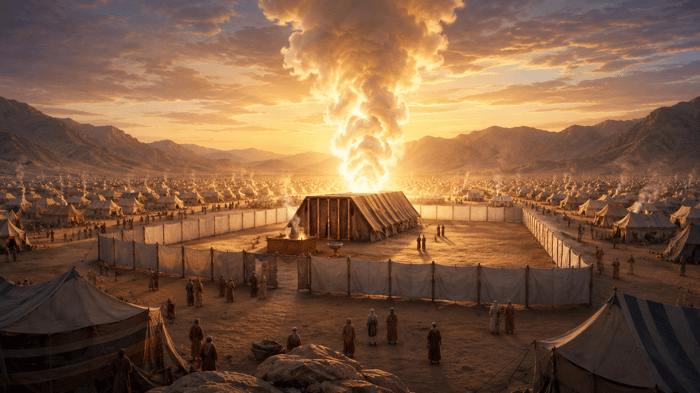
The tabernacle was a portable sanctuary that God commanded Moses to build after Israel left Egypt. It served as the center of worship during Israel's journey through the wilderness.
God gave detailed instructions for its construction because it represented heavenly realities and taught spiritual truths.
"Let them make me a sanctuary, that I may dwell among them."
Exodus 25:8 (WEB)
The tabernacle reminded Israel that God was present with them. Unlike the false gods of surrounding nations, the Lord truly dwelt among His covenant people.
At the same time, the structure itself showed that access to God was limited.
The Tabernacle Meaning and God's Presence
The tabernacle meaning goes beyond a place of worship. It represented God's presence among His people.
God's glory filled the tabernacle when it was completed.
"Then the cloud covered the tent of meeting, and the glory of the Lord filled the tabernacle."
Exodus 40:34 (ESV)
This was a great blessing. The Creator of heaven and earth chose to dwell among Israel.
Yet God's presence was not treated casually. The connection between tabernacle and God's holiness required reverence, obedience, and separation from impurity.
The people could camp around the tabernacle, but they could not simply walk into God's presence whenever they wished.
Why Did God Require Separation?
Many people read about the restrictions surrounding the tabernacle and wonder why they existed.
The answer is found in God's holiness.
God is perfectly pure and completely separate from sin. Human beings, because of sin, cannot stand before a holy God on their own merit.
"You shall be holy, for I the Lord your God am holy."
Leviticus 19:2 (ESV)
The separation taught Israel several important truths:
- God is holy
- Sin creates a barrier between God and people
- Access to God requires atonement
- Worship must be approached God's way
- Humanity needs a mediator
These lessons are central to understanding the connection between the tabernacle and God's holiness.
The Layout of the Tabernacle
The design of the tabernacle itself communicated increasing levels of holiness.
The closer someone came to God's dwelling place, the more restricted access became.
| Area | Who Could Enter? | Purpose |
|---|---|---|
| Outer Court | Israelites | Sacrifices and cleansing |
| Holy Place | Priests | Daily ministry before God |
| Most Holy Place | High Priest only | God's special dwelling place |
This progression was intentional.
Each step reminded worshipers that approaching God was not something to take lightly.
The Holy Place and Most Holy Place
One of the most significant features of the tabernacle was the division between the holy place and most holy place.
The Holy Place contained sacred furnishings used by the priests during daily worship.
Beyond it stood another chamber called the Most Holy Place, sometimes called the Holy of Holies.
Inside the Most Holy Place was the Ark of the Covenant, representing God's throne among His people.
"There I will meet with you, and I will tell you from above the mercy seat, from between the two cherubim which are on the ark of the covenant."
Exodus 25:22 (WEB)
No ordinary Israelite could enter this room.
Even priests could not enter freely.
Only the high priest could enter, and only once each year on the Day of Atonement.
"But into the second, the high priest alone, once in the year, not without blood, which he offers for himself and for the errors of the people."
Hebrews 9:7 (WEB)
The holy place and most holy place demonstrated both God's nearness and His holiness, revealing important truths about tabernacle and God's holiness.
The Veil in the Tabernacle
Separating these two rooms was a thick curtain known as the veil.
The veil in the tabernacle served as a physical reminder that sinful people could not freely enter God's presence.
It was not meant to suggest that God was unwilling to save. Instead, it revealed the reality of humanity's separation from Him because of sin.
and the Lord said to Moses, “Tell Aaron your brother not to come at any time into the Holy Place inside the veil, before the mercy seat that is on the ark, so that he may not die. For I will appear in the cloud over the mercy seat.
Leviticus 16:2 (ESV)
Every time the priests saw the veil, they were reminded that access to God remained limited.
The barrier was real.
Sin had consequences.
Tabernacle Symbolism and the Need for a Mediator
The tabernacle symbolism pointed beyond itself.
The sacrifices taught that sin required payment.
The priesthood taught that people needed someone to represent them before God.
The washbasin taught the need for cleansing.
The altar taught the seriousness of sin.
Everything pointed to the reality that sinners cannot make themselves acceptable before a holy God.
"Without shedding of blood there is no remission."
Hebrews 9:22 (WEB)
The entire system anticipated a greater solution that would come through Jesus Christ.
God's Presence in the Tabernacle and the Gospel
God's presence in the tabernacle was both comforting and terrifying.
It was comforting because God chose to dwell among His people.
It was terrifying because His holiness exposed human sin.
This tension runs throughout Scripture.
God desires fellowship with His people, yet sin creates separation.
The tabernacle illustrated this problem generation after generation.
The sacrifices had to be repeated.
The priests had to continue serving.
The veil remained standing.
The system revealed the need for a permanent answer, which is one of the central lessons of tabernacle and God's holiness.
How Jesus Fulfilled the Tabernacle
The New Testament reveals that the tabernacle pointed directly to Jesus Christ.
He became the true mediator between God and humanity.
"For there is one God, and one mediator between God and men, the man Christ Jesus."
1 Timothy 2:5 (WEB)
Jesus did what the tabernacle system could never fully accomplish.
He offered Himself as the perfect sacrifice for sin.
He entered the heavenly sanctuary on behalf of His people.
"But Christ having come as a high priest of the coming good things... entered in once for all into the Holy Place, having obtained eternal redemption."
Hebrews 9:11-12 (WEB)
His sacrifice removed the barrier that separated sinners from God.
The Torn Veil and Access to God
One of the most powerful moments in Scripture occurred at Jesus' death.
At the very moment Christ died, the veil was torn.
"Behold, the veil of the temple was torn in two from the top to the bottom."
Matthew 27:51 (WEB)
This was not merely a dramatic event.
It was a declaration.
The barrier had been removed.
Access to God was now available through Christ.
The veil in the tabernacle had always pointed to this moment.
Jesus fulfilled what the tabernacle symbolized.
What the Tabernacle Teaches Christians Today
The lessons of the tabernacle remain important.
Many people view God as either distant or casual.
The tabernacle corrects both errors.
It teaches that God is near.
It also teaches that God is holy.
Believers can approach God with confidence because of Jesus, but they should never lose sight of God's holiness.
"Let us therefore draw near with boldness to the throne of grace, that we may receive mercy and may find grace for help in time of need."
Hebrews 4:16 (WEB)
This confidence is not based on human goodness.
It is based entirely on Christ's finished work.
Why the Tabernacle and God's Holiness Still Matter
The relationship between the tabernacle and God's holiness helps us understand the story of redemption.
The tabernacle revealed God's desire to dwell among His people.
It also revealed humanity's inability to enter His presence because of sin.
Every sacrifice, priest, and curtain pointed forward to Jesus Christ.
Today believers enjoy access to God because Christ fulfilled everything the tabernacle foreshadowed.
The tabernacle reminds us that God is holy, sin is serious, and salvation is entirely a work of grace.
Far from being an obscure Old Testament structure, the tabernacle remains one of Scripture's clearest pictures of God's holiness, humanity's need, and God's provision through His Son.
FAQs
What was the purpose of the tabernacle?
The tabernacle was the place God appointed for worship during Israel's wilderness journey. It served as the center of Israel's worship and symbolized God's presence among His people.
It also taught important lessons about God's holiness, sin, sacrifice, and the need for a mediator.
"Let them make me a sanctuary, that I may dwell among them."
Exodus 25:8 (WEB)
What is the tabernacle meaning in the Bible?
The tabernacle meaning goes beyond a physical tent. It represented God's dwelling place among His covenant people and illustrated how sinful humanity could approach a holy God through the means He provided.
Its design, sacrifices, and priesthood all pointed toward deeper spiritual truths that were ultimately fulfilled in Christ.
"Then the cloud covered the Tent of Meeting, and Yahweh's glory filled the tabernacle."
Exodus 40:34 (WEB)
Why did God require separation in the tabernacle?
God required separation because He is perfectly holy. Sinful people could not casually enter His presence.
The restricted access within the tabernacle taught Israel that sin creates a barrier between God and humanity. The closer someone came to God's dwelling place, the greater the restrictions became.
"You shall be holy; for I Yahweh your God am holy."
Leviticus 19:2 (WEB)
What was the difference between the Holy Place and the Most Holy Place?
The Holy Place was where priests performed their daily ministry before God. The Most Holy Place contained the Ark of the Covenant and represented God's special dwelling place among His people.
Only the high priest could enter the Most Holy Place, and only once each year on the Day of Atonement.
"But into the second, the high priest alone, once in the year, not without blood, which he offers for himself and for the errors of the people."
Hebrews 9:7 (WEB)
What did the veil in the tabernacle represent?
The veil in the tabernacle symbolized the separation between a holy God and sinful humanity.
It prevented access to the Most Holy Place and reminded worshipers that sin creates a real barrier between people and God.
The veil pointed forward to the day when Christ would remove that barrier through His sacrifice.
"Yahweh said to Moses, 'Tell your brother Aaron not to come at just any time into the sanctuary within the veil before the mercy seat.'"
Leviticus 16:2 (WEB)
How does the tabernacle and God's holiness relate to salvation?
The relationship between the tabernacle and God's holiness helps explain why the gospel is necessary.
The tabernacle revealed two truths at the same time. God desired to dwell among His people, but sin prevented direct access to His presence. The sacrifices, priests, and veil all showed that humanity could not remove this barrier on its own.
The gospel reveals God's solution. Jesus Christ fulfilled everything the tabernacle pointed toward. He became the perfect sacrifice, the true High Priest, and the mediator between God and humanity. Through His death and resurrection, He opened the way for sinners to be reconciled to God.
The story of the tabernacle reflects humanity's separation from God because of sin and God's provision of a way back through His Son.
"For there is one God, and one mediator between God and men, the man Christ Jesus."
1 Timothy 2:5 (WEB)
Why was the veil torn when Jesus died?
When Jesus died on the cross, the veil in the temple was torn from top to bottom.
This signified that the barrier separating sinners from God's presence had been removed through Christ's sacrifice. Access to God was now available through faith in Him.
"Behold, the veil of the temple was torn in two from the top to the bottom."
Matthew 27:51 (WEB)
What does the tabernacle teach Christians today?
The tabernacle reminds believers that God is both holy and gracious.
It teaches reverence for God's holiness while also pointing to the confidence believers can have through Jesus Christ. Because Christ fulfilled the tabernacle system, Christians can draw near to God with assurance.
"Let us therefore draw near with boldness to the throne of grace, that we may receive mercy and may find grace for help in time of need."
Hebrews 4:16 (WEB)