
Table of Contents
- Isaiah's Vision of God in Isaiah 6
- What Did Isaiah See?
- Holy Holy Holy Meaning in Isaiah 6
- God's Holiness in Isaiah 6
- Isaiah Saw God and Saw His Own Sin
- God's Mercy Cleanses Isaiah
- Whom Shall I Send?
- Why Was Isaiah's Mission So Hard?
- How Isaiah's Vision Points to Jesus
- Lessons From Isaiah's Vision of God
- Why Isaiah 6 Still Matters Today
- FAQs
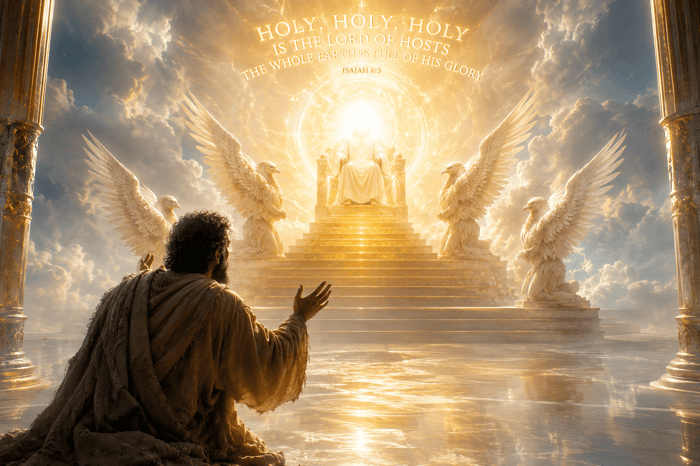
Isaiah's vision of God is one of the clearest pictures of God's holiness in the Bible. In Isaiah 6, the prophet sees the Lord seated on His throne, surrounded by heavenly beings who cry, "Holy, holy, holy."
This was not a casual religious moment. Isaiah saw God in His glory, and the sight changed him.
Isaiah's response teaches us what happens when sinful people see the holiness of God. We see God's greatness, our guilt, His mercy, and His call.
Isaiah's Vision of God in Isaiah 6
Isaiah's vision of God begins with a time marker. King Uzziah had died. Judah had lost a long-reigning king, but the true King was still on His throne.
In the year that king Uzziah died, I saw the Lord sitting on a throne, high and lifted up; and his train filled the temple.
Isaiah 6:1 (WEB)
Earthly kings die. God does not.
This is one reason Isaiah 6 matters so much. The nation faced uncertainty, but Isaiah saw the Lord reigning in glory.
God was not nervous. He was not weak. He was not absent. He was seated on the throne, high and lifted up.
Isaiah's vision of God shows us that God's holiness is tied to His rule. He is not only morally pure. He is the King above every king.
What Did Isaiah See?
Isaiah saw the Lord in majesty. The train of His robe filled the temple. This picture shows honor, power, and greatness.
He also saw heavenly beings called seraphim.
Above him stood the seraphim. Each one had six wings. With two he covered his face. With two he covered his feet. With two he flew.
Isaiah 6:2 (WEB)
The seraphim in the Bible appear here as heavenly servants who worship God. Even these holy beings cover themselves before Him.
That matters.
They are not sinful humans. Yet they still respond to God with reverence. Their covered faces show that God's glory is too great to treat lightly.
The scene is full of awe. The throne is high. The temple is filled. The seraphim are worshiping. The voice of heaven shakes the place.
Holy Holy Holy Meaning in Isaiah 6
The words of the seraphim are the center of the vision.
And one called to another and said:
“Holy, holy, holy is the Lord of hosts;
the whole earth is full of his glory!”
Isaiah 6:3 (ESV)
The phrase "holy, holy, holy" means God is perfectly holy. In Hebrew thought, repeating a word adds weight. Saying it three times shows the fullness of God's holiness.
God is not partly holy. He is not holy only when compared to people. He is holy in Himself.
This is the holy holy holy meaning in Isaiah 6: God is set apart, pure, glorious, and unlike anyone else.
| Phrase | Meaning |
|---|---|
| Holy | God is set apart from sin |
| Holy, holy | God's holiness is emphasized |
| Holy, holy, holy | God is perfectly and completely holy |
| Whole earth is full of His glory | God's holiness is not hidden from creation |
The seraphim do not first cry, "Love, love, love," though God is love. They do not cry, "Power, power, power," though God is all-powerful.
They cry, "Holy, holy, holy."
This shows that God's holiness is central to who He is.
God's Holiness in Isaiah 6
God's holiness in Isaiah 6 is not abstract. It fills the temple. It shakes the thresholds. It exposes Isaiah's heart.
The foundations of the thresholds shook at the voice of him who called, and the house was filled with smoke.
Isaiah 6:4 (WEB)
The created world trembles before the holy God.
This reminds us that God's holiness is not a soft idea. It is weighty. It is powerful. It is glorious.
When people speak of God only as kind or helpful, they may miss the full picture. God is kind, but He is also holy. God is near to His people, but He is never common.
Isaiah's vision of God helps correct small thoughts of God. He is not a larger version of us. He is the Lord of Armies.
Isaiah Saw God and Saw His Own Sin
When Isaiah saw God, he did not boast. He did not point to his calling, his nation, or his good works.
He confessed his sin.
And I said: “Woe is me! For I am lost; for I am a man of unclean lips, and I dwell in the midst of a people of unclean lips; for my eyes have seen the King, the Lord of hosts!”
Isaiah 6:5 (ESV)
Isaiah saw God, and he knew he was unclean.
This is what happens when God's holiness is revealed. We stop comparing ourselves to other people. We see ourselves before the holy King.
Isaiah mentioned his lips because a prophet speaks for God. The very part of his life connected to his calling was unclean.
That should humble us.
God's holiness exposes more than outward behavior. It reveals the heart, the words, the motives, and the hidden places we may try to protect.
God's Mercy Cleanses Isaiah
Isaiah's vision does not end with guilt. God provides cleansing.
Then one of the seraphim flew to me, having a live coal in his hand, which he had taken with the tongs from off the altar.
Isaiah 6:6 (WEB)
The coal came from the altar. That matters because the altar was connected to sacrifice.
Isaiah could not cleanse himself. He did not climb up to God. God provided what Isaiah needed.
He touched my mouth with it, and said, "Behold, this has touched your lips; and your iniquity is taken away, and your sin forgiven."
Isaiah 6:7 (WEB)
This is a powerful picture of grace. Isaiah was guilty, but God made him clean.
The holy God does not lower His standard. He removes Isaiah's guilt.
This points forward to the greater cleansing found in Jesus Christ. The altar in Isaiah's vision reminds us that sin requires atonement. In the Gospel, Jesus gives Himself as the final sacrifice for sin.
In whom we have our redemption through his blood, the forgiveness of our trespasses, according to the riches of his grace.
Ephesians 1:7 (WEB)
Isaiah 6 explained in light of the whole Bible shows both holiness and mercy. God exposes sin, but He also provides cleansing.
Whom Shall I Send?
After Isaiah is cleansed, he hears the voice of the Lord.
I heard the Lord's voice, saying, "Whom shall I send, and who will go for us?" Then I said, "Here I am. Send me!"
Isaiah 6:8 (WEB)
The phrase "whom shall I send" comes after cleansing, not before it.
This order matters.
Isaiah is not sent because he is naturally worthy. He is sent because God has cleansed him.
God's call flows from God's mercy. First Isaiah sees God's holiness. Then he confesses his sin. Then God cleanses him. Then God sends him.
That pattern still helps us today.
We do not serve God to earn forgiveness. We serve because God has shown mercy.
Why Was Isaiah's Mission So Hard?
Isaiah's calling was not easy. God sent him to a people who would hear but not understand.
He said, "Go, and tell this people, 'You hear indeed, but don't understand. You see indeed, but don't perceive.'"
Isaiah 6:9 (WEB)
This is a sobering part of Isaiah's vision of God.
The same holy God who cleanses Isaiah also sends him with a hard message. The people of Judah had resisted God's Word. Their hearts were dull.
Isaiah's ministry would reveal the seriousness of sin and the hardness of unbelief.
God's holiness is seen not only in His mercy toward Isaiah but also in His commitment to speak truth to a rebellious people.
A holy God speaks truth, even when people refuse to listen.
How Isaiah's Vision Points to Jesus
Isaiah saw the glory of the Lord. The New Testament helps us see that this glory points us to Christ.
John speaks of Isaiah's vision when explaining why many did not believe in Jesus.
Isaiah said these things when he saw his glory, and spoke of him.
John 12:41 (WEB)
Jesus is not separate from God's glory. He reveals God to us.
This matters because the holy God Isaiah saw is not distant from the Gospel. The same glory that overwhelmed Isaiah is revealed in the Son.
Jesus came to sinners, but He never became sinful. He touched the unclean, but He was never defiled. He died for sin, but death could not hold Him.
The Word became flesh, and lived among us. We saw his glory, such glory as of the one and only Son of the Father, full of grace and truth.
John 1:14 (WEB)
In Christ, sinners can know the holy God without being destroyed. They are cleansed, forgiven, and brought near.
Lessons From Isaiah's Vision of God
Isaiah's vision of God teaches several truths that still matter.
- God reigns even when earthly leaders fall.
- God's holiness is central to His character.
- True worship begins with reverence.
- Seeing God clearly reveals our sin.
- Cleansing comes from God's mercy, not human effort.
- Forgiven people are sent to serve.
- God's Word must be spoken, even when it is rejected.
- Jesus reveals the glory of God.
This vision is not just a dramatic scene from the Old Testament. It is a window into reality.
God is holy. We are sinful. Mercy is needed. Cleansing is possible. God's call still matters.
Why Isaiah 6 Still Matters Today
Isaiah 6 calls us to see God as He truly is.
Many people want a God who comforts but never confronts. Others imagine a God who judges but never shows mercy. Isaiah's vision of God shows both truth and grace.
God is holy enough to expose sin. He is merciful enough to cleanse sinners.
That is why this passage still speaks with power. It shows us the Lord on His throne, the guilt of human sin, and the mercy that makes service possible.
When we understand Isaiah 6, we learn to worship with reverence, confess with honesty, receive mercy with faith, and answer God's call with surrendered hearts.
FAQs
What is Isaiah's vision of God?
Isaiah's vision of God is the encounter recorded in Isaiah 6 where the prophet saw the Lord seated on a throne, surrounded by seraphim proclaiming God's holiness.
The vision revealed God's glory, Isaiah's sinfulness, God's mercy, and Isaiah's calling to serve.
In the year that king Uzziah died, I saw the Lord sitting on a throne, high and lifted up; and his train filled the temple.
Isaiah 6:1 (WEB)
Did Isaiah literally see God?
Isaiah saw a divine vision of God's glory and majesty. While no one can fully comprehend God's infinite nature, God revealed Himself to Isaiah in a way that communicated His holiness and kingship.
The focus of the passage is not on God's physical appearance but on His glory and authority.
Then I said, "Woe is me! For I am undone, because I am a man of unclean lips, and I dwell among a people of unclean lips; for my eyes have seen the King, Yahweh of Armies!"
Isaiah 6:5 (WEB)
What are the seraphim in the Bible?
The seraphim are heavenly beings who worship God and serve in His presence. In Isaiah 6, they surround God's throne and continually declare His holiness.
Their actions show deep reverence for God, even though they themselves are heavenly creatures.
Above him stood the seraphim. Each one had six wings. With two he covered his face. With two he covered his feet. With two he flew.
Isaiah 6:2 (WEB)
What does "Holy, Holy, Holy" mean?
The phrase emphasizes God's perfect holiness. Repeating a word three times in Hebrew literature was a way of expressing supreme importance and completeness.
The seraphim were declaring that God is completely set apart from sin and unlike anyone or anything else.
One called to another, and said, "Holy, holy, holy, is Yahweh of Armies! The whole earth is full of his glory!"
Isaiah 6:3 (WEB)
Why did Isaiah say, "Woe is me"?
Isaiah became aware of his own sin when he saw God's holiness. Instead of feeling proud, he recognized how unclean he was compared to the holy King.
His response shows that a true understanding of God leads to humility and repentance.
Then I said, "Woe is me! For I am undone, because I am a man of unclean lips, and I dwell among a people of unclean lips; for my eyes have seen the King, Yahweh of Armies!"
Isaiah 6:5 (WEB)
What did the burning coal symbolize?
The burning coal represented God's provision for cleansing and forgiveness. The coal came from the altar, which was associated with sacrifice.
This showed that Isaiah's guilt could be removed only through God's provision, not through his own efforts.
He touched my mouth with it, and said, "Behold, this has touched your lips; and your iniquity is taken away, and your sin forgiven."
Isaiah 6:7 (WEB)
What does "Whom shall I send?" mean?
After Isaiah was cleansed, God called him into service. The question "Whom shall I send?" revealed God's purpose for Isaiah's life.
Isaiah responded willingly because he had already experienced God's mercy.
I heard the Lord's voice, saying, "Whom shall I send, and who will go for us?" Then I said, "Here I am. Send me!"
Isaiah 6:8 (WEB)
How does Isaiah's vision of God relate to salvation?
Isaiah's vision of God reveals the same pattern found in the Gospel. First, Isaiah encountered God's holiness. Then he recognized his sin. Next, God provided cleansing. Finally, Isaiah was sent out to serve.
The vision shows that sinful people cannot stand before a holy God on their own. They need God to remove their guilt.
The burning coal from the altar points forward to the greater cleansing provided through Jesus Christ. Through His death and resurrection, God makes sinners clean and restores them to a right relationship with Himself.
In whom we have our redemption through his blood, the forgiveness of our trespasses, according to the riches of his grace.
Ephesians 1:7 (WEB)
Why is Isaiah 6 important for Christians today?
Isaiah 6 reminds believers that God is still holy, worthy of worship, and sovereign over all things. It also teaches that God's grace is greater than human sin.
The chapter encourages Christians to worship with reverence, confess sin honestly, and respond willingly to God's call.
Therefore let us have grace, through which we serve God acceptably, with reverence and awe,
Hebrews 12:28 (WEB)