Table of Contents
- What Is the King of Kings Meaning?
- Where Is Jesus Called the King of Kings?
- Why Is Jesus Called the King of Kings?
- The Old Testament Promise of a Coming King
- How Is Jesus Different From Earthly Kings?
- What Does Lord of Lords Mean?
- The King of Kings in Revelation
- How Should We Respond to Jesus as King?
- What Does the King of Kings Mean for Salvation?
- Why This Title Gives Christians Hope
- FAQs
The King of Kings meaning points to the supreme rule of Jesus Christ over every ruler, nation, power, and authority. The title does not mean that Jesus is one king among many equal kings. It means that every earthly ruler is under His authority, whether that ruler admits it or not.
The Bible presents Jesus as the promised Messiah, the risen Lord, and the eternal King. His kingdom is not built by human armies or political power. He rules by divine right because He is the Son of God, the Creator, the Savior, and the One appointed to judge the world.
Understanding this title helps us see why Jesus deserves our trust, worship, obedience, and hope.
What Is the King of Kings Meaning?
The King of Kings meaning is that Jesus holds the highest possible authority. No king, president, emperor, judge, or government stands above Him. He is the ruler over all rulers.
The title appears in a world where kings often claimed great power. Some controlled large kingdoms and demanded complete loyalty. Yet Scripture shows that even the strongest human ruler has limited power, a short life, and authority that God allows for a time.
Jesus is different. His reign has no end. His authority is not borrowed, and no one can remove Him from His throne.
"He changes the times and the seasons.
He removes kings and sets up kings.
He gives wisdom to the wise,
and knowledge to those who have understanding."
Daniel 2:21 (WEB)
This verse does not name Jesus directly, but it reveals a truth about God's rule. Earthly rulers rise and fall under His sovereign hand. The New Testament then shows that all authority has been given to Christ.
"Jesus came to them and spoke to them, saying, 'All authority has been given to me in heaven and on earth.'"
Matthew 28:18 (WEB)
The King of Kings meaning rests on this total authority. Jesus rules in heaven and on earth, not in one nation or during one period of history.
Where Is Jesus Called the King of Kings?
The clearest use of the title appears in Revelation. John sees Jesus returning in victory, not as a weak or defeated figure, but as the righteous Judge and conquering King.
"He has on his garment and on his thigh a name written, 'KING OF KINGS, AND LORD OF LORDS.'"
Revelation 19:16 (WEB)
This scene explains the King of Kings meaning with great force. Jesus returns openly, defeats evil, judges with justice, and reveals His rule before all creation.
The Revelation 19 King of Kings language also connects Jesus with the title "Lord of lords." Together, these names declare that no authority in heaven or on earth can compete with Him.
A similar title appears earlier in Revelation:
"These will war against the Lamb, and the Lamb will overcome them, for he is Lord of lords and King of kings. They also will overcome who are with him, called and chosen and faithful."
Revelation 17:14 (WEB)
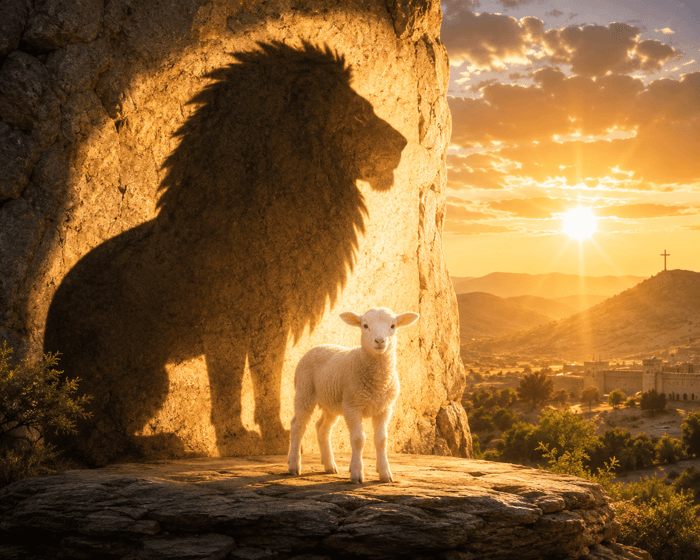
The Lamb is Jesus, the One who gave His life for sinners. The same Jesus who was crucified will overcome every enemy. His sacrifice was not a defeat. His resurrection proved His victory.
Why Is Jesus Called the King of Kings?
Why is Jesus called the King of Kings? Scripture gives several connected reasons.
| Reason | What It Shows |
|---|---|
| He is the eternal Son of God | His authority is divine, not merely human |
| He created all things | Every ruler and nation exists under His power |
| He is the promised Messiah | He fulfills God's covenant promises |
| He defeated sin and death | His resurrection proves His victory |
| He will judge the world | Every person will answer to Him |
| His kingdom never ends | No enemy can remove Him from His throne |
Jesus as King is not only a future truth. He reigns now. Yet the world does not see the full display of His kingdom at this time.
Christ is gathering His people, ruling through His Word, and building His church. He continues this work until the day when every enemy is placed under His feet.
"For he must reign until he has put all his enemies under his feet. The last enemy that will be abolished is death."
1 Corinthians 15:25-26 (WEB)
Jesus reigns as King even while evil remains active. His present reign guarantees the final defeat of sin, Satan, death, and every power that opposes God.
This part of the King of Kings meaning gives Christians confidence. Christ is not waiting to become King. He rules now, though the full glory of His kingdom will be revealed when He returns.
The Old Testament Promise of a Coming King
The King of Kings meaning becomes clearer through the Old Testament promises of a royal Messiah. God promised David that one of his descendants would rule on an everlasting throne.
"Your house and your kingdom will be made sure forever before you. Your throne will be established forever."
2 Samuel 7:16 (WEB)
No ordinary son of David could fulfill this promise in its complete sense. Earthly kings died, kingdoms divided, and the royal line lost its visible throne. But God's promise did not fail.
Jesus was born in David's family line. He is the promised King whose reign will never end.
"He will be great and will be called the Son of the Most High.
The Lord God will give him the throne of his father David,
and he will reign over the house of Jacob forever.
There will be no end to his Kingdom."
Luke 1:32-33 (WEB)
The King of Kings meaning includes this fulfillment. Jesus is not a ruler who gained power by force. He is the King whom God promised through the prophets.
Psalm 2 also describes God's chosen King ruling the nations.
"Yet I have set my King on my holy hill of Zion."
Psalm 2:6 (WEB)
The nations may resist God, but they cannot cancel His plan. Jesus is the appointed King, and every ruler remains under His authority.
How Is Jesus Different From Earthly Kings?
Earthly kings often gain power through birth, elections, war, wealth, or political skill. Their rule is limited by borders, time, health, laws, and other powers.
Jesus has no such limits.
Earthly rulers may govern unjustly. Jesus judges with perfect righteousness. Human leaders may break promises, but Jesus is faithful. Kings may use people for their own gain, but Jesus gave Himself to save His people.
"For the Son of Man also came not to be served, but to serve, and to give his life as a ransom for many."
Mark 10:45 (WEB)
This truth gives depth to the King of Kings meaning. Jesus is supreme in power, but He is not cruel or selfish. His kingship is holy, just, wise, and full of mercy.
He is also the Shepherd-King who cares for His people. He does not command from a distance. He knows His sheep, leads them, protects them, and gave His life for them.
Earthly leaders eventually die and leave their positions. Jesus rose from the dead and lives forever. His authority cannot be ended by death, rebellion, or the passing of time.
What Does Lord of Lords Mean?
The Lord of lords meaning is closely tied to King of Kings. A king rules a kingdom, while "lord" points to authority, ownership, and mastery.
Calling Jesus the Lord of lords means that every power, master, ruler, and authority is under Him. No spiritual force or human government exists outside His final control.
Paul describes the exaltation of Jesus after His obedient death on the cross:
"Therefore God also highly exalted him,
and gave to him the name which is above every name,
that at the name of Jesus every knee should bow,
of those in heaven, those on earth, and those under the earth,
and that every tongue should confess that Jesus Christ is Lord,
to the glory of God the Father."
Philippians 2:9-11 (WEB)
One day, every person will acknowledge Christ's lordship. Some bow to Him now in faith, love, and worship. Others will face Him as Judge. No one will remain outside His authority.
The titles King of Kings and Lord of lords point to the same central truth: Jesus possesses complete and final authority over all creation.
The King of Kings in Revelation
The King of Kings in Revelation is both comforting and sobering. It comforts believers because evil will not win. It warns those who reject God because Jesus will judge with perfect justice.
Revelation does not present Christ's return as uncertain. He will come. He will defeat every enemy, expose false power, and establish righteous rule.
"The kingdom of the world has become the Kingdom of our Lord and of his Christ. He will reign forever and ever!"
Revelation 11:15 (WEB)
This future victory is one of the strongest parts of the King of Kings meaning. Human history is not moving toward chaos without purpose. It is moving toward the open rule of Jesus Christ.
Believers can face unstable governments, persecution, war, and cultural change with hope. Christ's throne is not threatened by elections, armies, markets, or public opinion.
Revelation 19 shows Jesus riding in victory. He is called Faithful and True because His judgment is always right. He does not misuse power as sinful rulers often do.
The King who returns is the same Savior who died on the cross. His justice and mercy are never in conflict. He judges evil and saves everyone who comes to Him in faith.
How Should We Respond to Jesus as King?
The title calls for more than interest. It calls for a personal response.
- Trust His saving work.
- Turn away from sin.
- Confess Him as Lord.
- Obey His teaching.
- Worship Him with reverence.
- Hope in His return.
- Live as a faithful citizen of His kingdom.
Jesus as King has the right to direct every part of life. His commands are not suggestions. Yet obedience is not a way to earn salvation. It is the response of those who have been saved by grace.
"If you love me, keep my commandments."
John 14:15 (WEB)
The Christian life is lived under the good rule of Christ. His people learn to submit their plans, desires, words, money, relationships, and choices to Him.
Accepting the King of Kings meaning means more than agreeing that Jesus is powerful. It means recognizing His rightful authority and seeking to follow Him in daily life.
What Does the King of Kings Mean for Salvation?
The King of Kings meaning is central to the Gospel because the King came to save rebels.
Sin is not only weakness or a mistake. It is rebellion against God's rightful rule. Every person has chosen self-rule instead of joyful obedience to the Creator. Because God is holy and just, sin brings guilt, judgment, and death.
Jesus, the sinless King, took the place of sinners. He died on the cross, bearing the punishment they deserved. He rose from the dead and now offers forgiveness and eternal life to all who repent and believe in Him.
"Because if you will confess with your mouth that Jesus is Lord,
and believe in your heart that God raised him from the dead,
you will be saved."
Romans 10:9 (WEB)
Saving faith does not treat Jesus as a helpful addition to life. It receives Him as Savior and Lord. Those who trust Him are forgiven, brought into His kingdom, and given a new life under His loving rule.
The King who will judge the world is also the Lamb who was slain. This is why the Gospel is urgent and full of hope. The Judge offers mercy before the day of judgment.
No person can earn a place in Christ's kingdom through good works. Salvation is God's gift, received through faith in Jesus. Good works follow salvation as the fruit of a changed life.
Why This Title Gives Christians Hope
Christians do not place their final hope in human leaders. Good rulers can serve a real purpose, but none can remove sin, conquer death, or create perfect justice.
Jesus can.
The King of Kings meaning assures believers that Christ's plans cannot fail. His promises will stand. His enemies will be defeated. His people will be raised, gathered, and welcomed into His everlasting kingdom.
"He will wipe away every tear from their eyes.
Death will be no more;
neither will there be mourning, nor crying, nor pain, any more.
The first things have passed away."
Revelation 21:4 (WEB)
Jesus King of Kings is not only a title for the end of history. It shapes Christian faith now. Because He rules, believers can obey when obedience is costly, endure suffering with hope, and speak the truth without fear.
The King of Kings meaning also reminds Christians that no earthly crisis has the final word. Jesus reigns as King today, and He will return as the victorious King.
Every earthly throne will pass away. Christ's throne will remain forever, and those who belong to Him will live under His perfect rule without sin, sorrow, injustice, or death.
FAQs
What is the King of Kings meaning in the Bible?
The King of Kings meaning is that Jesus Christ has supreme authority over every ruler, kingdom, and power. No earthly king or government is equal to Him because His reign is eternal and His authority comes directly from God.
"He has on his garment and on his thigh a name written, 'KING OF KINGS, AND LORD OF LORDS.'"
Revelation 19:16 (WEB)
Why is Jesus called the King of Kings?
Jesus is called the King of Kings because He is God's promised Messiah, the risen Savior, and the eternal ruler over all creation. Every human ruler serves under His authority, whether they recognize Him or not.
"Jesus came to them and spoke to them, saying, 'All authority has been given to me in heaven and on earth.'"
Matthew 28:18 (WEB)
Does Jesus reign as King right now?
Yes. Although the fullness of His kingdom will be revealed when He returns, Jesus reigns as King today. He rules over His church, directs history according to God's plan, and will ultimately defeat every enemy.
"For he must reign until he has put all his enemies under his feet.
The last enemy that will be abolished is death."
1 Corinthians 15:25-26 (WEB)
What does "Lord of lords" mean?
The title "Lord of lords" emphasizes that Jesus possesses supreme authority over every master, ruler, and power. It complements His title of King of Kings by declaring that no authority exists above Him.
"Therefore God also highly exalted him,
and gave to him the name which is above every name,
that at the name of Jesus every knee should bow,
of those in heaven, those on earth, and those under the earth,
and that every tongue should confess that Jesus Christ is Lord,
to the glory of God the Father."
Philippians 2:9-11 (WEB)
What does the King of Kings in Revelation teach us?
The King of Kings in Revelation shows that Jesus will return in glory to judge evil, establish perfect justice, and reign forever. His victory is certain, giving believers confidence that evil will not have the final word.
"The kingdom of the world has become the Kingdom of our Lord and of his Christ.
He will reign forever and ever!"
Revelation 11:15 (WEB)
How should Christians respond to Jesus as King?
Christians should respond with faith, worship, obedience, and hope. Since Jesus is the rightful King, believers are called to follow His Word, trust His leadership, and live as faithful citizens of His kingdom.
"If you love me, keep my commandments."
John 14:15 (WEB)
How does the King of Kings meaning point to the Gospel?
The King of Kings meaning reveals that every person has rebelled against God's rightful King through sin. Yet Jesus, the holy King, came to earth, died on the cross for sinners, and rose again so that those who repent and believe in Him can receive forgiveness and become citizens of His eternal kingdom.
The King who will one day judge the world first offered Himself as the sacrifice for sin, inviting everyone to receive His gift of salvation through faith.
"Because if you will confess with your mouth that Jesus is Lord,
and believe in your heart that God raised him from the dead,
you will be saved."
Romans 10:9 (WEB)
Will every person recognize Jesus as King?
Yes. The Bible teaches that one day every person will acknowledge Jesus Christ as King and Lord. Those who trust Him now will rejoice in His kingdom, while those who reject Him will stand before Him as Judge.
"That at the name of Jesus every knee should bow,
of those in heaven, those on earth, and those under the earth,
and that every tongue should confess that Jesus Christ is Lord,
to the glory of God the Father."
Philippians 2:10-11 (WEB)