Table of Contents
- What Did Messiah Mean in Jesus' Day?
- Were All Jewish Messianic Expectations the Same?
- Why Did Many Expect a Son of David?
- How Did Roman Rule Shape Messianic Expectations?
- What Did the Jews Expect the Messiah to Be?
- How Did Some People Recognize Jesus as the Messiah?
- Why Did Peter Recognize Jesus?
- Why Did the Crowds Welcome Jesus Into Jerusalem?
- Why Did the Jews Reject Jesus?
- Why Didn't the Jews Accept Jesus as the Messiah?
- The Missing Expectation of a Suffering Messiah
- How Jesus Corrected First Century Messianic Expectations
- Did Jesus Claim to Be the Expected Messiah?
- What Can We Learn From Messiah Expectations in Jesus' Day?
- How Messianic Expectations Point to the Gospel
- Recognizing the Messiah Today
- FAQs
Messianic expectations shaped how Jewish people responded to Jesus. Many hoped God would send a powerful descendant of David who would defeat Israel's enemies, restore the kingdom, and bring peace. Others looked for a prophet, priest, teacher, or heavenly deliverer.
There was no single list that every Jewish group accepted. The Pharisees, Sadducees, priests, teachers, revolutionaries, and common people did not always read Scripture in the same way.
This helps explain why some people recognized Jesus as the Messiah while others rejected Him. Messianic expectations often shaped how people interpreted God's promises, but Jesus did not always fit the kind of Messiah they had created in their minds.
What Did Messiah Mean in Jesus' Day?
The Hebrew word Messiah means "anointed one." The Greek form is Christ. In the Old Testament, kings and priests were anointed when they were set apart for God's service.
By the time of Jesus, many Jewish people used the title for a promised figure who would act on God's behalf. He would bring deliverance, restore justice, and fulfill God's promises to Israel.
Andrew used both the Hebrew and Greek titles when he told Peter about Jesus:
He first found his own brother, Simon, and said to him, "We have found the Messiah!" which is, being interpreted, Christ.
John 1:41 (WEB)
The question was not only whether a Messiah would come. People also debated what He would be like and what He would do.
Were All Jewish Messianic Expectations the Same?
Jewish expectations of the Messiah were diverse. Some people expected a king from David's family. Others focused on a prophet like Moses, a priestly leader, or God's direct intervention in history.
Many of these hopes overlapped. A person might expect the Messiah to be both a king and a teacher who would restore Israel's faithfulness to God.
Several common expectations included:
- A descendant of King David
- A ruler who would restore Israel
- A deliverer from foreign oppression
- A prophet who would speak with God's authority
- A leader who would cleanse or restore the temple
- A righteous king who would judge evil
- A servant who would care for the poor
- A figure connected with the coming kingdom of God
These hopes came from real Old Testament promises. Messianic expectations were shaped by how people understood those Scriptures. The problem came when they selected some promises while overlooking others.
Many wanted the Messiah's crown but did not understand His cross.
Why Did Many Expect a Son of David?
The Old Testament connected the coming ruler with King David's family.
God promised David that his royal house would continue:
Your house and your kingdom will be made sure forever before you. Your throne will be established forever.
2 Samuel 7:16 (WEB)
Israel's later kings failed, and the nation eventually lost its independence. Yet God's promise created hope that a righteous Son of David would arise.
Isaiah also described a ruler connected to David's family:
A shoot will come out of the stock of Jesse, and a branch out of his roots will bear fruit.
Isaiah 11:1 (WEB)
Jesse was David's father. This prophecy pictured new life growing from what appeared to be a fallen royal family.
These Old Testament expectations of the Messiah explain why people called Jesus the "Son of David." They were not only identifying His ancestors. They were recognizing Him as the promised King.
How Did Roman Rule Shape Messianic Expectations?
In Jesus' day, the Jewish people lived under Roman authority. Rome collected taxes, appointed rulers, and used military power to maintain control.
This setting caused many people to long for national freedom. These Messianic expectations led many to expect the Messiah to act like David: defeat Israel's enemies, remove foreign rule, and establish a visible kingdom in Jerusalem.
After Jesus fed a large crowd, some people wanted to make Him king by force:
Jesus therefore, perceiving that they were about to come and take him by force to make him king, withdrew again to the mountain by himself.
John 6:15 (WEB)
They saw His power, but they misunderstood His mission. They wanted a king who would fill their stomachs and defeat Rome.
Jesus came as King, but His first work was deeper. Humanity needed deliverance from sin before political change could solve anything.
What Did the Jews Expect the Messiah to Be?
The question "what did the Jews expect the Messiah to be?" does not have one simple answer. Different people emphasized different promises.
The following table summarizes some of the major hopes seen in Scripture and in the Gospel accounts.
| Expected role | Biblical basis | How people could misunderstand it |
|---|---|---|
| Son of David | 2 Samuel 7:16; Isaiah 11:1 | They could expect only a political king |
| Prophet like Moses | Deuteronomy 18:15 | They could treat Jesus as only a human teacher |
| Restorer of Israel | Isaiah 49:6; Ezekiel 37:21-22 | They could limit restoration to national power |
| Righteous judge | Psalm 2:8-9; Isaiah 11:4 | They could expect immediate judgment on Rome |
| Temple restorer | Malachi 3:1 | They could expect support for the religious system |
| Suffering servant | Isaiah 53:4-6 | They could overlook a Messiah who suffered |
| Son of Man | Daniel 7:13-14 | They could miss His heavenly authority |
None of these biblical pictures is false. The Messiah is King, Prophet, Servant, Judge, and Son of Man.
The full truth could only be understood by receiving all that Scripture taught.
How Did Some People Recognize Jesus as the Messiah?
Some people recognized Jesus through His words, works, character, and fulfillment of Scripture.
John the Baptist prepared the way for Him. Andrew identified Him as the Messiah. Philip believed that Jesus was the One written about by Moses and the prophets.
Nathanael responded to Jesus with a royal confession:
Nathanael answered him, "Rabbi, you are the Son of God! You are King of Israel!"
John 1:49 (WEB)
Others noticed that Jesus performed the kinds of works associated with God's promised salvation. He gave sight to the blind, healed the sick, cleansed lepers, preached to the poor, and raised the dead.
When John the Baptist sent messengers to ask whether Jesus was the expected One, Jesus pointed to these works:
Jesus answered them, "Go and tell John the things which you hear and see: the blind receive their sight, the lame walk, the lepers are cleansed, the deaf hear, the dead are raised up, and the poor have good news preached to them."
Matthew 11:4-5 (WEB)
Jesus' works matched Isaiah's picture of God's coming salvation. Those who knew Scripture and had Messianic expectations shaped by God's Word could recognize the signs.
Why Did Peter Recognize Jesus?
Peter spent time with Jesus, heard His teaching, and saw His miracles. Yet Jesus said Peter's confession came through revelation from the Father.
Jesus asked the disciples who they believed He was.
Simon Peter answered, "You are the Christ, the Son of the living God."
Matthew 16:16 (WEB)
Peter recognized Jesus' Messianic identity, but he still misunderstood the Messiah's mission.
When Jesus explained that He would suffer, be killed, and rise again, Peter objected. Peter could accept a victorious Messiah, but he struggled with a suffering Messiah.
This shows that a person could recognize Jesus' title while still misunderstanding His work.
Why Did the Crowds Welcome Jesus Into Jerusalem?
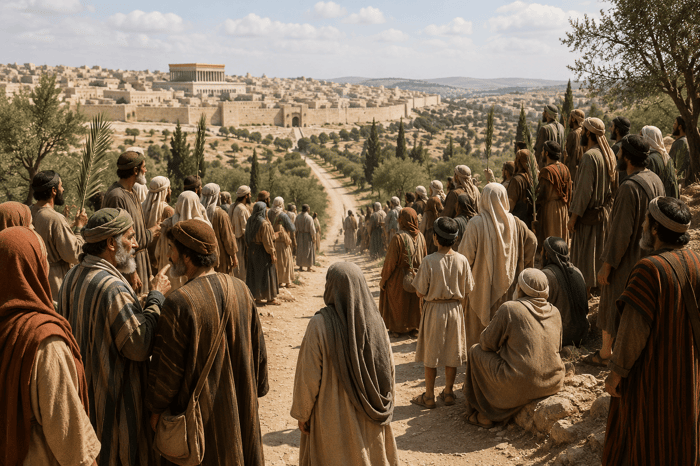
When Jesus entered Jerusalem, the crowds treated Him as a royal figure. They spread clothing and branches before Him and called Him the Son of David.
Jesus entered on a donkey, fulfilling Zechariah's picture of a humble King:
Rejoice greatly, daughter of Zion! Shout, daughter of Jerusalem! Behold, your King comes to you! He is righteous, and having salvation; lowly, and riding on a donkey, even on a colt, the foal of a donkey.
Zechariah 9:9 (WEB)
The crowd saw a public claim to kingship. Yet many may have expected Jesus to take political control.
Jesus entered as King, but He went to the temple rather than a military headquarters. He confronted sin and false worship rather than organizing an army.
His kingdom challenged Rome, but it also challenged every human heart.
Why Did the Jews Reject Jesus?
The phrase "why did the Jews reject Jesus" must be handled with care. Jesus was Jewish, His disciples were Jewish, and the first believers were Jewish.
Not all Jews rejected Jesus. Many followed Him, believed in Him, and proclaimed Him after His resurrection.
At the same time, many religious leaders and members of the public did reject Him. The Gospel accounts give several reasons:
- He did not fit their political hopes.
- He exposed sin and religious hypocrisy.
- He challenged human traditions.
- He claimed authority that belonged to God.
- He welcomed sinners and outsiders.
- He threatened the leaders' influence.
- He spoke of suffering rather than immediate national victory.
- He called people to repent.
Some leaders feared what Rome might do if Jesus' movement continued:
If we leave him alone like this, everyone will believe in him, and the Romans will come and take away both our place and our nation.
John 11:48 (WEB)
Their rejection involved theology, fear, politics, pride, and unbelief. It cannot be explained by one reason alone.
Why Didn't the Jews Accept Jesus as the Messiah?
Some people ask, "Why didn't the Jews accept Jesus as the Messiah?" The question should be changed to "Why did some accept Him while others did not?"
Many Jewish people did accept Him. The first church began in Jerusalem, and thousands of Jewish worshipers believed the apostles' message.
Those who did not accept Him often judged Jesus according to their preferred Messianic expectations. They expected immediate victory over Israel's enemies, but Jesus called them to recognize sin as their greatest enemy.
They expected the Messiah to honor their religious standing, but Jesus exposed pride and called everyone to repentance.
They expected a ruler who would destroy the wicked, but Jesus first came to save sinners.
For the Son of Man came to seek and to save that which was lost.
Luke 19:10 (WEB)
Jesus did not fail to fulfill God's plan. He failed to fulfill plans that people had added to God's Word.
The Missing Expectation of a Suffering Messiah
Many first century Messianic expectations focused on power, victory, and restoration. These themes were biblical, but they were incomplete without the suffering Servant.
Isaiah said that God's Servant would be rejected and wounded for the sins of others:
But he was pierced for our transgressions. He was crushed for our iniquities. The punishment that brought our peace was on him; and by his wounds we are healed.
Isaiah 53:5 (WEB)
Jesus repeatedly told His disciples that the Messiah had to suffer. After His resurrection, He explained that His suffering and glory were both part of Scripture.
He said to them, "Foolish people, and slow of heart to believe in all that the prophets have spoken! Didn't the Christ have to suffer these things and to enter into his glory?"
Luke 24:25-26 (WEB)
The key phrase is "all that the prophets have spoken." People could not understand the Messiah by accepting only the promises they preferred.
The crown and the cross were both part of God's plan.
How Jesus Corrected First Century Messianic Expectations
Jesus corrected false expectations without denying that He was King.
He taught that His kingdom was not built by worldly violence. He called people to love enemies, serve others, repent of sin, and trust God.
He also taught that greatness in His kingdom looked different from greatness in earthly kingdoms:
Whoever desires to become great among you shall be your servant. Whoever of you desires to become first shall be bondservant of all.
Mark 10:43-44 (WEB)
Jesus came with authority, but He used His authority to serve. He conquered through sacrifice rather than military force.
After His resurrection, He sent His disciples to make followers among all nations. The Messiah's kingdom was larger than one nation's freedom from Rome.
Did Jesus Claim to Be the Expected Messiah?
Jesus did not always announce His identity in the way people demanded. Public claims could have been misunderstood as calls for political revolt.
Still, Jesus clearly accepted the title Messiah. When the Samaritan woman spoke of the coming Messiah, Jesus answered directly:
Jesus said to her, "I am he, the one who speaks to you."
John 4:26 (WEB)
At His trial, He also connected Himself with the Son of Man from Daniel 7, who receives authority and an everlasting kingdom.
Jesus claimed to be the Messiah, but He defined the title through Scripture rather than popular pressure.
What Can We Learn From Messiah Expectations in Jesus' Day?
Messiah expectations in Jesus' day warn us against shaping Jesus according to what we want Him to be.
Some wanted a political leader. Others wanted a miracle worker, provider, or supporter of their religious system.
People still make similar mistakes. They may want Jesus to improve their plans without ruling their lives. They may want comfort without repentance or blessing without obedience.
The biblical Messiah does not exist to support our personal expectations. He is Lord, and we must receive Him as God has revealed Him.
How Messianic Expectations Point to the Gospel
Messianic expectations reveal why the Gospel was both surprising and necessary.
Many people wanted rescue from Rome, but every person needed rescue from sin. Political freedom could not remove guilt, change the heart, or defeat death.
Jesus came as the promised King, but He first wore a crown of thorns. He gave His life as the sacrifice for sinners and rose from the grave.
For the Son of Man also came not to be served, but to serve, and to give his life as a ransom for many.
Mark 10:45 (WEB)
The Gospel calls us to lay aside the Messiah we might prefer and trust the Savior God actually sent.
Jesus will return as the victorious King and righteous Judge. But the same King now offers forgiveness to everyone who repents and believes in Him.
Recognizing the Messiah Today
Some Jewish people recognized Jesus because they allowed Scripture to correct their expectations. Others rejected Him because He did not fit the role they had imagined.
The same choice remains before every reader. Our own Messianic expectations can shape how we view Jesus, or we can receive God's testimony about His Son.
Jesus is the Son of David, Prophet like Moses, suffering Servant, Son of Man, risen Savior, and eternal King. He fulfills the full biblical picture rather than one narrow expectation.
To recognize the Messiah is more than knowing His title. It means trusting Jesus Christ, submitting to His rule, and receiving the salvation He accomplished through His death and resurrection.
FAQs
What were the main Messianic expectations in Jesus' day?
Many Jewish people expected the Messiah to be a descendant of David who would restore Israel, defeat its enemies, and establish God's kingdom. Others looked for a prophet like Moses, a righteous judge, or a deliverer who would bring peace and justice. These expectations came from the Old Testament, but people did not always understand how all the prophecies fit together.
A shoot will come out of the stock of Jesse, and a branch out of his roots will bear fruit.
Isaiah 11:1 (WEB)
Why did some Jews recognize Jesus as the Messiah?
Those who recognized Jesus paid attention to His teaching, miracles, character, and the fulfillment of Scripture. They saw that His life matched what the prophets had written about the coming Messiah.
Nathanael answered him, "Rabbi, you are the Son of God! You are King of Israel!"
John 1:49 (WEB)
Why did many people reject Jesus as the Messiah?
Many expected a political ruler who would overthrow Roman rule and restore Israel's independence. Jesus came first to deal with humanity's greatest problem—sin. Because His mission did not match many popular expectations, some people rejected Him despite the evidence.
He came to his own, and those who were his own didn't receive him.
John 1:11 (WEB)
Did the Old Testament predict that the Messiah would suffer?
Yes. While many people focused on promises about the Messiah's kingdom, the prophets also foretold that He would suffer for the sins of others. Isaiah 53 is one of the clearest examples of this truth.
But he was pierced for our transgressions. He was crushed for our iniquities. The punishment that brought our peace was on him; and by his wounds we are healed.
Isaiah 53:5 (WEB)
Did all Jewish people reject Jesus?
No. Jesus, His disciples, and the earliest believers were all Jewish. Thousands of Jewish men and women believed that Jesus was the promised Messiah. The New Testament records both acceptance and rejection among the Jewish people.
Those then who received his word were baptized. There were added that day about three thousand souls.
Acts 2:41 (WEB)
How do Messianic Expectations point to the Gospel?
Messianic Expectations reveal that people longed for deliverance, but many expected freedom from Rome rather than freedom from sin. Jesus came first to fulfill God's greater plan by giving His life as the sacrifice for sinners and rising again.
The Gospel shows that the promised Messiah came not only to reign as King but also to die in our place. Everyone who repents and trusts in Him receives forgiveness, eternal life, and the promise of His future kingdom.
For the Son of Man also came not to be served, but to serve, and to give his life as a ransom for many.
Mark 10:45 (WEB)
Christ also suffered for sins once, the righteous for the unrighteous, that he might bring you to God, being put to death in the flesh, but made alive in the spirit.
1 Peter 3:18 (WEB)
What can Christians learn from the Messianic expectations of Jesus' day?
The people of Jesus' day remind us that it is possible to know Scripture yet still misunderstand God's plan. Christians should allow the whole Bible—not personal preferences or cultural expectations—to shape their understanding of Jesus and His mission.
Then he said to them, "Foolish people, and slow of heart to believe in all that the prophets have spoken!"
Luke 24:25 (WEB)