Table of Contents
- Why Jesus Told the Parable
- The Story of the Unforgiving Servant
- The Servant Refused to Show Mercy
- What the Unforgiving Servant Teaches About the Human Heart
- Mercy and Forgiveness in the Bible
- The King Responded With Judgment
- Forgiveness Does Not Mean Ignoring Sin
- Real-Life Application of the Parable
- Why Forgiveness Matters So Much
- God Forgave an Impossible Debt
- Signs of an Unforgiving Spirit
- How Christians Can Grow in Forgiveness
- Jesus Is the Perfect Example of Forgiveness
- The Heart of the Parable of the Unforgiving Servant
- FAQs
The parable of the unforgiving servant is one of Jesus' strongest teachings about mercy, forgiveness, and the condition of the human heart. Found in Matthew 18, this parable explains how believers should respond after receiving God's forgiveness. Jesus used this story to warn against holding bitterness while also showing the greatness of God's mercy.
Many people struggle with forgiveness. Some carry anger for years because of deep hurt or betrayal. Others wonder how often they should forgive someone who continues to fail. The parable of the unforgiving servant answers these questions by showing the connection between receiving mercy and extending mercy to others.
This Matthew 18 forgiveness lesson still speaks clearly to Christians today because relationships, conflict, and forgiveness remain part of everyday life.
Why Jesus Told the Parable
The story begins after Peter asked Jesus an important question about forgiveness in the parable of the unforgiving servant.
Matthew 18:21-22
“Then Peter came and said to him, ‘Lord, how often shall my brother sin against me, and I forgive him? Until seven times?’ Jesus said to him, ‘I don’t tell you until seven times, but, until seventy times seven.’”
Peter may have thought forgiving someone seven times sounded generous. But Jesus showed that forgiveness should not be limited by human counting.
Jesus then shared the parable of the unforgiving servant to explain what true forgiveness looks like and why mercy matters in relationships.
The Story of the Unforgiving Servant
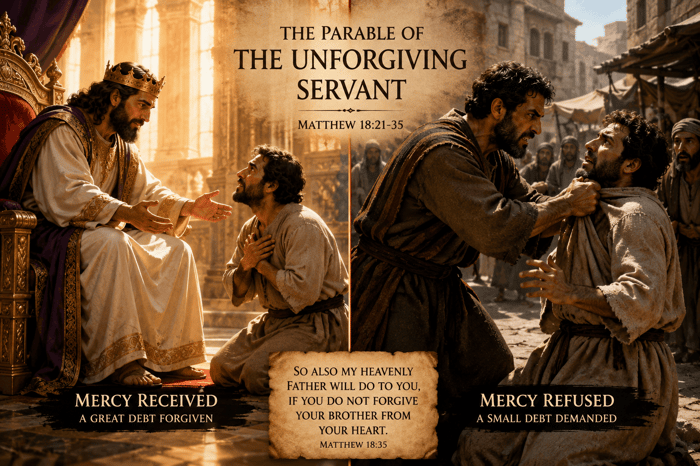
Jesus described a servant who owed his king an enormous debt that he could never repay.
Matthew 18:23-25
“Therefore the Kingdom of Heaven is like a certain king, who wanted to reconcile accounts with his servants. When he had begun to reconcile, one was brought to him who owed him ten thousand talents. But because he couldn’t pay, his lord commanded him to be sold, with his wife, his children, and all that he had, and payment to be made.”
The amount owed was massive. It represented a debt beyond human ability to repay.
The servant begged for mercy.
Matthew 18:26-27
“The servant therefore fell down and kneeled before him, saying, ‘Lord, have patience with me, and I will repay you all!’ The lord of that servant, being moved with compassion, released him and forgave him the debt.”
Instead of demanding payment, the king completely forgave the servant.
This part of the unforgiving servant meaning points to God's mercy toward sinners. Humanity owes a spiritual debt because of sin that cannot be repaid through good works or personal effort.
The Servant Refused to Show Mercy
After receiving forgiveness, the servant immediately found another servant who owed him a much smaller amount.
Matthew 18:28
“But that servant went out and found one of his fellow servants, who owed him one hundred denarii, and he grabbed him and took him by the throat, saying, ‘Pay me what you owe!’”
The second debt was tiny compared to the first one.
The fellow servant begged for patience using almost the same words.
Matthew 18:29-30
“So his fellow servant fell down at his feet and begged him, saying, ‘Have patience with me, and I will repay you!’ He would not, but went and cast him into prison until he should pay back that which was due.”
This shocking response revealed that the servant had experienced mercy without allowing it to change his heart.
What the Unforgiving Servant Teaches About the Human Heart
One major lesson from the parable of the unforgiving servant is that unforgiveness reveals spiritual problems inside the heart.
The servant wanted mercy for himself but refused to give mercy to others.
Jesus often taught that forgiven people should become forgiving people.
Ephesians 4:32
“And be kind to one another, tender hearted, forgiving each other, just as God also in Christ forgave you.”
Colossians 3:13
“Bearing with one another and forgiving each other, if any man has a complaint against any; even as Christ forgave you, so you also do.”
These verses connect God's forgiveness directly to how Christians should treat others.
Mercy and Forgiveness in the Bible
The Bible repeatedly teaches that mercy matters deeply to God.
Micah 7:18
“Who is a God like you, who pardons iniquity, and passes over the disobedience of the remnant of his heritage? He doesn’t retain his anger forever, because he delights in loving kindness.”
God delights in mercy. Christians are called to reflect that same mercy in relationships.
Jesus' parables about forgiveness remind believers that forgiveness is not weakness. It is an act of obedience and faith.
The King Responded With Judgment
When the king learned what the servant had done, he confronted him.
Matthew 18:32-33
“Then his lord called him in and said to him, ‘You wicked servant! I forgave you all that debt because you begged me. Shouldn’t you also have had mercy on your fellow servant, even as I had mercy on you?’”
The king expected mercy to produce mercy.
Then Jesus ended the parable with a serious warning.
Matthew 18:34-35
“His lord was angry, and delivered him to the tormentors until he should pay all that was due to him. So my heavenly Father will also do to you, if you don’t each forgive your brother from your hearts for his misdeeds.”
This does not teach salvation through works. Instead, it shows that a person who truly understands God's mercy will not continue living in hardened unforgiveness.
Forgiveness Does Not Mean Ignoring Sin
Some people misunderstand biblical forgiveness. Forgiveness does not mean pretending sin never happened. It does not always remove consequences or instantly rebuild trust.
Forgiveness means releasing personal revenge and placing justice in God's hands.
Romans 12:19
“Don’t seek revenge yourselves, beloved, but give place to God’s wrath. For it is written, ‘Vengeance belongs to me; I will repay, says the Lord.’”
Christians can forgive while still setting wise boundaries in harmful situations.
Real-Life Application of the Parable
The parable of the unforgiving servant applies to many real-life situations:
| Situation | Biblical Response |
|---|---|
| Family conflict | Choose mercy instead of bitterness |
| Betrayal by a friend | Pray and release revenge to God |
| Church disagreements | Seek reconciliation humbly |
| Ongoing anger | Remember God's forgiveness toward you |
| Personal pride | Reflect on the mercy you have received |
Forgiveness is often difficult because pain is real. Yet Jesus calls believers to respond differently than the world.
Why Forgiveness Matters So Much
Unforgiveness damages relationships, creates bitterness, and harms spiritual growth.
Hebrews 12:15
“Looking carefully lest there be any man who falls short of the grace of God; lest any root of bitterness springing up trouble you, and many be defiled by it.”
Bitterness spreads like roots underground. It affects thoughts, emotions, and relationships over time.
Forgiveness frees believers from carrying constant anger and resentment.
God Forgave an Impossible Debt
The enormous debt in the parable points to humanity's sin before God.
People cannot save themselves through religion, effort, or morality. God provided forgiveness through Jesus Christ.
Romans 5:8
“But God commends his own love toward us, in that while we were yet sinners, Christ died for us.”
Colossians 1:13-14
“Who delivered us out of the power of darkness, and translated us into the Kingdom of the Son of his love; in whom we have our redemption through his blood, the forgiveness of our sins.”
The Gospel stands at the center of this parable. Christians forgive because they have first been forgiven by God.
Signs of an Unforgiving Spirit
The unforgiving servant meaning becomes clearer when believers honestly examine their own hearts.
Common signs of unforgiveness include:
- Constant anger toward someone
- Replaying painful memories repeatedly
- Refusing reconciliation completely
- Enjoying thoughts of revenge
- Speaking bitterly about others
- Resisting prayer for someone who caused pain
Jesus calls believers to forgive “from your hearts,” not merely through outward words.
How Christians Can Grow in Forgiveness
Forgiveness is often a process rather than a single emotional moment.
Here are practical ways believers can grow:
Remember God's Mercy
Reflect often on how much God has forgiven you.
Pray for Strength
Ask God to soften bitterness and help you forgive sincerely.
Renew Your Mind With Scripture
God's Word helps believers think differently.
Refuse Revenge
Leave justice in God's hands rather than seeking personal payback.
Seek Reconciliation Wisely
When possible and safe, pursue peace and restoration.
Jesus Is the Perfect Example of Forgiveness
Jesus showed mercy even while suffering on the cross.
Luke 23:34
“Jesus said, ‘Father, forgive them, for they don’t know what they are doing.’”
This may be the greatest example of mercy and forgiveness in the Bible.
Christians are called to follow Christ's example, even when forgiveness feels difficult.
The Heart of the Parable of the Unforgiving Servant
The main message of the parable of the unforgiving servant is clear: people who receive God's mercy should extend mercy to others, reflecting the forgiveness they have received through Christ..
Forgiveness is not about pretending hurt never happened. It is about reflecting the grace believers have already received through Christ.
Jesus' parables about forgiveness challenge believers to examine their hearts honestly. Are they living with bitterness, or are they allowing God's mercy to shape how they treat others?
The more Christians understand the greatness of God's forgiveness, the more willing they become to forgive others.
FAQs
What is the parable of the unforgiving servant about?
The parable of the unforgiving servant is a teaching from Jesus in Matthew 18 about mercy, forgiveness, and the condition of the heart. Jesus told this story after Peter asked how many times someone should forgive another person.
The parable shows a servant forgiven of a massive debt who then refuses to forgive someone else for a much smaller debt.
“Therefore the Kingdom of Heaven is like a certain king, who wanted to reconcile accounts with his servants.”
— Matthew 18:23
“Shouldn’t you also have had mercy on your fellow servant, even as I had mercy on you?”
— Matthew 18:33
What does the unforgiving servant represent?
The unforgiving servant represents people who receive mercy from God but refuse to show mercy to others. The story reveals how easily human hearts can accept grace personally while withholding forgiveness from those around them.
The unforgiving servant meaning points to the danger of bitterness and pride.
“And be kind to one another, tender hearted, forgiving each other, just as God also in Christ forgave you.”
— Ephesians 4:32
“Bearing with one another and forgiving each other, if any man has a complaint against any; even as Christ forgave you, so you also do.”
— Colossians 3:13
Why did Jesus say to forgive seventy times seven?
Jesus was teaching that forgiveness should not be limited by counting offenses. He was not giving an exact number but showing that forgiveness should become part of a believer's heart and character.
This Matthew 18 forgiveness lesson teaches continual mercy rather than keeping records of wrongs.
“Jesus said to him, ‘I don’t tell you until seven times, but, until seventy times seven.’”
— Matthew 18:22
“Love is patient and is kind. Love doesn’t envy. Love doesn’t brag, is not proud.”
— 1 Corinthians 13:4
Does forgiveness mean ignoring sin or abuse?
No. Biblical forgiveness does not mean pretending sin never happened. It also does not mean removing wise boundaries or allowing ongoing harm.
Forgiveness means releasing personal revenge and trusting God with justice.
“Don’t seek revenge yourselves, beloved, but give place to God’s wrath. For it is written, ‘Vengeance belongs to me; I will repay, says the Lord.’”
— Romans 12:19
“Looking carefully lest there be any man who falls short of the grace of God; lest any root of bitterness springing up trouble you, and many be defiled by it.”
— Hebrews 12:15
Why is forgiveness so important in Christianity?
Forgiveness matters because Christians have been forgiven by God through Jesus Christ. Mercy and forgiveness in the Bible are connected directly to the Gospel.
Believers are called to reflect the same grace they have received.
“Who is a God like you, who pardons iniquity, and passes over the disobedience of the remnant of his heritage? He doesn’t retain his anger forever, because he delights in loving kindness.”
— Micah 7:18
“But God commends his own love toward us, in that while we were yet sinners, Christ died for us.”
— Romans 5:8
What are signs of an unforgiving heart?
An unforgiving spirit often reveals itself through bitterness, anger, revenge, or refusing reconciliation completely.
The parable of the unforgiving servant warns believers against allowing bitterness to control their hearts.
Common signs include:
- Constant anger toward someone
- Replaying hurt repeatedly
- Speaking bitterly
- Refusing to pray for someone
- Enjoying thoughts of revenge
“So my heavenly Father will also do to you, if you don’t each forgive your brother from your hearts for his misdeeds.”
— Matthew 18:35
“Create in me a clean heart, O God. Renew a right spirit within me.”
— Psalm 51:10
How does the parable of the unforgiving servant connect to salvation?
The parable of the unforgiving servant points directly to the Gospel because the enormous debt represents humanity's sin before God. People cannot repay this spiritual debt through good works or personal effort.
God provided forgiveness through Jesus Christ, who died and rose again to save sinners.
The servant in the parable was forgiven an impossible debt, just as believers are forgiven through Christ. Christians forgive others because they have first received mercy from God.
“Who delivered us out of the power of darkness, and translated us into the Kingdom of the Son of his love; in whom we have our redemption through his blood, the forgiveness of our sins.”
— Colossians 1:13-14
“For God so loved the world, that he gave his one and only Son, that whoever believes in him should not perish, but have eternal life.”
— John 3:16
“Therefore if anyone is in Christ, he is a new creation. The old things have passed away. Behold, all things have become new.”
— 2 Corinthians 5:17