Table of Contents
- 1. Ezekiel Was Both a Prophet and a Priest
- 2. He Was Taken to Babylon in the First Deportation
- 3. Ezekiel Had Powerful Visions
- 4. He Was Called to Be a Watchman
- 5. He Acted Out His Messages
- 6. He Was Not Allowed to Mourn His Wife’s Death
- 7. He Prophesied the Fall of Jerusalem
- 8. He Preached Hope and Restoration
- 9. He Spoke of a New Temple and a New Land
- 10. His Name Means “God Strengthens”
- Summary Table
Ezekiel was a prophet during a time of exile and sorrow. His visions were vivid, symbolic, and full of meaning. God used Ezekiel to speak to the people of Israel when they were far from home and struggling to keep their faith alive. Here are ten interesting facts about Ezekiel and his role in the Bible.
1. Ezekiel Was Both a Prophet and a Priest
Ezekiel came from a priestly family, which meant he was trained in temple duties. But God called him to be a prophet while in exile.
Ezekiel 1:3 – “The word of the Lord came expressly unto Ezekiel the priest, the son of Buzi, in the land of the Chaldeans by the river Chebar…”
This unique background helped him understand both God’s law and His vision for the people.
2. He Was Taken to Babylon in the First Deportation
Ezekiel was one of the captives taken to Babylon during King Jehoiachin’s exile, around 597 BC.
2 Kings 24:14 – “And he carried away all Jerusalem… even ten thousand captives, and all the craftsmen and smiths…”
Ezekiel lived among the exiles near the Chebar River in Babylon.
3. Ezekiel Had Powerful Visions
Ezekiel’s book opens with an incredible vision of heavenly beings and wheels full of eyes.
Ezekiel 1:15–21 describes “wheels within wheels” and “the spirit of the living creatures was in the wheels.”
This vision showed God’s presence and power, even outside of Jerusalem.
4. He Was Called to Be a Watchman
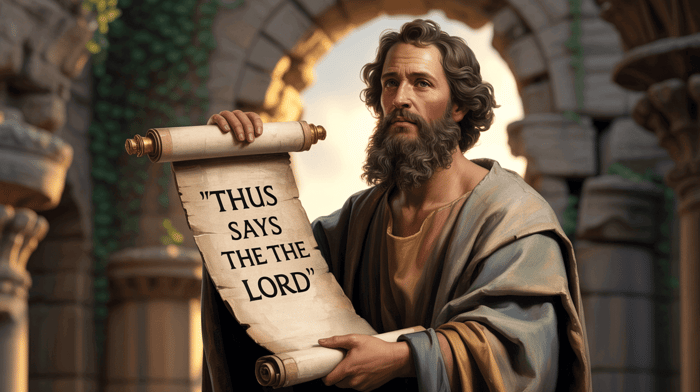
God gave Ezekiel the job of being a “watchman” for Israel, warning them of judgment and urging them to repent.
Ezekiel 3:17 – “Son of man, I have made thee a watchman unto the house of Israel…”
His role was serious—if he didn’t warn the people, their blood would be on his hands.
5. He Acted Out His Messages
Ezekiel used dramatic signs and actions to share God’s message. He lay on his side for hundreds of days, shaved his head, and cooked food over dung as symbols of Israel’s sins and coming judgment.
Ezekiel 4:4–5 – “Lie thou also upon thy left side… and bear the iniquity of the house of Israel…”
These signs made God’s word unforgettable.
6. He Was Not Allowed to Mourn His Wife’s Death
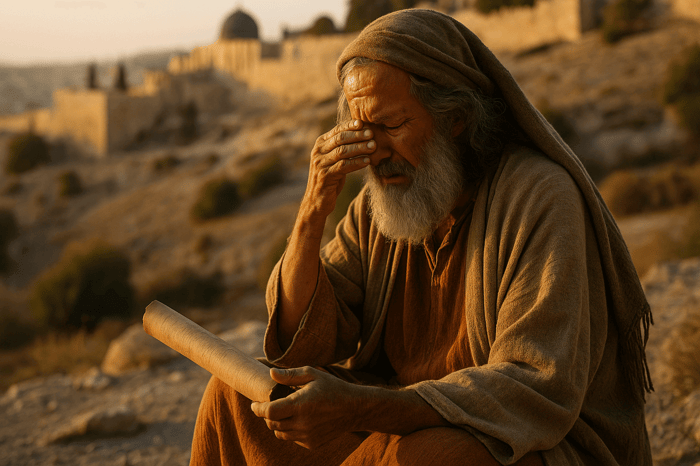
God told Ezekiel not to publicly mourn when his wife died. It was a sign of the sorrow that would come when the temple was destroyed.
Ezekiel 24:16–17 – “Son of man, behold, I take away from thee the desire of thine eyes… yet neither shalt thou mourn nor weep…”
This message warned the people of the deep pain that was coming.
7. He Prophesied the Fall of Jerusalem
Even though Ezekiel was in Babylon, he clearly described the destruction of Jerusalem before it happened.
Ezekiel 5:12 – “A third part of thee shall die with the pestilence… and I will scatter a third part into all the winds…”
His prophecy came true in 586 BC when the Babylonians destroyed the city and the temple.
8. He Preached Hope and Restoration
After judgment came messages of hope. Ezekiel saw a future where God would restore His people and bring them back to life.
Ezekiel 37:5 – “Behold, I will cause breath to enter into you, and ye shall live.”
The vision of dry bones rising again gave hope to the exiles.
9. He Spoke of a New Temple and a New Land
Chapters 40–48 of Ezekiel describe a new temple and restored land with great detail.
Ezekiel 40:2 – “In the visions of God brought he me into the land of Israel, and set me upon a very high mountain…”
This pointed to a future time of peace and worship.
10. His Name Means “God Strengthens”
The name “Ezekiel” (Hebrew: יְחֶזְקֵאל, Yechezkel) means “God strengthens.” That meaning fits his mission—God gave him strength to speak truth during dark times.
Ezekiel 2:6 – “Be not afraid of them, neither be afraid of their words… for thou dost dwell among scorpions…”
God strengthened Ezekiel to stand firm, even when no one wanted to listen.
Summary Table
| Fact | Bible Reference | Key Idea |
|---|---|---|
| Priest and Prophet | Ezekiel 1:3 | Ezekiel came from a priestly line |
| Taken to Babylon | 2 Kings 24:14 | Exiled with the first wave |
| Heavenly Visions | Ezekiel 1:15–21 | Wheels, creatures, and God's glory |
| Watchman for Israel | Ezekiel 3:17 | Responsible for warning the people |
| Acted Out Prophecies | Ezekiel 4:4–5 | Symbolic acts to share God's message |
| Did Not Mourn His Wife | Ezekiel 24:16–17 | Personal loss used as a prophetic sign |
| Prophesied Jerusalem’s Fall | Ezekiel 5:12 | Predicted the city's destruction |
| Vision of Dry Bones | Ezekiel 37:5 | Hope of national revival |
| New Temple and Land | Ezekiel 40:2 | Vision of restoration and worship |
| Name Means “God Strengthens” | Ezekiel 2:6 | Encouragement in his tough calling |