Table of Contents
- The Humble Beginning of King David
- King David and Goliath: Faith Over Fear
- The Rise and Trials of King David
- The Sin of King David and the Path of Repentance
- King David as Worshiper and Psalmist
- The Covenant Promise to King David
- The Character of King David
- What King David Teaches Us Today
- The Final Days of King David
- Why King David Still Matters
- FAQs
King David stands as one of the most important figures in the Bible. When we read about him, we see courage, failure, worship, repentance, and deep faith all woven into one life. His story stretches from quiet fields in Bethlehem to the throne of Israel. He was a shepherd, a warrior, a poet, and a king. Yet above all, he was a man who sought the heart of God.
His life shows that God does not look at the outside first. God sees the heart.
The Humble Beginning of King David
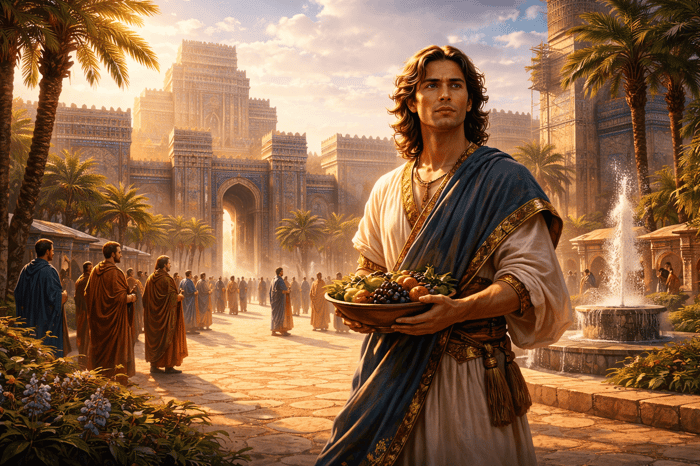
He was the youngest son of Jesse. In his culture, the youngest son was not expected to become king. When the prophet Samuel came to anoint a new ruler, even David’s own father did not bring him forward at first.
1 Samuel 16:7 (ESV)
But the Lord said to Samuel, “Do not look on his appearance or on the height of his stature, because I have rejected him. For the Lord sees not as man sees: man looks on the outward appearance, but the Lord looks on the heart.”
God chose David not because of his height, strength, or position. God chose him because of his heart.
Before the crown, there were sheep. David spent long hours in the fields. There he learned to trust God. He protected the flock from lions and bears. Those quiet years shaped his courage. The battlefield did not build his faith; the pasture did.
Many believers today also live in quiet seasons. Work feels small. Life feels unseen. Yet those hidden seasons often prepare us for greater responsibility.
Lessons from David’s early life:
- God values the heart over appearance
- Private faith prepares us for public calling
- Small tasks matter in God’s plan
King David and Goliath: Faith Over Fear
The story of David and Goliath is known even outside the church. Israel’s army was afraid. The giant Goliath mocked them daily. No soldier stepped forward.
Then David arrived.
He was not trained as a warrior. He carried no sword. Instead, he trusted the Lord.
1 Samuel 17:45 (ESV)
Then David said to the Philistine, “You come to me with a sword and with a spear and with a javelin, but I come to you in the name of the Lord of hosts, the God of the armies of Israel, whom you have defied.
He did not focus on the size of the giant. He focused on the greatness of God. That shift in vision changed everything.
This moment teaches a simple truth: courage grows when faith is stronger than fear.
| Advantage of David’s Faith | Challenge He Faced |
|---|---|
| Trusted God’s power | Faced a giant soldier |
| Acted with bold obedience | Risked his life |
| Inspired Israel | Stood alone at first |
Faith does not remove risk. It changes how we respond to it.
The Rise and Trials of King David
After defeating Goliath, David became known across Israel. Songs were sung about him. But fame brought danger. King Saul grew jealous and sought to kill him.
Instead of taking revenge when he had the chance, David spared Saul’s life more than once.
1 Samuel 24:6 (ESV)
He said to his men, “The Lord forbid that I should do this thing to my lord, the Lord's anointed, to put out my hand against him, seeing he is the Lord's anointed.”
He respected God’s authority, even when leadership treated him unfairly. That restraint showed spiritual maturity.
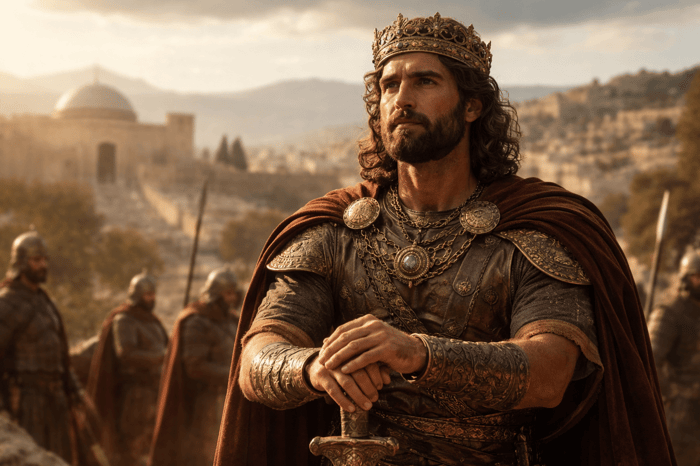
Eventually, after years of running and hiding, David became king. He united the tribes of Israel. He brought the Ark of the Covenant to Jerusalem. He made the city the center of worship.
2 Samuel 5:4 (ESV)
David was thirty years old when he began to reign, and he reigned forty years.
David’s leadership brought stability and growth. Yet even strong leaders remain human.
The Sin of King David and the Path of Repentance
One of the hardest chapters in Scripture is David’s sin with Bathsheba. While his army fought, David stayed home. He saw Bathsheba, committed adultery, and later arranged the death of her husband Uriah.
2 Samuel 11:2–3 (ESV)
It happened, late one afternoon, when David arose from his couch and was walking on the roof of the king's house, that he saw from the roof a woman bathing; and the woman was very beautiful. And David sent and inquired about the woman. And one said, “Is not this Bathsheba, the daughter of Eliam, the wife of Uriah the Hittite?”
This moment reveals that no one is beyond temptation. Even he failed deeply.
But the story does not end in silence. The prophet Nathan confronted him. David confessed.
Psalm 51:10 (ESV)
Create in me a clean heart, O God,
and renew a right spirit within me.
Psalm 51 shows true repentance. David did not excuse himself. He did not blame others. He asked for a clean heart.
There are both strengths and weaknesses in this chapter of his life:
| Strength | Weakness |
|---|---|
| Confessed sin | Misused power |
| Accepted correction | Acted selfishly |
| Sought restoration | Ignored warning signs |
Sin brought consequences. His family experienced turmoil. Yet God’s mercy remained. This balance of justice and grace is central to David’s story.
King David as Worshiper and Psalmist
Many of the Psalms were written by David. These songs reveal his inner life. He praised God in victory. He cried out in distress. He asked hard questions. He celebrated forgiveness.
Psalm 23:1 (ESV)
The Lord is my shepherd; I shall not want.
Psalm 23 shows David’s heart as a shepherd who knew the Shepherd. He saw God as guide, protector, and provider.
Psalm 18:2 (ESV)
The Lord is my rock and my fortress and my deliverer,
my God, my rock, in whom I take refuge,
my shield, and the horn of my salvation, my stronghold.
His worship was honest. He did not hide fear or sorrow. He brought every emotion before God.
That honesty makes his prayers relatable. We do not need perfect words. We need a sincere heart.
Themes in David’s Psalms:
- Trust in hardship
- Joy in God’s presence
- Confession and forgiveness
- Praise in battle
The Covenant Promise to King David
One of the most important moments in David’s reign came when God made a covenant with him. David wanted to build a temple for the Lord. Instead, God promised to build David’s house — a lasting dynasty.
2 Samuel 7:16 (ESV)
And your house and your kingdom shall be made sure forever before me. Your throne shall be established forever.’”
This promise pointed beyond David himself. It looked ahead to the Messiah. Jesus Christ is often called the Son of David.
Matthew 1:1 (ESV)
The book of the genealogy of Jesus Christ, the son of David, the son of Abraham.
Through his line, God fulfilled His promise of salvation. This shows that God’s plans stretch across generations.
David’s kingdom was earthly and limited. Christ’s kingdom is eternal.
The Character of King David
Scripture calls David “a man after God’s own heart.”
Acts 13:22 (ESV)
And when he had removed him, he raised up David to be their king, of whom he testified and said, ‘I have found in David the son of Jesse a man after my heart, who will do all my will.’
This phrase does not mean David was perfect. It means he desired God’s will. When he sinned, he returned. When he struggled, he prayed. When he rejoiced, he worshiped.
There are both strengths and struggles in his character:
| Strengths of King David | Struggles of King David |
|---|---|
| Courage in battle | Moral failure |
| Deep worship | Family conflict |
| Willing repentance | Poor decisions at times |
| Trust in God’s promises | Leadership pressure |
This balance makes his life real. He was not a legend carved in stone. He was a man shaped by grace.
What King David Teaches Us Today
His life offers guidance for daily faith.
- Guard the heart.
Private choices shape public life. - Respond to correction.
Repentance restores fellowship with God. - Trust God’s timing.
David waited years before wearing the crown. - Worship in every season.
Praise is not only for victory days.
Many people today face pressure, temptation, and fear. David faced the same. His story reminds us that faith is not the absence of failure. Faith is the decision to return to God.
The Final Days of King David
Near the end of his life, David prepared the way for his son Solomon to build the temple. He gathered materials and gave instructions.
1 Chronicles 28:9 (ESV)
“And you, Solomon my son, know the God of your father and serve him with a whole heart and with a willing mind, for the Lord searches all hearts and understands every plan and thought. If you seek him, he will be found by you, but if you forsake him, he will cast you off forever.
His final charge urged wholehearted devotion to God.
He died after a long reign. Scripture honors him as a significant ruler in Israel’s history.
1 Kings 2:10–11 (ESV)
Then David slept with his fathers and was buried in the city of David. And the time that David reigned over Israel was forty years. He reigned seven years in Hebron and thirty-three years in Jerusalem.
Though his earthly kingdom ended, his spiritual legacy continued.
Why King David Still Matters
He remains central in biblical history because his life reflects both human weakness and divine mercy. His story connects the Old Testament to the New. It points to Christ. It reminds believers that God works through imperfect people.
His journey from shepherd to king shows that calling begins with faithfulness. His repentance shows that failure is not final. His worship shows that God desires the heart.
When we read about King David, we are not reading distant history. We are reading about faith under pressure, leadership under strain, and grace that covers sin.
His life asks each reader a question: Will we seek God’s heart, even after we stumble?
FAQs
Why was King David chosen to be king?
God chose him because of his heart, not his outward appearance or status. While others saw a young shepherd, the Lord saw faith and obedience.
1 Samuel 16:7 (WEB)
But Yahweh said to Samuel, “Don’t look on his face, or on the height of his stature, because I have rejected him; for Yahweh sees not as man sees. For man looks at the outward appearance, but Yahweh looks at the heart.”
How did King David defeat Goliath?
He trusted in the power of God rather than weapons or armor. His confidence rested in the Lord, not in human strength.
1 Samuel 17:45 (WEB)
Then David said to the Philistine, “You come to me with a sword, with a spear, and with a javelin; but I come to you in the name of Yahweh of Armies, the God of the armies of Israel, whom you have defied.”
What was King David’s greatest sin?
His sin with Bathsheba and the arranged death of Uriah marked a serious moral failure. This event brought deep consequences to his family and kingdom.
2 Samuel 11:2–3 (WEB)
It happened at evening that David arose from off his bed and walked on the roof of the king’s house. From the roof he saw a woman bathing; and the woman was very beautiful to look at.
David sent and inquired after the woman. One said, “Isn’t this Bathsheba, the daughter of Eliam, Uriah the Hittite’s wife?”
Did King David repent of his sin?
Yes. When confronted by the prophet Nathan, he confessed and asked God to cleanse his heart. Psalm 51 records his prayer of repentance.
Psalm 51:10 (WEB)
Create in me a clean heart, O God. Renew a right spirit within me.
What covenant did God make with King David?
God promised that his throne would be established forever. This covenant pointed ahead to Jesus Christ, the eternal King.
2 Samuel 7:16 (WEB)
Your house and your kingdom shall be made sure forever before you. Your throne shall be established forever.
Why is King David called a man after God’s own heart?
This title reflects his desire to follow God’s will. Though he sinned, he returned to the Lord in humility and faith.
Acts 13:22 (WEB)
When he had removed him, he raised up David to be their king, to whom he also testified, “I have found David the son of Jesse, a man after my heart, who will do all my will.”