Table of Contents
- What Is Hell in the Bible?
- What Is the Lake of Fire in the Bible?
- Hell vs Lake of Fire: What Is the Difference?
- When Does the Lake of Fire Come Into Play?
- Who Is Thrown Into the Lake of Fire?
- Why Does the Bible Use Both Terms?
- Is the Lake of Fire Eternal?
- What Does This Teach About God’s Justice?
- The Gospel Connection: Why This Matters
- Real-Life Application: What Should You Do?
- A Simple Summary of Hell vs Lake of Fire
- Final Thoughts
- FAQs
Many people ask about hell vs lake of fire and whether they are the same thing. The Bible uses both terms, but they are not exactly identical. Understanding the difference helps clarify what happens after death, what judgment looks like, and how the final outcome is described in Scripture.
This topic can feel confusing because the Bible speaks about present conditions and future judgment. But when we look closely, a clear picture begins to form.
What Is Hell in the Bible?
In simple terms, “hell” often refers to a place of temporary holding before final judgment. In the New Testament, this idea is sometimes connected to “Hades.”
“In Hades, he lifted up his eyes, being in torment…” — Luke 16:23 (WEB)
This passage shows that hell is a place of conscious awareness and suffering. It is not just symbolic.
Key Ideas About Hell
- It is a real place
- It involves separation from comfort and peace
- It exists before the final judgment
- It is not the final destination
Another verse shows that hell itself will not last forever in its current form:
“Death and Hades were thrown into the lake of fire…” — Revelation 20:14 (WEB)
This means hell is temporary in the sense that it leads to something final.
What Is the Lake of Fire in the Bible?
The lake of fire is described as the final place of judgment. It appears clearly in the book of Revelation.
“The devil who deceived them was thrown into the lake of fire and sulfur…” — Revelation 20:10 (WEB)
This is not just a temporary place. It is the final and eternal state.
Another verse explains its importance:
“This is the second death, the lake of fire.” — Revelation 20:14 (WEB)
The phrase “second death” shows that this is the ultimate outcome after judgment.
Hell vs Lake of Fire: What Is the Difference?
To understand hell vs lake of fire, it helps to compare them side by side.
Comparison Table
| Feature | Hell (Hades) | Lake of Fire |
|---|---|---|
| Timing | Present state | Future final state |
| Purpose | Temporary holding | Final judgment |
| Duration | Temporary | Eternal |
| Mentioned in | Luke 16, others | Revelation 20 |
| End Result | Cast into lake of fire | Remains forever |
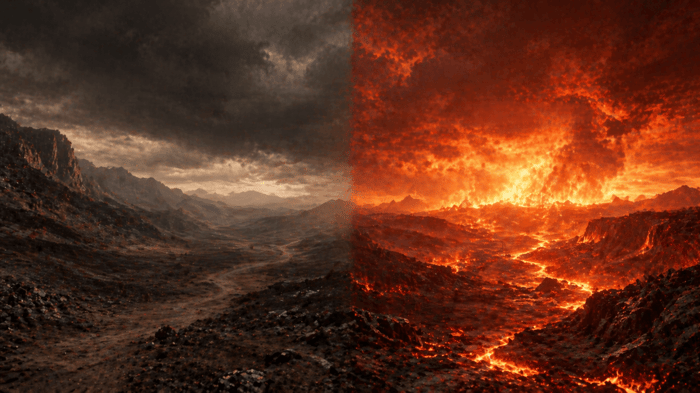
This table shows the key difference between hell and lake of fire in the Bible. One is temporary, the other is final.
When Does the Lake of Fire Come Into Play?
The lake of fire appears at the final judgment, often called the “Great White Throne.”
“I saw a great white throne… The dead were judged out of the things which were written in the books…” — Revelation 20:11–12 (WEB)
At this moment, all people stand before God.
Then comes the final step:
“If anyone was not found written in the book of life, he was cast into the lake of fire.” — Revelation 20:15 (WEB)
This shows that the lake of fire is the final destination after judgment is complete.
Who Is Thrown Into the Lake of Fire?
The Bible clearly explains who faces this final judgment.
According to Scripture, this includes:
- Satan and his followers
- Death and Hades
- Those not found in the book of life
- Those who reject God
“But for the cowardly, unbelieving, sinners… their part is in the lake that burns with fire and sulfur…” — Revelation 21:8 (WEB)
This connects directly to the idea of final judgment in the Bible.
Why Does the Bible Use Both Terms?
Understanding hell vs lake of fire requires seeing the timeline of events.
Simple Timeline
- Death occurs
- A temporary state (hell/Hades)
- Final judgment
- Lake of fire (final state)
The Bible uses both terms to describe different stages, not to confuse readers.
Is the Lake of Fire Eternal?
Yes. The Bible describes the lake of fire as eternal.
“They will be tormented day and night forever and ever.” — Revelation 20:10 (WEB)
This shows that the lake of fire is not temporary like hell. It is the final and lasting judgment.
What Does This Teach About God’s Justice?
The difference between hell and the lake of fire shows that God’s judgment is ordered and fair.
Key Truths About Judgment
- God does not judge randomly
- There is a process leading to final judgment
- Justice is complete and final
- Sin is fully dealt with
“He has appointed a day in which he will judge the world in righteousness…” — Acts 17:31 (WEB)
God’s justice is not rushed. It is complete and perfect.
The Gospel Connection: Why This Matters
Understanding hell vs lake of fire is not just about judgment. It is about why salvation is needed.
The Bible teaches:
- God created people for relationship
- Sin broke that relationship
- Judgment is the result of sin
- Jesus came to restore what was lost
“For God so loved the world, that he gave his one and only Son, that whoever believes in him should not perish, but have eternal life.” — John 3:16 (WEB)
This verse shows that the final outcome is not fixed for everyone. There is a way to be saved.
Real-Life Application: What Should You Do?
This topic is not just about future events. It affects how you live today.
Important Takeaways
- Life does not end at death
- Judgment is real and certain
- Choices matter now
- Salvation is available
Questions to Consider
- Are you prepared for judgment?
- Have you trusted Christ?
- Do you understand the seriousness of sin?
These questions are not meant to scare, but to help you think clearly.
A Simple Summary of Hell vs Lake of Fire
Hell (Hades)
- Temporary place after death
- Holds people before judgment
- Will be thrown into the lake of fire
Lake of Fire
- Final place of judgment
- Eternal and unchanging
- The ultimate result of rejecting God
Final Thoughts
The Bible makes a clear distinction between hell vs lake of fire. Hell is a temporary state, while the lake of fire is the final and eternal judgment.
This teaching shows both the seriousness of sin and the importance of salvation. God’s justice is real, but so is His mercy.
The same Bible that warns about judgment also offers hope through Jesus Christ.
FAQs
What is the difference between hell and the lake of fire in the Bible?
The Bible shows that hell, often called Hades, is a temporary place after death, while the lake of fire is the final and eternal judgment.
“Death and Hades were thrown into the lake of fire. This is the second death, the lake of fire.” — Revelation 20:14 (WEB)
Is hell the final destination according to Scripture?
No. Hell is not the final state. It is a temporary place before the final judgment, after which comes the lake of fire.
“If anyone was not found written in the book of life, he was cast into the lake of fire.” — Revelation 20:15 (WEB)
What does the lake of fire mean in Revelation?
The lake of fire represents the final and complete judgment of all who reject God. It is described as the “second death.”
“This is the second death, the lake of fire.” — Revelation 20:14 (WEB)
Is the lake of fire eternal?
Yes, the Bible teaches that the lake of fire is eternal and unending, unlike the temporary state of hell.
“They will be tormented day and night forever and ever.” — Revelation 20:10 (WEB)
Who is thrown into the lake of fire?
Scripture says that Satan, death, and all who are not found in the book of life will face this final judgment.
“But for the cowardly, unbelieving, sinners… their part is in the lake that burns with fire and sulfur…” — Revelation 21:8 (WEB)
Why does the Bible describe both hell and the lake of fire?
The Bible uses both terms to show a process of judgment—first a temporary state after death, then a final and eternal outcome.
“It is appointed for men to die once, and after this, judgment.” — Hebrews 9:27 (WEB)
How does the question “hell vs lake of fire” connect to the Gospel?
Understanding hell vs lake of fire shows why salvation is so important. If judgment is real and final, then people need a way to be rescued. The Bible teaches that sin separates us from God, but He made a way through Jesus Christ to restore that relationship.
“For God so loved the world, that he gave his one and only Son, that whoever believes in him should not perish, but have eternal life.” — John 3:16 (WEB)
This means the difference between hell and the lake of fire is not just about timing—it points to the urgency of trusting Christ for eternal life.