
Table of Contents
- God's Faithfulness in Salvation Begins with His Promise
- Why Salvation Was Needed
- God's Promises Fulfilled in Christ
- God's Covenant Faithfulness and the Gospel
- Fulfilled Prophecy About Jesus
- God's Mercy and Faithfulness Meet at the Cross
- The Resurrection Confirms God's Promise
- God's Promise of Eternal Life
- How Salvation Shows That God Keeps His Promises
- God's Faithfulness Gives Assurance to Believers
- Responding to God's Faithfulness in the Gospel
- Resting in God's Faithfulness in Salvation
- FAQs
God's faithfulness in salvation is seen most clearly in the Gospel of Jesus Christ. From the first promise of rescue after sin entered the world to the death and resurrection of Christ, Scripture shows that God keeps His Word.
Salvation is not a backup plan. It is the faithful work of God to redeem sinners through His Son.
The Bible tells one united story: mankind sinned, God promised a Savior, and Jesus fulfilled that promise.
I will put hostility between you and the woman,
and between your offspring and her offspring.
He will bruise your head,
and you will bruise his heel.
Genesis 3:15 (WEB)
God's Faithfulness in Salvation Begins with His Promise
God's faithfulness in salvation begins in Genesis. After Adam and Eve sinned, God did not leave humanity without hope.
Sin brought separation, shame, death, and judgment. Yet even in that dark moment, God promised that the offspring of the woman would defeat the serpent.
This first Gospel promise points forward to Jesus Christ. From the beginning, God planned redemption through Christ.
For the Son of Man came to seek and to save that which was lost.
Luke 19:10 (WEB)
God's plan of salvation was not based on human strength. It was rooted in God's mercy, faithfulness, and promise.
Why Salvation Was Needed
To understand God's faithfulness in the Gospel, we must first understand why salvation was needed.
Humanity was created by God and accountable to Him. But sin entered the world through disobedience. Sin is not only broken behavior. It is rebellion against a holy God.
for all have sinned, and fall short of the glory of God;
Romans 3:23 (WEB)
Because of sin, mankind could not restore itself to God. We needed more than moral improvement. We needed redemption through Christ.
For the wages of sin is death, but the free gift of God is eternal life in Christ Jesus our Lord.
Romans 6:23 (WEB)
This is why Jesus came. Salvation through Jesus Christ is God's faithful answer to mankind's deepest need.
God's Promises Fulfilled in Christ
The Bible shows God's promises fulfilled in Christ. God promised blessing through Abraham's offspring, a King from David's line, a suffering servant, and a new covenant.
Jesus fulfills these promises.
Now the Lord said to Abram, “Go from your country and your kindred and your father's house to the land that I will show you. And I will make of you a great nation, and I will bless you and make your name great, so that you will be a blessing. I will bless those who bless you, and him who dishonors you I will curse, and in you all the families of the earth shall be blessed.”
Genesis 12:1-3 (ESV)
God's promise to Abraham was not small. Through Abraham's offspring, blessing would come to the nations.
That blessing reaches its fullness in Jesus.
Now the promises were spoken to Abraham and to his offspring. He doesn’t say, “To descendants”, as of many, but as of one, “To your offspring”, which is Christ.
Galatians 3:16 (WEB)
God keeps His promises. The Gospel proves it.
God's Covenant Faithfulness and the Gospel
God's covenant faithfulness means He remains loyal to His promises. Even when people fail, God does not fail.
Throughout Scripture, God makes promises and keeps them. He promised a people, a land, a kingdom, a Savior, and a new covenant.
| Promise Theme | Fulfillment in Christ |
|---|---|
| Offspring of the woman | Jesus defeats sin, Satan, and death |
| Promise to Abraham | Blessing comes to the nations |
| Davidic King | Jesus reigns as the eternal King |
| Suffering Servant | Jesus dies for sinners |
| New Covenant | Forgiveness comes through His blood |
God's faithfulness is not vague. It is seen in real promises fulfilled in history.
“Behold, the days are coming, declares the Lord, when I will make a new covenant with the house of Israel and the house of Judah,
Jeremiah 31:31 (ESV)
Jesus connects this new covenant directly to His saving death.
He took the cup in the same way after supper, saying, “This cup is the new covenant in my blood, which is poured out for you.”
Luke 22:20 (WEB)
The faithfulness of God in the Gospel is covenant faithfulness. God's faithfulness in salvation is seen in the fact that God promised redemption, and Christ secured it.
Fulfilled Prophecy About Jesus
Fulfilled prophecy about Jesus shows that God was not guessing. His plan was certain.
The Old Testament pointed to the coming Messiah in many ways. It spoke of His birth, suffering, rejection, death, and victory.
Isaiah described a servant who would suffer for the sins of others.
But he was pierced for our transgressions.
He was crushed for our iniquities.
The punishment that brought our peace was on him;
and by his wounds we are healed.
Isaiah 53:5 (WEB)
This helps answer the question, why did Jesus die for our sins?
Jesus died because sinners needed a substitute. He took the punishment we deserved so that we could receive peace with God.
The cross was not an accident. It was the faithful fulfillment of God's saving plan.
God's Mercy and Faithfulness Meet at the Cross
God's mercy and faithfulness meet at the cross of Christ. Mercy means God shows compassion to sinners who do not deserve it. Faithfulness means He keeps His promises and remains true to His holy character.
At the cross, God did not ignore sin. He judged sin in Christ so that sinners could be forgiven.
But God commends his own love toward us, in that while we were yet sinners, Christ died for us.
Romans 5:8 (WEB)
This is the heart of the Gospel and God's faithfulness. Jesus did not die for people who had made themselves worthy. He died for sinners.
Salvation is grace, not a reward for religious effort.
for by grace you have been saved through faith, and that not of yourselves; it is the gift of God,
not of works, that no one would boast.
Ephesians 2:8-9 (WEB)
Because salvation is God's work, believers can rest in God's promise.
The Resurrection Confirms God's Promise
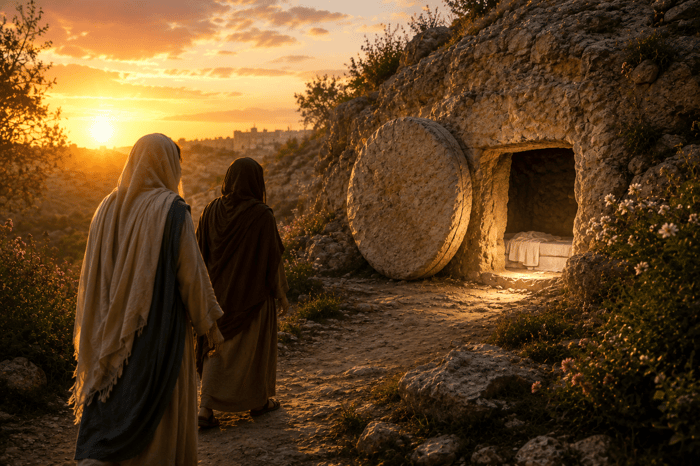
The resurrection confirms that Jesus finished the work of salvation. If Christ had stayed in the grave, there would be no Gospel hope.
But Jesus rose from the dead.
He is not here, but is risen. Remember what he told you when he was still in Galilee,
saying that the Son of Man must be delivered up into the hands of sinful men, and be crucified, and the third day rise again?
Luke 24:6-7 (WEB)
The resurrection shows that God accepted the sacrifice of Christ. It also shows that death does not have the final word.
God's promise of eternal life is secure because Jesus lives.
Because I live, you will live also.
John 14:19 (WEB)
This is why the Gospel and God's faithfulness belong together. The resurrection proves that God's saving promise stands.
God's Promise of Eternal Life
God's promise of eternal life is not based on human performance. It is given through Jesus Christ to all who believe.
For God so loved the world, that he gave his one and only Son, that whoever believes in him should not perish, but have eternal life.
John 3:16 (WEB)
Eternal life is more than living forever. It is restored relationship with God through Christ.
The believer is forgiven, adopted, made new, and given hope beyond death.
This is the promise which he promised us, the eternal life.
1 John 2:25 (WEB)
God's faithfulness in salvation means He will not abandon those who belong to Christ. The same God who saves also keeps.
How Salvation Shows That God Keeps His Promises
God keeps His promises in ways that are deeper than we often expect.
Many people expected a political deliverer. God sent a crucified and risen Savior. Many expected immediate victory. God brought victory through suffering, death, and resurrection.
This shows that God's promises are always true, even when His methods surprise us.
Here are several ways salvation reveals God's faithfulness:
- God promised a Savior and sent Jesus.
- God promised blessing to the nations and opened salvation to all who believe.
- God promised a new covenant and gave forgiveness through Christ's blood.
- God promised victory over sin and death and raised Jesus from the grave.
- God promised eternal life and gives it through His Son.
He who calls you is faithful, who will also do it.
1 Thessalonians 5:24 (WEB)
If God has been faithful to save, He can be trusted in every other promise.
God's Faithfulness Gives Assurance to Believers
Believers do not have assurance because their faith is perfect. They have assurance because God is faithful.
This matters because Christians still struggle with sin, weakness, fear, and doubt. But salvation rests on Christ's finished work, not on the believer's flawless strength.
If we are faithless, he remains faithful; for he can’t deny himself.
2 Timothy 2:13 (WEB)
This does not excuse careless living. It gives hope to repentant believers who know they need grace.
God's faithfulness in salvation gives confidence that He will complete what He began.
being confident of this very thing, that he who began a good work in you will complete it until the day of Jesus Christ.
Philippians 1:6 (WEB)
The God who saves is also the God who sanctifies and keeps His people.
Responding to God's Faithfulness in the Gospel
The right response to God's faithfulness in the Gospel is repentance, faith, worship, and obedience.
The Gospel is not only information to study. It is good news to believe.
“The time is fulfilled, and God’s Kingdom is at hand! Repent, and believe in the Good News.”
Mark 1:15 (WEB)
To trust in Christ is to stop trusting in yourself. It is to receive salvation as a gift from God.
For the believer, the Gospel also becomes a daily anchor. When life is uncertain, God's faithfulness in salvation reminds us that God keeps His promises.
When guilt rises, Christ's blood speaks a better word.
When fear comes, the empty tomb reminds us that God has already defeated our greatest enemy.
Resting in God's Faithfulness in Salvation
God's faithfulness in salvation is the clearest proof that God keeps His promises. He promised redemption, sent His Son, judged sin at the cross, raised Christ from the dead, and gives eternal life to all who believe.
The Gospel reveals that God is not slow, careless, or uncertain. He is faithful.
Because Jesus has come, died, and risen, sinners can be saved.
And because God kept His greatest promise in Christ, His people can trust Him with every promise that remains.
FAQs
What does God's faithfulness in salvation mean?
God's faithfulness in salvation means that God keeps His promises to save sinners through Jesus Christ. From the first promise of a Savior in Genesis to the resurrection of Christ, God has faithfully accomplished His plan of redemption.
"He who calls you is faithful, who will also do it."
1 Thessalonians 5:24 (WEB)
How does the Gospel demonstrate God's faithfulness?
The Gospel demonstrates God's faithfulness because God promised throughout Scripture that He would provide a Savior. Jesus fulfilled those promises through His perfect life, sacrificial death, and victorious resurrection.
"For however many are the promises of God, in him is the 'Yes.' Therefore also through him is the 'Amen,' to the glory of God through us."
2 Corinthians 1:20 (WEB)
What promises did God fulfill through Jesus Christ?
God fulfilled many promises through Jesus, including the promise of a Savior, a King from David's line, a suffering servant who would bear sin, and a new covenant that brings forgiveness.
"Now the promises were spoken to Abraham and to his offspring. He doesn't say, 'To descendants', as of many, but as of one, 'To your offspring', which is Christ."
Galatians 3:16 (WEB)
Why did Jesus have to die for our sins?
Sin separates people from God and brings judgment. Jesus died as a substitute for sinners, taking the punishment we deserved so that we could be forgiven and reconciled to God.
"But he was pierced for our transgressions.
He was crushed for our iniquities.
The punishment that brought our peace was on him;
and by his wounds we are healed."
Isaiah 53:5 (WEB)
How does the resurrection prove God's faithfulness?
The resurrection confirms that Jesus completed the work of salvation and that God's promises are true. By raising Christ from the dead, God demonstrated His victory over sin and death.
"He is not here, but is risen. Remember what he told you when he was still in Galilee,
saying that the Son of Man must be delivered up into the hands of sinful men, and be crucified, and the third day rise again?"
Luke 24:6-7 (WEB)
Can believers trust God's promise of eternal life?
Yes. Eternal life is based on God's promise, not human effort. Because God is faithful and Jesus has risen from the dead, believers can have confidence that God will keep His promise.
"This is the promise which he promised us, the eternal life."
1 John 2:25 (WEB)
How does God's faithfulness in salvation reveal the need for the Gospel?
God's faithfulness in salvation reveals both humanity's problem and God's solution. Humanity sinned against God and could not save itself. Yet God promised a Redeemer and fulfilled that promise in Jesus Christ.
The Gospel shows that salvation is not earned through good works but received through faith in the Savior God provided. God's faithfulness is seen in His determination to rescue sinners through Christ exactly as He promised.
"But God, being rich in mercy, for his great love with which he loved us,
even when we were dead through our trespasses, made us alive together with Christ—by grace you have been saved."
Ephesians 2:4-5 (WEB)
How should Christians respond to God's faithfulness in salvation?
Christians should respond with gratitude, worship, obedience, and trust. Since God has kept His greatest promise through Christ, believers can trust Him with every other promise He has made.
"I urge you therefore, brothers, by the mercies of God, to present your bodies a living sacrifice, holy, acceptable to God, which is your spiritual service."
Romans 12:1 (WEB)