Table of Contents
- What Is Tritheism?
- Why Tritheism Is Not the Trinity
- Does Christianity Believe in Three Gods?
- The Father Is Not One God Among Three
- The Son Is Not a Second God
- The Holy Spirit Is Not a Third God
- Three Persons Are Not Three Divine Beings
- Jesus' Baptism Shows Three Persons, Not Three Gods
- The Great Commission Does Not Name Three Gods
- Why Tritheism Can Seem Attractive
- Why "Three People" Can Be Misleading
- The Father and Son Are Not Separate Deities
- Tritheism Explained by What Scripture Never Says
- Why Tritheism Matters for Worship
- Tritheism and the Gospel
- A Better Way to Speak About the Trinity
- Why Tritheism Is a Serious Misunderstanding
- FAQs
Tritheism is the belief that there are three separate gods rather than one God who exists as Father, Son, and Holy Spirit. Because Christians confess that the Father is God, the Son is God, and the Holy Spirit is God, some people assume Christianity teaches three gods. Scripture does not.
The central question in this error is whether three distinct divine Persons must mean three separate divine beings. The Bible's answer is no.
Scripture reveals the Father, Son, and Holy Spirit as distinct Persons who share the one divine identity. The doctrine of the Trinity holds those truths together without turning the Persons into three gods.
What Is Tritheism?
Tritheism teaches that the Father, Son, and Holy Spirit are three separate divine beings.
In simple terms, it treats the Trinity as three gods who are closely united.
That is not what Christians mean when they speak of the Trinity.
The Bible teaches:
- There is one God.
- The Father is God.
- The Son is God.
- The Holy Spirit is God.
- The Father, Son, and Holy Spirit are personally distinct.
- They are not three separate gods.
The first truth rules out Tritheism.
Hear, Israel: Yahweh is our God. Yahweh is one.
Deuteronomy 6:4 (WEB)
Israel was surrounded by nations that worshiped many gods. Yet God's people were commanded to confess that Yahweh alone is God.
The New Testament never abandons this truth.
Why Tritheism Is Not the Trinity
Tritheism and the Trinity make different claims about the Father, Son, and Holy Spirit.
Tritheism says there are three separate divine beings. The Trinity says the three distinct Persons fully share the one divine being.
Jesus Himself affirmed that God is one.
Jesus answered, "The greatest is, 'Hear, Israel, the Lord our God, the Lord is one.'"
Mark 12:29 (WEB)
Jesus did not introduce belief in three gods.
The apostles also continued to teach that there is one God.
Paul wrote:
For there is one God, and one mediator between God and men, the man Christ Jesus.
1 Timothy 2:5 (WEB)
An explanation that turns the three Persons into three independent gods is therefore not the doctrine Scripture requires.
That is why Tritheism is a serious misunderstanding.
Does Christianity Believe in Three Gods?
No.
When Christians say that the Father, Son, and Holy Spirit are each God, they are not saying that there are three independent divine beings.
Scripture speaks of the Father, Son, and Holy Spirit in ways that belong to God, while still declaring that God is one.
Paul gives a helpful example:
Yet to us there is one God, the Father, of whom are all things, and we for him; and one Lord, Jesus Christ, through whom are all things, and we live through him.
1 Corinthians 8:6 (WEB)
Paul does not divide Christian worship among multiple gods.
He begins by saying, "there is one God."
At the same time, he places Jesus Christ within the work and identity of the one God.
So the answer to "does Trinity mean three gods" is no. Three Persons do not mean three separate divine beings.
The Father Is Not One God Among Three
Scripture clearly identifies the Father as God.
Jesus prayed to the Father and spoke of Him as God.
The apostles also regularly referred to God the Father.
Paul wrote:
Grace to you and peace from God our Father and the Lord Jesus Christ.
Philippians 1:2 (WEB)
The Father is not one god within a group of three deities.
He is fully God.
Yet the Bible also teaches that the Son and Holy Spirit are divine without presenting them as additional gods alongside Him.
The Son Is Not a Second God
The New Testament speaks clearly about the deity of Jesus Christ.
John opens his Gospel with these words:
In the beginning was the Word, and the Word was with God, and the Word was God.
John 1:1 (WEB)
This verse holds together two truths.
The Word was with God, showing distinction.
The Word was God, showing deity.
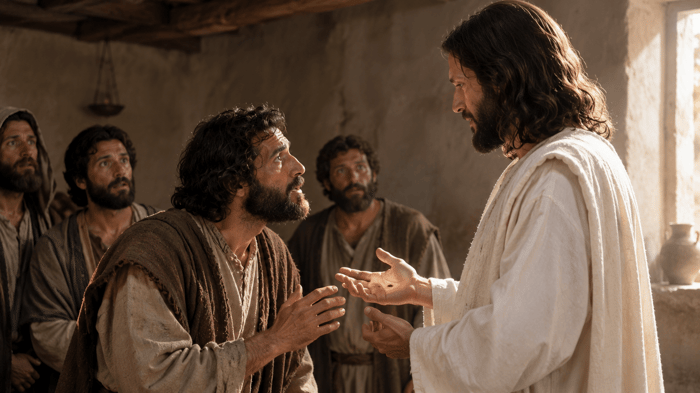
Later, Thomas addresses the risen Jesus directly:
Thomas answered him, "My Lord and my God!"
John 20:28 (WEB)
Calling Jesus God does not make Him a second deity beside the Father.
The Son is personally distinct from the Father while sharing the one divine identity.
The Holy Spirit Is Not a Third God
The Holy Spirit is also described in divine terms.
When Ananias lied about money he had claimed to give, Peter confronted him:
But Peter said, "Ananias, why has Satan filled your heart to lie to the Holy Spirit and to keep back part of the price of the land?"
Acts 5:3 (WEB)
Peter then says:
You haven't lied to men, but to God.
Acts 5:4 (WEB)
The Spirit is not a third god.
He shares the divine identity of the one God.
The Bible therefore does not avoid Tritheism by denying the deity of the Son or Spirit. It preserves their deity without multiplying God into three beings.
Three Persons Are Not Three Divine Beings
The Trinity teaches personal distinction without separation into different gods.
The Father is not the Son.
The Son is not the Holy Spirit.
The Holy Spirit is not the Father.
Yet they are not three separate divine beings.
A simple comparison can help show the difference:
| Teaching | Number of Gods | Father, Son, and Spirit |
|---|---|---|
| Biblical Trinity | One | Three distinct Persons who share the one divine being |
| Tritheism | Three | Three separate divine beings |
| Modalism | One | One Person appearing in different modes |
| Partialism | One | Three parts that combine to make God |
Tritheism protects the distinction between the Persons but destroys the unity of God.
The biblical Trinity preserves both.
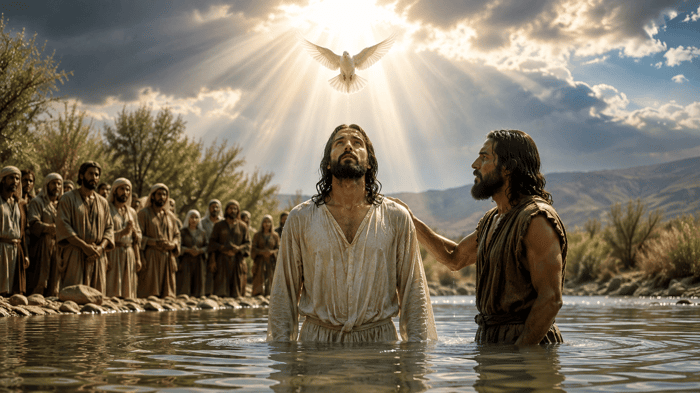
Jesus' Baptism Shows Three Persons, Not Three Gods
Jesus' baptism reveals the Father, Son, and Holy Spirit together.
The Son is baptized.
The Spirit descends.
The Father speaks from heaven.
Jesus, when he was baptized, went up directly from the water: and behold, the heavens were opened to him. He saw the Spirit of God descending as a dove, and coming on him.
Matthew 3:16 (WEB)
Then the Father speaks:
Behold, a voice out of the heavens said, "This is my beloved Son, with whom I am well pleased."
Matthew 3:17 (WEB)
This scene clearly shows personal distinction.
But three distinct Persons do not require three separate gods.
The Father, Son, and Holy Spirit are not pictured as independent deities meeting at the Jordan.
The Great Commission Does Not Name Three Gods
Jesus' command to baptize His disciples gives another important picture.
Go and make disciples of all nations, baptizing them in the name of the Father and of the Son and of the Holy Spirit.
Matthew 28:19 (WEB)
Notice that Jesus says "in the name," not "in the names."
Father, Son, and Holy Spirit are named distinctly, yet they are joined under one "name."
This is not a complete explanation of the Trinity by itself, but it does not support the idea of three independent deities.
There is distinction without separation into three gods.
Why Tritheism Can Seem Attractive
Tritheism may arise because the Trinity is difficult to picture.
We are used to thinking that three persons must mean three separate beings.
That is true of human beings.
Three human persons are three human beings.
But God is not simply a larger version of humanity.
If we force human categories onto God, we may end up dividing Him into three separate beings.
Scripture should shape our understanding of God rather than our everyday experience becoming the final measure.
Why "Three People" Can Be Misleading
Christians sometimes say that the Trinity is "three people."
That language can create confusion.
If we hear "three people," we usually imagine three separate individuals standing next to one another.
Applied carelessly to God, this can lead toward Tritheism.
The word "Person" in Trinitarian teaching does not mean three independent beings who happen to share similar qualities.
It points to real personal distinction within the one God.
The Father loves the Son.
The Son speaks to the Father.
The Holy Spirit glorifies the Son.
Yet Scripture never presents them as three gods cooperating as a team.
The Father and Son Are Not Separate Deities
Jesus spoke about His relationship with the Father in ways that go beyond agreement between two separate beings.
He said:
I and the Father are one.
John 10:30 (WEB)
This does not mean the Father and Son are the same Person.
Other passages clearly distinguish them.
But their unity cannot be reduced to two gods who merely agree with each other.
The Son is not another deity standing beside the Father.
He shares the one divine identity.
Tritheism Explained by What Scripture Never Says
Sometimes the clearest way to understand the error is to notice what Scripture never teaches.
The Bible never says:
- The Father is one God.
- The Son is a second God.
- The Holy Spirit is a third God.
- The Trinity is a group of three gods.
- Christians worship three divine beings.
- The three Persons merely cooperate as separate deities.
Instead, Scripture repeatedly declares that there is one God while also revealing the deity and distinction of the Father, Son, and Holy Spirit.
That is why Tritheism explained as "three gods working together" is not a biblical understanding of the Trinity.
Why Tritheism Matters for Worship
This issue is not merely about choosing the right theological word.
Christians worship one God.
If the Trinity meant three gods, Christian worship would become a form of polytheism.
But Scripture rejects that idea.
God alone is worthy of worship.
The Father, Son, and Holy Spirit are not three competing objects of worship.
They are the one God.
This helps us understand why Christians can worship Jesus without treating Him as a second deity beside the Father.
Tritheism and the Gospel
Tritheism also affects how we understand salvation.
The Gospel is not the story of three gods cooperating to rescue humanity.
It is the saving work of the one God.
Human beings have sinned against God and cannot restore themselves to Him.
The Father sends the Son.
The Son becomes human and gives Himself for sinners.
The Holy Spirit brings God's saving work into the lives of believers.
Paul describes this Trinitarian pattern:
But when the fullness of the time came, God sent out his Son, born to a woman, born under the law, that he might redeem those who were under the law, that we might receive the adoption of children.
Galatians 4:4-5 (WEB)
Then he continues:
And because you are children, God sent out the Spirit of his Son into your hearts, crying, "Abba, Father!"
Galatians 4:6 (WEB)
The Father, Son, and Spirit act distinctly.
But salvation is not the work of three separate gods.
It is the unified saving work of the one God.
A Better Way to Speak About the Trinity
To avoid Tritheism, Christians should use careful language.
We can say:
- There is one God.
- The Father is fully God.
- The Son is fully God.
- The Holy Spirit is fully God.
- The Father is not the Son.
- The Son is not the Spirit.
- The Spirit is not the Father.
- The three Persons are not three gods.
This keeps us close to the biblical evidence.
We do not need to solve every mystery about God's nature.
We do need to avoid explanations that turn the three Persons into separate divine beings.
Why Tritheism Is a Serious Misunderstanding
Tritheism turns the Trinity into belief in three gods.
That is not Christianity.
The Bible teaches one God.
It also teaches that the Father, Son, and Holy Spirit are distinct and fully divine.
Those truths must remain together.
The Trinity is not three gods united by purpose.
It is one God who eternally exists as Father, Son, and Holy Spirit.
FAQs
What is Tritheism?
Tritheism is the belief that the Father, Son, and Holy Spirit are three separate gods or divine beings. The article explains that Scripture instead teaches one God while revealing the Father, Son, and Holy Spirit as distinct and fully divine.
Hear, Israel: Yahweh is our God. Yahweh is one.
Deuteronomy 6:4 (WEB)
Does Christianity believe in three gods?
No. Christianity teaches that there is one God. The Father, Son, and Holy Spirit are personally distinct, but the article does not describe them as three independent divine beings.
For there is one God, and one mediator between God and men, the man Christ Jesus.
1 Timothy 2:5 (WEB)
How can the Father, Son, and Holy Spirit each be God without being three gods?
The article explains that Scripture identifies the Father, Son, and Holy Spirit in divine terms while continuing to confess one God. The three Persons are distinct without being three separate gods.
Yet to us there is one God, the Father, of whom are all things, and we for him; and one Lord, Jesus Christ, through whom are all things, and we live through him.
1 Corinthians 8:6 (WEB)
Does calling Jesus God mean Christians believe in another god?
No. The article points to John 1:1, where the Word is both with God and is God. This shows personal distinction while remaining within Scripture's teaching that there is one God.
In the beginning was the Word, and the Word was with God, and the Word was God.
John 1:1 (WEB)
Does Jesus' baptism teach that there are three gods?
No. Jesus' baptism shows the Father, Son, and Holy Spirit acting distinctly. The Son is baptized, the Spirit descends, and the Father speaks, but the article explains that distinct Persons do not require three separate divine beings.
Behold, a voice out of the heavens said, "This is my beloved Son, with whom I am well pleased."
Matthew 3:17 (WEB)
How does Matthew 28:19 help distinguish the Trinity from Tritheism?
Jesus names the Father, Son, and Holy Spirit distinctly while speaking of one "name." The article uses this passage to show distinction without dividing God into three gods.
Go and make disciples of all nations, baptizing them in the name of the Father and of the Son and of the Holy Spirit.
Matthew 28:19 (WEB)
Why can describing the Trinity as "three people" be misleading?
The article explains that "three people" can make us picture three separate human beings. Applied carelessly to God, that language can suggest three independent gods rather than the deeper divine unity Scripture reveals.
I and the Father are one.
John 10:30 (WEB)
Why does Tritheism matter for understanding the Gospel?
Tritheism can make the Gospel sound like three gods cooperating to rescue humanity. The article instead presents salvation as the saving work of the one God: humanity has sinned and cannot restore itself to God, the Father sends the Son to redeem sinners, and the Spirit brings God's saving work into believers' lives. This points sinners to faith in Jesus Christ, the Son sent for our redemption.
But when the fullness of the time came, God sent out his Son, born to a woman, born under the law, that he might redeem those who were under the law, that we might receive the adoption of children.
Galatians 4:4-5 (WEB)