Table of Contents
The Trinity is one of the most important truths Christians learn about God. The Bible teaches that there is one God, yet the Father, the Son, and the Holy Spirit are each revealed as fully God and personally distinct. Christians do not believe in three gods. We worship the one true God who has made Himself known as Father, Son, and Holy Spirit.
Because this truth touches so many parts of Scripture, it can raise important questions. How can God be one and three? Where does the Bible reveal the Father, Son, and Holy Spirit together? Is Jesus truly God? Is the Holy Spirit a person? Why have Christians sometimes explained this doctrine in ways that cause confusion?
This page is designed to help you find the right place to explore those questions. Some sections focus on the biblical foundation for the Trinity. Others trace how the Father, Son, and Holy Spirit appear throughout Scripture. You can also explore common misunderstandings and begin with a broad introduction if this subject is new to you.
The goal is not to answer every question here. Instead, use this page as a guide to the main areas of study so you can understand what Scripture reveals about the one true God.
Key Scriptures About the Trinity
Several passages bring the Father, Son, and Holy Spirit together in ways that help us see the biblical pattern clearly.
“Go and make disciples of all nations, baptizing them in the name of the Father and of the Son and of the Holy Spirit.”
Matthew 28:19 (WEB)
Jesus names the Father, Son, and Holy Spirit together while speaking of one “name.” This passage gives Christians an important foundation for understanding how the three persons belong together within the identity of the one God.
“The grace of the Lord Jesus Christ, the love of God, and the fellowship of the Holy Spirit be with you all. Amen.”
2 Corinthians 13:14 (WEB)
Paul also brings the Son, the Father, and the Holy Spirit together in one blessing. Passages like these do not provide a complete explanation by themselves, but they show why Christians have always needed language that faithfully accounts for all that Scripture says about God.
What the Bible Teaches About the Trinity
The Bible consistently teaches that there is only one God. At the same time, Scripture presents the Father as God, the Son as God, and the Holy Spirit as God. The Father is not the Son, the Son is not the Holy Spirit, and the Holy Spirit is not the Father.
The word Trinity gives Christians a way to summarize these truths without changing them. It is not meant to make God simple or reduce Him to an illustration. Instead, the doctrine helps us hold together everything Scripture reveals about His identity.
Understanding the Trinity also helps us read the rest of the Bible more carefully. We see the Father sending the Son, the Son accomplishing redemption, and the Holy Spirit applying God’s work in the lives of believers. We see all three involved in creation, salvation, prayer, Christian growth, and the mission of the church.
The sections below will guide you to the main areas of study.
Start With the Basic Biblical Framework
Understand One God in Three Persons
If you are new to the Trinity, begin with a broad overview. This will help you understand the basic Christian teaching that God is one in being and three in person without getting lost in individual debates or difficult passages.
This starting point introduces the main ideas, explains why the doctrine matters, and gives you a framework for the more detailed studies that follow.
Examine the Biblical Foundation
Once you understand the basic framework, the next step is to look at the biblical evidence behind it. The doctrine does not depend on one verse. It comes from bringing together many truths Scripture teaches about the Father, Son, Holy Spirit, and the oneness of God.
This section is useful when you want to understand why Christians believe the doctrine is rooted in Scripture rather than added to the Bible later.
Follow the Trinity Through Scripture
See How Scripture Reveals the Father, Son, and Holy Spirit
After learning the basic framework, it is helpful to trace the Trinity across the Bible. Scripture does not reveal everything about God in one place. Instead, the picture becomes clearer as God’s Word unfolds.
You can explore how the Father, Son, and Holy Spirit are revealed in different books, passages, events, and teachings. This helps show that the doctrine is not based on an isolated verse but reflects a pattern that runs through Scripture.
Studying the Trinity throughout Scripture can also help you see familiar passages with greater clarity. Creation, Jesus’ baptism, His teaching about the Father and Spirit, the Great Commission, Pentecost, and the New Testament letters all contribute to a fuller biblical picture.
The purpose is not to force every passage into a formula. It is to notice how consistently Scripture reveals the one God through the Father, the Son, and the Holy Spirit.
Work Through Difficult Questions and Misunderstandings
Understand Common Errors About the Trinity
Because the Trinity goes beyond ordinary human experience, people often try to explain God with simple comparisons. Some of these explanations can create more confusion than clarity.
Other questions come from trying to understand how Jesus can be both God and the Son of God, whether the Holy Spirit is a person, or whether belief in three persons means belief in three gods.
These questions are worth taking seriously. Careful biblical answers can help us avoid both confusion and false ideas about God.
Learning what the Trinity does not mean can be just as helpful as learning what Christians affirm. It protects us from reducing God to an analogy, dividing Him into parts, treating Father, Son, and Holy Spirit as temporary roles, or imagining three separate gods.
The goal is not to win arguments. It is to speak about God as faithfully as Scripture allows.
Why Understanding the Trinity Matters
The Trinity is not merely a difficult theological idea. It shapes the way Christians understand God’s work in creation, salvation, prayer, worship, and daily life.
The Father sends the Son. The Son reveals the Father and gives Himself for sinners. The Holy Spirit brings new life, dwells within believers, and helps them grow in Christ. The more clearly we understand who God has revealed Himself to be, the more clearly we can understand what He has done for us.
This is also why studying the Trinity should lead beyond information. Knowing more about God should lead us toward worship, trust, obedience, and deeper fellowship with Him.
If this subject is new to you, begin with the broad introduction. If you already understand the basic doctrine, explore the biblical foundation or trace the Father, Son, and Holy Spirit throughout Scripture. If particular questions or objections have made the doctrine difficult to understand, use the section on misunderstandings to work through them carefully.
Each study approaches the same biblical truth from a different direction, helping you build a clearer picture of the God who has revealed Himself through His Word.
FAQs
What is the Trinity?
The Trinity is the Christian teaching that there is one God who is revealed as three distinct persons: the Father, the Son, and the Holy Spirit. Christians do not believe in three gods. The doctrine brings together what Scripture teaches about God's oneness and the full deity and personal distinction of the Father, Son, and Holy Spirit.
“Go and make disciples of all nations, baptizing them in the name of the Father and of the Son and of the Holy Spirit.”
Matthew 28:19 (WEB)
Does the Bible teach that God is one?
Yes. The Bible clearly teaches that there is only one God. The Trinity does not change this truth. Instead, it helps Christians understand how the one God has revealed Himself as Father, Son, and Holy Spirit.
“Hear, Israel: Yahweh is our God. Yahweh is one.”
Deuteronomy 6:4 (WEB)
Are the Father, Son, and Holy Spirit distinct from one another?
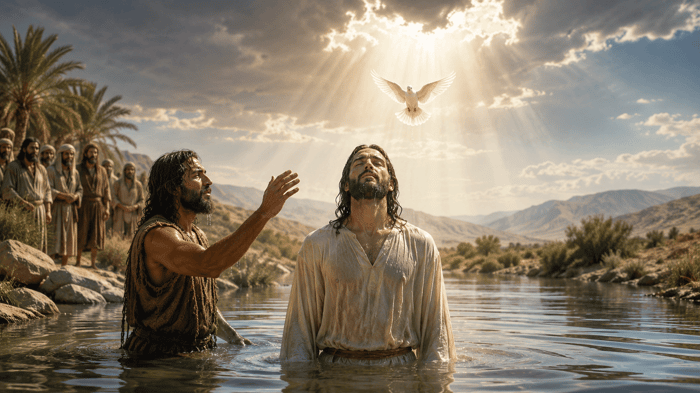
Yes. The Father is not the Son, the Son is not the Holy Spirit, and the Holy Spirit is not the Father. Jesus’ baptism provides a clear biblical picture: the Son is baptized, the Spirit descends upon Him, and the Father speaks from heaven.
“Behold, a voice out of the heavens said, ‘This is my beloved Son, with whom I am well pleased.’”
Matthew 3:17 (WEB)
Where can I see the Trinity in Scripture?
The Father, Son, and Holy Spirit appear together in several important passages, and their work can be traced throughout Scripture. The Bible does not explain everything about God in one passage. Instead, these truths become clearer as we consider the whole biblical witness.
“The grace of the Lord Jesus Christ, the love of God, and the fellowship of the Holy Spirit be with you all. Amen.”
2 Corinthians 13:14 (WEB)
Does the Trinity mean Christians believe in three gods?
No. Christianity teaches that there is one God, not three gods. The Father, Son, and Holy Spirit are personally distinct, but Christians do not divide God into three separate beings. This is why both God's oneness and the distinction of the three persons must be held together.
“Yet to us there is one God, the Father, of whom are all things, and we for him; and one Lord, Jesus Christ, through whom are all things, and we live through him.”
1 Corinthians 8:6 (WEB)
Why can Trinity analogies cause confusion?
Simple illustrations can make the Trinity sound easier to understand, but they can also give a false picture of God. Some divide God into parts, while others make the Father, Son, and Holy Spirit seem like different roles played by one person. It is safer to let Scripture shape our understanding of who God is.
“To whom then will you liken God? Or what likeness will you compare to him?”
Isaiah 40:18 (WEB)
Why does understanding the Trinity matter for salvation?
The Trinity helps us understand the Gospel because salvation reveals the work of the Father, Son, and Holy Spirit. The Father sent His Son because sinful humanity needed rescue. Jesus gave Himself so that those who believe in Him may receive eternal life. The Gospel therefore does not point us toward an abstract idea about God, but toward the Triune God who acts to save sinners through Jesus Christ.
“For God so loved the world, that he gave his one and only Son, that whoever believes in him should not perish, but have eternal life.”
John 3:16 (WEB)
How should understanding the Trinity affect Christian life?
Understanding the Trinity should lead to more than theological knowledge. Knowing the Father, Son, and Holy Spirit more clearly should deepen worship, trust, obedience, prayer, and fellowship with God. Christians grow by knowing God as He has revealed Himself rather than shaping Him according to human ideas.
“But grow in the grace and knowledge of our Lord and Savior Jesus Christ. To him be the glory both now and forever. Amen.”
2 Peter 3:18 (WEB)