Table of Contents
- What Is Partialism?
- Why Partialism Does Not Fit the Bible
- The Father Is Fully God
- The Son Is Fully God
- The Fullness of Deity Dwells in Christ
- The Holy Spirit Is Fully God
- Each Person Fully God Does Not Mean Three Gods
- Why the Triangle Analogy Can Be Misleading
- The Egg Analogy Has the Same Problem
- God Is Not Made of Pieces
- Partialism and the Baptism of Jesus
- Partialism Explained Through What Scripture Does Not Say
- Why Partialism Matters for the Gospel
- The Holy Spirit Applies God's Saving Work
- A Better Way to Think About the Trinity
- Why Partialism Is a Serious Misunderstanding
- FAQs
Partialism is the belief that the Father, Son, and Holy Spirit are each one part of God, and that together they make up the whole God. It may sound like an easy way to explain the Trinity, but it does not match the way Scripture describes God.
The Bible does not present the Father as one-third of God, the Son as one-third of God, and the Holy Spirit as one-third of God. Each Person is fully divine, yet there is only one God.
This matters because Christians should speak about God as He has revealed Himself. We should not reduce the Trinity to three pieces that combine to form a greater whole.
What Is Partialism?
Partialism teaches that the three Persons of the Trinity are parts or portions of God.
The idea may be pictured like this:
- The Father is one part of God.
- The Son is another part of God.
- The Holy Spirit is another part of God.
- Together, the three parts make one complete God.
This may seem logical at first. We often understand complex things by dividing them into smaller pieces.
But God is not made of pieces.
The Bible teaches that there is one God.
Hear, Israel: Yahweh is our God. Yahweh is one.
Deuteronomy 6:4 (WEB)
This does not mean that God is one Person who appears in different forms. It also does not mean that the three Persons each possess only part of the divine nature.
The Father, Son, and Holy Spirit are distinct Persons, but each is fully God.
Why Partialism Does Not Fit the Bible
The main problem with Partialism is that Scripture never describes the Father, Son, or Holy Spirit as incomplete pieces of God.
Instead, the Bible speaks of each Person in ways that belong fully to God.
The Father is God.
The Son is God.
The Holy Spirit is God.
Yet Scripture continues to insist that there is only one God.
The Christian doctrine of the Trinity does not teach three pieces forming one being. It teaches one divine being who eternally exists as three distinct Persons.
The Father Is Fully God
The Bible clearly speaks of the Father as God.
Paul writes:
Yet to us there is one God, the Father, of whom are all things, and we for him; and one Lord, Jesus Christ, through whom are all things, and we live through him.
1 Corinthians 8:6 (WEB)
The Father is not merely a portion of deity.
He is spoken of as God.
All things come from Him, and believers live for Him.
Nothing in Scripture suggests that the Father must be combined with two other divine pieces before He can truly be called God.
The Son Is Fully God
Partialism also fails because the Bible does not describe Jesus as one-third of God.
The Son is fully divine.
John begins his Gospel by speaking about the Word, who later becomes flesh in Jesus Christ.
In the beginning was the Word, and the Word was with God, and the Word was God.
John 1:1 (WEB)
The Word was with God, showing personal distinction.
At the same time, the Word was God.
John does not say that the Word was part of God.
He says the Word was God.
Thomas also addressed the risen Jesus with words of worship:
Thomas answered him, "My Lord and my God!"
John 20:28 (WEB)
Jesus does not correct Thomas for calling Him God.
The Son is not a smaller divine piece that needs the Father and Spirit added to Him before He can truly be divine.
He is fully God.
The Fullness of Deity Dwells in Christ
One of the strongest passages against a Trinity three parts idea appears in Colossians.
Paul writes about Jesus:
For in him all the fullness of the Deity dwells bodily.
Colossians 2:9 (WEB)
Notice the word fullness.
Paul does not say that one-third of deity dwells in Christ.
He says all the fullness of deity dwells in Him.
This directly challenges Partialism.
Jesus is not a slice of God's divine nature. He possesses the fullness of deity.
That does not mean Jesus is the Father or the Holy Spirit. The Persons remain distinct.
It means the Son is fully divine.
The Holy Spirit Is Fully God
The same pattern appears with the Holy Spirit.
In Acts, Peter confronts Ananias for lying about money he had claimed to give.
Peter first says:
But Peter said, "Ananias, why has Satan filled your heart to lie to the Holy Spirit and to keep back part of the price of the land?"
Acts 5:3 (WEB)
Then Peter explains the seriousness of the sin:
You haven't lied to men, but to God.
Acts 5:4 (WEB)
Peter connects lying to the Holy Spirit with lying to God.
The Holy Spirit is not simply a fraction of God's power or a lesser divine portion.
He is fully divine.
Each Person Fully God Does Not Mean Three Gods
This is where many people become confused.
If the Father is fully God, the Son is fully God, and the Holy Spirit is fully God, does that mean there are three gods?
No.
Scripture continues to teach that God is one.
For there is one God, and one mediator between God and men, the man Christ Jesus.
1 Timothy 2:5 (WEB)
Christian teaching must hold both truths together.
| Biblical Truth | What It Means |
|---|---|
| There is one God | Christianity is monotheistic |
| The Father is God | The Father possesses the full divine nature |
| The Son is God | Jesus possesses the full divine nature |
| The Holy Spirit is God | The Spirit possesses the full divine nature |
| The Persons are distinct | The Father is not the Son, and the Son is not the Spirit |
| God is not divided | The three Persons are not pieces that combine to make God |
The phrase each person fully God helps protect us from the error of Partialism.
Each Person possesses the divine nature fully, not partly.
Why the Triangle Analogy Can Be Misleading
Some people try to explain the Trinity with a triangle.
A triangle has three sides, and all three sides together make one triangle.
This can be useful for showing the number three and the number one, but it can also create confusion.
Each side is only part of the triangle.
No single side is the entire triangle.
If this illustration is applied too closely to God, it teaches something like Partialism.
The Father is not merely one side of God.
The Son is not merely another side.
The Spirit is not the final side that completes the whole.
God is not assembled from three pieces.
The Egg Analogy Has the Same Problem
Another popular illustration compares the Trinity to an egg.
An egg has:
- a shell,
- a white,
- a yolk.
Together, those three parts form one egg.
But once again, each part is only a portion of the whole.
The yolk is not fully the egg.
The shell is not fully the egg.
The white is not fully the egg.
That is why the comparison can suggest Partialism.
The Father, Son, and Holy Spirit are not three divine ingredients that must be combined before God is complete.
God Is Not Made of Pieces
Partialism also creates a deeper problem.
If God were made of parts, then each Person would be less than the whole God.
The Father would lack something found in the Son and Spirit.
The Son would lack something found in the Father and Spirit.
The Spirit would lack something found in the Father and Son.
But Scripture does not describe the Persons this way.
Jesus says:
I and the Father are one.
John 10:30 (WEB)
This does not mean the Father and Son are the same Person. Jesus regularly speaks to the Father and distinguishes Himself from Him.
But Jesus' statement shows a unity far deeper than two pieces belonging to a larger object.
The Father and Son share the one divine identity.
Partialism and the Baptism of Jesus
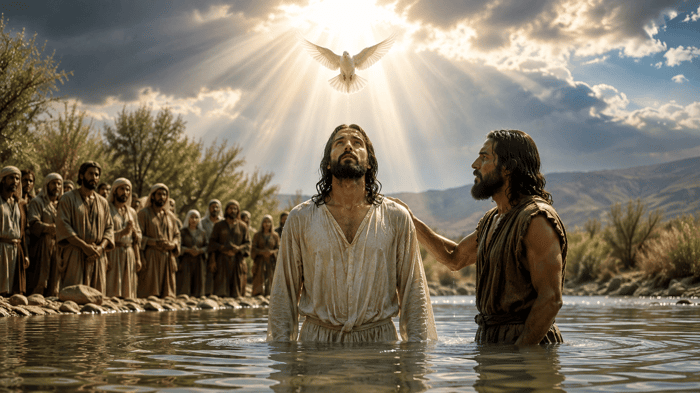
Jesus' baptism also helps us see why a simple parts model does not work.
The Son is baptized.
The Spirit descends.
The Father speaks.
Behold, a voice out of the heavens said, "This is my beloved Son, with whom I am well pleased."
Matthew 3:17 (WEB)
The scene reveals distinction between the Persons.
But Scripture never suggests that each Person present possesses only a fraction of deity.
The Father is fully God.
The Son is fully God.
The Holy Spirit is fully God.
The baptism shows personal distinction without dividing God into three separate pieces.
Partialism Explained Through What Scripture Does Not Say
Sometimes it helps to notice what the Bible never says.
Scripture never says:
- The Father is one-third God.
- The Son is one-third God.
- The Holy Spirit is one-third God.
- The divine nature is divided among three Persons.
- The three Persons combine to form God.
- Each Person lacks something needed to be fully divine.
Instead, Scripture speaks of one God and gives full divine honor, identity, and works to the Father, Son, and Holy Spirit.
That is why partialism explained as "three parts making one God" is not a biblical description of the Trinity.
Why Partialism Matters for the Gospel
Partialism may sound like a technical mistake, but it can affect how we understand salvation.
The Gospel reveals the full work of God in saving sinners.
The Father sends the Son.
The Son becomes human, dies for sinners, and rises from the dead.
The Holy Spirit gives life and brings believers into the saving work of Christ.
Paul describes this pattern:
But when the fullness of the time came, God sent out his Son, born to a woman, born under the law, that he might redeem those who were under the law, that we might receive the adoption of children.
Galatians 4:4-5 (WEB)
The Son who comes to save us is not one-third of God.
He is fully divine.
This matters because salvation is God's own work.
Humanity has sinned against God and cannot rescue itself. God does not send a lesser piece of Himself to deal with sin.
The Son comes in the fullness of deity and truly becomes human.
The Holy Spirit Applies God's Saving Work
The Gospel also includes the work of the Holy Spirit.
Paul continues:
And because you are children, God sent out the Spirit of his Son into your hearts, crying, "Abba, Father!"
Galatians 4:6 (WEB)
The Spirit is not a small portion of God's presence.
He brings believers into fellowship with God.
He works personally in those who belong to Christ.
Understanding the Trinity protects the beauty of the Gospel. The Father, Son, and Holy Spirit are personally distinct, yet the saving work belongs to the one God.
A Better Way to Think About the Trinity
Instead of picturing God as three pieces, it is better to follow biblical language.
We can say:
- God is one.
- The Father is fully God.
- The Son is fully God.
- The Holy Spirit is fully God.
- The Father is not the Son.
- The Son is not the Holy Spirit.
- The Holy Spirit is not the Father.
- God is not divided into parts.
This may be harder to picture than an egg or a triangle.
But our goal is not to make God easy to illustrate.
Our goal is to understand Him as faithfully as Scripture allows.
Why Partialism Is a Serious Misunderstanding
Partialism makes God seem divisible.
It suggests that the Father, Son, and Holy Spirit each possess only a share of deity.
The Bible gives us a richer picture.
The Father is fully God.
The Son is fully God.
The Holy Spirit is fully God.
Yet there is only one God.
We should not reduce the mystery of the Trinity into a model of pieces and parts.
God is not assembled.
He is not divided.
He is one God, eternally existing as Father, Son, and Holy Spirit.
FAQs
What is Partialism?
Partialism is the belief that the Father, Son, and Holy Spirit are each one part of God and together make one complete God. The Bible does not describe God as three pieces. It teaches that God is one and that the Father, Son, and Holy Spirit are distinct Persons who are fully divine.
Hear, Israel: Yahweh is our God. Yahweh is one.
Deuteronomy 6:4 (WEB)
Why does Partialism not fit the Bible?
Partialism does not fit Scripture because the Bible never says that the divine nature is divided among the Father, Son, and Holy Spirit. Instead, Scripture speaks of one God while describing each Person in ways that belong fully to God.
Yet to us there is one God, the Father, of whom are all things, and we for him; and one Lord, Jesus Christ, through whom are all things, and we live through him.
1 Corinthians 8:6 (WEB)
Does the Bible teach that Jesus is only part of God?
No. Scripture does not describe Jesus as one-third of God. John says that the Word was God, and Paul says that all the fullness of deity dwells in Christ. Jesus is distinct from the Father and Holy Spirit, but He is fully divine rather than a smaller piece of God.
For in him all the fullness of the Deity dwells bodily.
Colossians 2:9 (WEB)
Is the Holy Spirit fully God or only part of God?
The Holy Spirit is fully divine, not a fraction of God. In Acts, Peter tells Ananias that he lied to the Holy Spirit and then says that he lied to God. This shows why the Spirit should not be understood as merely one portion of the divine nature.
You haven't lied to men, but to God.
Acts 5:4 (WEB)
If the Father, Son, and Holy Spirit are each fully God, are there three gods?
No. The Bible teaches that there is one God. Saying that each Person is fully divine does not divide God into three separate beings. The Father, Son, and Holy Spirit are personally distinct, yet God is one and is not divided into parts.
For there is one God, and one mediator between God and men, the man Christ Jesus.
1 Timothy 2:5 (WEB)
Why can the egg or triangle analogy lead to Partialism?
An egg has a shell, white, and yolk, while a triangle has three sides. In both examples, each piece is only part of the whole. If these illustrations are applied too closely to the Trinity, they can suggest that the Father, Son, and Holy Spirit are incomplete portions that combine to make God.
I and the Father are one.
John 10:30 (WEB)
How does Jesus' baptism help explain the error of Partialism?
Jesus' baptism shows the Father, Son, and Holy Spirit as personally distinct. The Son is baptized, the Spirit descends, and the Father speaks from heaven. Yet Scripture never says that each possesses only part of deity. The scene shows distinction without dividing God into pieces.
Behold, a voice out of the heavens said, "This is my beloved Son, with whom I am well pleased."
Matthew 3:17 (WEB)
Why does Partialism matter for understanding the Gospel?
Partialism can weaken our understanding of who acts to save sinners. Humanity has sinned against God and cannot rescue itself. The Father sends the Son to redeem us, and the Son who comes is not one-third of God but fully divine. Salvation therefore points us to faith in Jesus Christ as God's true Son who became human to redeem sinners, not as a lesser piece of deity.
But when the fullness of the time came, God sent out his Son, born to a woman, born under the law, that he might redeem those who were under the law, that we might receive the adoption of children.
Galatians 4:4-5 (WEB)