
Table of Contents
- What Is Arianism?
- Arianism and the Question "Is Jesus Created?"
- All Things Were Created Through the Son
- Jesus Existed Before Abraham
- The Son Is the Creator of All Things
- Jesus Is Before All Things
- "Firstborn of All Creation" Does Not Mean First Created
- The Fullness of Deity Dwells in Christ
- Hebrews Calls the Son God
- Jesus Is Greater Than the Angels
- Thomas Calls Jesus God
- Does "The Father Is Greater Than I" Support Arianism?
- Arianism and the Trinity
- Arius and Jesus: Where the Difference Matters
- Why Arianism Matters for Worship
- Why Arianism Matters for the Gospel
- The Word Became Flesh
- A Better Way to Understand Jesus
- Why Arianism Is a Serious Misunderstanding
- FAQs
Arianism teaches that Jesus Christ is not eternally God but was created by God before the rest of creation. In this view, the Son is greater than every other created being, yet He is still not equal with God the Father in divine nature.
The Bible does not present Jesus this way. Scripture describes the Son as existing before creation, sharing God's divine identity, creating all things, and possessing the fullness of deity.
The question behind this teaching is important: Is Jesus created, or is Jesus eternal God? The answer affects how we understand the Trinity, worship, and the Gospel itself.
What Is Arianism?
Arianism takes its name from Arius, a teacher in the early church who argued that the Son did not exist eternally.
The basic idea can be summarized like this:
- God the Father alone is eternal in the fullest sense.
- The Son was brought into existence by the Father.
- Jesus existed before the physical universe.
- The Son is greater than every other created being.
- The Son is not equal with the Father in divine nature.
This makes Jesus far greater than an ordinary human being, angel, or prophet.
But it still places Him on the created side of the dividing line between Creator and creation.
Scripture places Jesus on the other side.
Arianism and the Question "Is Jesus Created?"
One of the clearest biblical answers comes from the opening of John's Gospel.
In the beginning was the Word, and the Word was with God, and the Word was God.
John 1:1 (WEB)
John does not say, "In the beginning the Word was created."
He says the Word was.
Before the creation described in Genesis begins, the Word already exists.
John then distinguishes the Word from God by saying that the Word was "with God." Yet he also identifies the Word as God.
This creates a problem for Arianism.
If the Word already existed "in the beginning" and was God, then He cannot simply be the first creature God made.
All Things Were Created Through the Son
John continues:
All things were made through him. Without him, nothing was made that has been made.
John 1:3 (WEB)
This is one of the strongest passages for answering whether Jesus is created.
John divides reality into two categories:
- Things that were made.
- The Word through whom those things were made.
He says that nothing that has been made came into existence apart from the Word.
If Jesus Himself were a created being, then He would belong to the category of "things that have been made."
But John places Him as the One through whom all created things came into existence.
That means the Son is not part of creation.
He is the Creator.
Jesus Existed Before Abraham
Jesus also spoke of His existence before His human birth.
During a dispute with religious leaders, Jesus said:
Jesus said to them, "Most certainly, I tell you, before Abraham came into existence, I AM."
John 8:58 (WEB)
Jesus does not merely say, "I existed before Abraham."
His wording is stronger.
Abraham "came into existence," but Jesus says, "I AM."
This statement points beyond Jesus having an earlier starting point than Abraham. It presents Him as possessing an existence that does not depend upon being created.
That does not fit the idea that the Son began to exist at some point before creation.
The Son Is the Creator of All Things
Paul gives another strong answer to Arianism explained from Scripture.
Speaking of Christ, he writes:
For by him all things were created, in the heavens and on the earth, things visible and things invisible, whether thrones or dominions or principalities or powers. All things have been created through him and for him.
Colossians 1:16 (WEB)
Notice how broad Paul's language is.
All things in heaven.
All things on earth.
Visible things.
Invisible things.
Even spiritual powers.
Everything was created through Christ and for Christ.
A created Jesus would have to be included somewhere within "all things."
Yet Paul places Jesus over creation as its Creator and purpose.
Jesus Is Before All Things
Paul continues:
He is before all things, and in him all things are held together.
Colossians 1:17 (WEB)
Jesus is not simply older than everything else.
Paul says He is before all things.
He also says creation continues to hold together in Him.
The Son does not merely belong to creation.
Creation depends upon Him.
That is a major difference between the biblical picture of Christ and the Arianism Trinity view.
| Question | Arianism | Biblical Teaching |
|---|---|---|
| Did the Son begin to exist? | Yes | No |
| Is Jesus created? | Yes | No |
| Did Jesus create all things? | Through delegated power | Scripture says all things were created through Him |
| Is the Son fully divine? | No | Yes |
| Is the Son eternal? | No | Yes |
| Does creation depend on Christ? | Not in the fullest sense | Yes |
"Firstborn of All Creation" Does Not Mean First Created
A common argument for a created Son comes from the previous verse.
Paul calls Jesus:
He is the image of the invisible God, the firstborn of all creation.
Colossians 1:15 (WEB)
At first glance, "firstborn" may sound like Jesus was the first being God created.
But the following verses explain what Paul means.
Jesus is called firstborn because He holds supreme rank over creation, not because He belongs to creation.
The next verse says all things were created through Him.
Then Paul says He is before all things.
In Scripture, "firstborn" can describe status, inheritance, and supremacy, not only birth order.
The context therefore points to Christ's authority over creation rather than His being the first creature.
The Fullness of Deity Dwells in Christ
Paul gives an even more direct statement about Jesus.
For in him all the fullness of the Deity dwells bodily.
Colossians 2:9 (WEB)
Paul does not say that Christ possesses a lesser form of deity.
He does not say that some divine qualities were given to Him because He was God's greatest creature.
He says all the fullness of deity dwells in Christ.
This is why the question of Jesus eternal God matters.
The Son is not partly divine.
He does not resemble God merely because He is the greatest heavenly being.
He possesses the fullness of deity.
Hebrews Calls the Son God
Hebrews also speaks directly about the identity of the Son.
The writer quotes God addressing the Son:
But of the Son he says, "Your throne, O God, is forever and ever. The scepter of uprightness is the scepter of your Kingdom."
Hebrews 1:8 (WEB)
The Son is addressed as God.
His throne is also described as lasting forever.
This is difficult to reconcile with the claim that the Son is merely the greatest created being.
The chapter continues by applying language about creation itself to the Son.
And, "You, Lord, in the beginning, laid the foundation of the earth. The heavens are the works of your hands."
Hebrews 1:10 (WEB)
Again, the Son is placed on the Creator side of the Creator-creature distinction.
Jesus Is Greater Than the Angels
Hebrews also separates Jesus from angels.
For to which of the angels did he say at any time, "You are my Son. Today I have become your father?" and again, "I will be to him a Father, and he will be to me a Son?"
Hebrews 1:5 (WEB)
The point is not simply that Jesus is a better angel.
He belongs to a different category.
The writer continues:
Let all the angels of God worship him.
Hebrews 1:6 (WEB)
Angels worship the Son.
The Son is not presented as the highest member of their order.
He stands above them.
Thomas Calls Jesus God
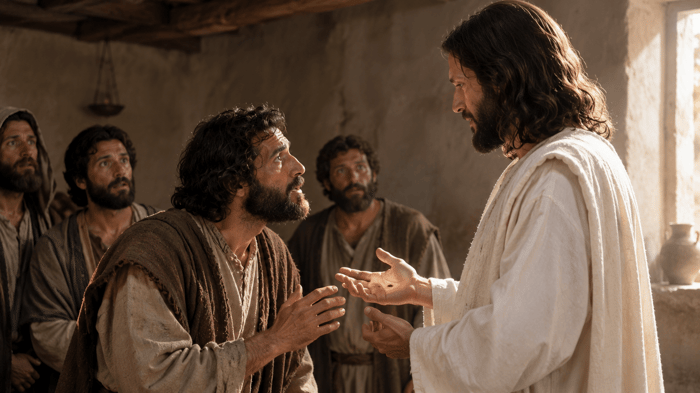
After Jesus rose from the dead, Thomas saw Him and responded:
Thomas answered him, "My Lord and my God!"
John 20:28 (WEB)
Thomas does not call Jesus "a godlike being."
He calls Him "my God."
Jesus does not correct him.
This confession appears near the end of John's Gospel and matches what John declared at the beginning: "the Word was God."
John begins and ends his Gospel by presenting Jesus within the identity of God.
Does "The Father Is Greater Than I" Support Arianism?
Jesus once said:
You heard how I told you, "I go away, and I come to you." If you loved me, you would have rejoiced because I said "I am going to my Father;" for the Father is greater than I.
John 14:28 (WEB)
This verse can seem to support Arianism when taken by itself.
But Scripture also teaches that the Son became truly human.
In His earthly mission, Jesus humbled Himself and obeyed the Father.
Paul explains:
But emptied himself, taking the form of a servant, being made in the likeness of men.
Philippians 2:7 (WEB)
Jesus' willing humiliation does not mean His divine nature became inferior.
The Son's role in His earthly mission should not be confused with His eternal identity.
The same Gospel that records "the Father is greater than I" also says that the Word was God, that all things were created through Him, and that Thomas called Jesus God.
Those truths must be held together.
Arianism and the Trinity
The Arianism Trinity problem is not mainly about how the three Persons relate to one another.
Its central problem is the identity of the Son.
If Jesus is created, then He does not share the one divine nature with the Father.
The Trinity would then collapse.
Instead of Father, Son, and Holy Spirit sharing the one divine being, the Father would be God while the Son would be a creature.
Scripture does not give us that picture.
The Father is God.
The Son is God.
The Holy Spirit is God.
Yet there is one God.
Arius and Jesus: Where the Difference Matters
The question connected with Arius Jesus teaching can be reduced to one dividing line:
Is the Son Creator or creature?
Scripture repeatedly places Jesus with the Creator.
He existed before creation.
All things were made through Him.
All things were made for Him.
He is before all things.
Creation is held together in Him.
The fullness of deity dwells in Him.
He receives worship.
He is called God.
Those statements go beyond describing a highly honored created being.
Why Arianism Matters for Worship
If Jesus were created, worshiping Him would create a serious problem.
Scripture teaches that worship belongs to God.
Yet Jesus receives worship.
The angels are commanded to worship Him.
Thomas confesses Him as God.
The disciples worship the risen Christ.
This makes sense because Jesus is not a creature.
He shares the divine identity.
Christians worship Jesus not as a second god beside the Father, but as the eternal Son who is fully divine.
Why Arianism Matters for the Gospel
Arianism also changes the meaning of salvation.
Human beings have sinned against God.
We cannot rescue ourselves from sin or restore ourselves to Him.
The Gospel announces that God Himself has acted to save.
John writes:
For God so loved the world, that he gave his one and only Son, that whoever believes in him should not perish, but have eternal life.
John 3:16 (WEB)
The Father sends His Son.
The Son becomes human.
He gives His life for sinners and rises from the dead.
If Jesus were only the highest created being, then God's saving work would become the work of a creature acting on God's behalf.
But Scripture gives us something greater.
The eternal Son enters His own creation to save sinners.
That is why rejecting Arianism is directly connected to the Gospel.
Faith rests not in a created mediator but in Jesus Christ, the eternal Son of God.
The Word Became Flesh
John describes the wonder of the Gospel this way:
The Word became flesh and lived among us. We saw his glory, glory as of the one and only Son of the Father, full of grace and truth.
John 1:14 (WEB)
The Word did not begin to exist when Jesus was born.
The eternal Word became flesh.
The One who was with God and was God entered human history.
That is the heart of the incarnation.
Jesus is truly human.
Jesus is also truly divine.
A Better Way to Understand Jesus
Instead of thinking of Jesus as God's first or greatest creature, Scripture gives us a stronger confession.
We can say:
- The Son existed before creation.
- The Son did not come into existence as a creature.
- All things were created through Him.
- All things were created for Him.
- The Son possesses the fullness of deity.
- The Son is distinct from the Father.
- The Son is called God.
- The Son became truly human without ceasing to be divine.
These truths keep us close to what Scripture actually says.
Why Arianism Is a Serious Misunderstanding
Arianism may honor Jesus more highly than many other false views.
But it still places Him below the identity Scripture gives Him.
Jesus is not merely God's greatest creation.
He is not the first being God made.
He is not a lesser divine figure standing between God and creation.
The Bible presents Jesus as the eternal Son, the Creator of all things, the One in whom the fullness of deity dwells, and the Savior who entered His own creation to redeem sinners.
The question is therefore not merely whether Jesus existed before us.
It is whether He belongs to creation at all.
Scripture's answer is clear: the Son is not created. He is the eternal God who became flesh for our salvation.
FAQs
What is Arianism?
Arianism teaches that Jesus Christ is not eternally God but was created by God before the rest of creation. The article explains that Scripture instead presents the Son as already existing in the beginning, distinct from the Father, and fully God.
In the beginning was the Word, and the Word was with God, and the Word was God.
John 1:1 (WEB)
Does the Bible teach that Jesus was created?
No. The article points to John 1:3, which says that all things that were made came into existence through the Word. If Jesus were a created being, He would belong among the things that were made. Instead, Scripture places Him as the One through whom creation came into existence.
All things were made through him. Without him, nothing was made that has been made.
John 1:3 (WEB)
What does "firstborn of all creation" mean?
The article explains that "firstborn" in Colossians 1:15 points to Christ's supreme rank over creation rather than saying He was the first creature. The surrounding verses say that all things were created through Him and for Him and that He is before all things.
He is the image of the invisible God, the firstborn of all creation.
Colossians 1:15 (WEB)
How does Colossians show that Jesus is not a created being?
Colossians places Jesus over creation rather than within it. Paul says that everything in heaven and on earth, visible and invisible, was created through Christ and for Him. This identifies the Son with the Creator rather than the creatures He made.
For by him all things were created, in the heavens and on the earth, things visible and things invisible, whether thrones or dominions or principalities or powers. All things have been created through him and for him.
Colossians 1:16 (WEB)
Does "the Father is greater than I" mean Jesus is less divine than the Father?
No. The article explains this statement in light of Jesus' earthly mission and willing humiliation. The Son truly became human and took the form of a servant, but His humble role does not mean His divine nature became inferior.
But emptied himself, taking the form of a servant, being made in the likeness of men.
Philippians 2:7 (WEB)
Why does Hebrews distinguish Jesus from angels?
Hebrews does not present Jesus as the greatest angel or highest created heavenly being. It distinguishes the Son from the angels and says that the angels worship Him. The article uses this distinction to show that Jesus belongs to a different category from created spiritual beings.
Let all the angels of God worship him.
Hebrews 1:6 (WEB)
Why does the deity of Jesus matter for Christian worship?
The article explains that if Jesus were created, worshiping Him would create a serious problem because worship belongs to God. Yet Thomas addresses the risen Jesus as his Lord and God, and Jesus does not correct him. Christians therefore worship Christ as the eternal Son who is fully divine, not as a created being.
Thomas answered him, "My Lord and my God!"
John 20:28 (WEB)
Why does Arianism matter for understanding the Gospel?
Arianism changes the identity of the One who saves. Humanity has sinned against God and cannot rescue itself. The Gospel announces that the Father gave His eternal Son, who became human, gave His life for sinners, and rose from the dead. Faith therefore rests not in a created mediator but in Jesus Christ, the eternal Son of God who entered His own creation to save sinners.
For God so loved the world, that he gave his one and only Son, that whoever believes in him should not perish, but have eternal life.
John 3:16 (WEB)