Table of Contents
- Why Didn't Jesus Say I Am God in Those Exact Words?
- Did Jesus Claim to Be God?
- Jesus Used God's Divine Name
- Jesus Claimed Authority to Forgive Sins
- Jesus Claimed Authority Over the Sabbath
- Jesus Claimed the Right to Judge the World
- Jesus Claimed to Give Eternal Life
- Jesus Accepted Worship
- Jesus Said He Reveals the Father
- What Claims Did Jesus Make?
- Why Did Jesus Sometimes Speak Indirectly?
- The Father and Son Are Distinct
- The Resurrection Confirms Jesus' Claims
- Why This Question Matters for Salvation
- Did Jesus Claim to Be God? The Evidence Is Clear
- FAQs
Why didn't Jesus say I am God in those exact English words? This question is often used to argue that Jesus never claimed to be divine. Yet it assumes Jesus had to use one modern sentence before His claim could be clear.
Jesus spoke within a first-century Jewish setting. He revealed His identity through words, titles, actions, authority, and references His listeners understood.
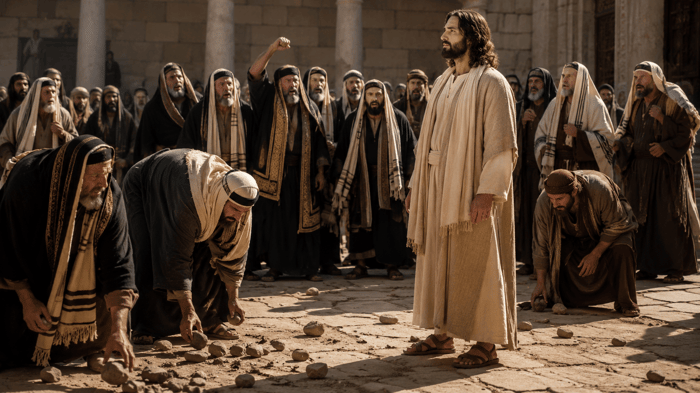
His enemies understood many of His claims. They sometimes tried to stone Him because they believed He was making Himself equal with God.
The real issue is not whether Jesus used one exact phrase. The issue is whether He claimed the identity, authority, works, and honor that belong to God.
Why Didn't Jesus Say I Am God in Those Exact Words?
The Bible does not record Jesus saying the exact English sentence, "I am God." But Jesus did not speak English, and the Bible does not require one exact sentence to establish a truth.
A person can clearly claim an identity without using one fixed phrase. A king may say, "This kingdom is mine," "I sit on the throne," or "You are under my authority." Each statement can reveal who he is.
Jesus made claims that were clear in His own culture. He used divine titles, claimed unity with the Father, forgave sins, accepted worship, and said He had authority over life and judgment.
So, why didn't Jesus say I am God? One reason is that the words "I am God" could have been misunderstood as meaning that Jesus was God the Father. Scripture teaches that the Son is divine, yet distinct from the Father.
Jesus revealed Himself as God the Son. He did not teach that He was the Father.
Did Jesus Claim to Be God?
Did Jesus claim to be God? Yes, though He often expressed that truth in ways rooted in the Old Testament and Jewish belief.
One of His clearest statements appears in John 10:
I and the Father are one.
John 10:30 (WEB)
The people listening did not think Jesus was merely saying that He and the Father agreed with each other. They understood Him to be making a much greater claim.
The Jews answered him, "We don't stone you for a good work, but for blasphemy: because you, being a man, make yourself God."
John 10:33 (WEB)
Their response shows how they understood His words. They believed Jesus, a man standing before them, was claiming equality with God.
Jesus did not correct them by saying, "You misunderstood. I am only a prophet." Instead, He continued defending His unique relationship with the Father.
This directly answers why didn't Jesus say I am God. His listeners already understood that His words carried a divine claim.
Jesus Used God's Divine Name
Another important example appears in John 8. Jesus spoke about Abraham and then made a striking statement:
Jesus said to them, "Most certainly, I tell you, before Abraham came into existence, I AM."
John 8:58 (WEB)
Jesus did not merely say, "I existed before Abraham." He used the words "I AM."
This language points back to God's revelation to Moses:
God said to Moses, "I AM WHO I AM," and he said, "You shall tell the children of Israel this: 'I AM has sent me to you.'"
Exodus 3:14 (WEB)
Jesus claimed existence before Abraham, who had lived many centuries earlier. He also used language associated with God's divine name.
The reaction was immediate:
Therefore they took up stones to throw at him, but Jesus was hidden, and went out of the temple, having gone through the middle of them, and so passed by.
John 8:59 (WEB)
Why didn't Jesus say I am God? In John 8:58, He made a claim that His audience understood as divine. Their attempt to stone Him shows that they did not hear His words as a harmless statement about age.
Jesus Claimed Authority to Forgive Sins
The deity of Christ is also revealed through what Jesus claimed authority to do.
When a paralyzed man was brought to Him, Jesus first addressed the man's deepest need:
Jesus, seeing their faith, said to the paralytic, "Son, cheer up! Your sins are forgiven you."
Matthew 9:2 (WEB)
The religious leaders understood the issue:
Behold, some of the scribes said to themselves, "This man blasphemes."
Matthew 9:3 (WEB)
A person can forgive an offense committed against himself. But Jesus announced the forgiveness of the man's sins against God.
Jesus then healed the man to show that He had authority to forgive sins.
This was more than compassion. Jesus exercised divine authority.
When people ask why Jesus didn't say he was God, they should also consider what He did. His actions often made the claim as clearly as words could.
Jesus Claimed Authority Over the Sabbath
God gave the Sabbath command to Israel. Yet Jesus claimed authority over it:
For the Son of Man is Lord of the Sabbath.
Matthew 12:8 (WEB)
Jesus did not present Himself as another teacher offering a personal opinion about the Sabbath. He said He was its Lord.
To be Lord of the Sabbath is to possess authority over an institution established by God.
This contributes to the answer to why didn't Jesus say I am God. Jesus repeatedly placed Himself in roles that belonged to God alone.
Jesus Claimed the Right to Judge the World
The Old Testament describes God as the Judge of all the earth. Jesus claimed that final judgment had been entrusted to Him.
For the Father judges no one, but he has given all judgment to the Son.
John 5:22 (WEB)
Jesus then explained why:
That all may honor the Son, even as they honor the Father. He who doesn't honor the Son doesn't honor the Father who sent him.
John 5:23 (WEB)
This is an astonishing claim. Jesus said the Son must receive the same honor given to the Father.
A faithful prophet would never tell people to honor him in the same way they honor God. Yet Jesus required that honor because He shares the divine nature.
The deity of Christ does not rest on one isolated verse. It appears throughout His claims and authority.
Jesus Claimed to Give Eternal Life
Jesus also claimed power over eternal life.
My sheep hear my voice, and I know them, and they follow me. I give eternal life to them. They will never perish, and no one will snatch them out of my hand.
John 10:27-28 (WEB)
Jesus did not say He merely told people how to earn eternal life. He said, "I give eternal life to them."
He also claimed the power to preserve them forever.
This is another reason the question why didn't Jesus say I am God is too narrow. The larger testimony of Scripture shows Jesus claiming divine power over salvation, life, death, and judgment.
Jesus Accepted Worship
Faithful servants of God refused worship.
When the apostle John fell before an angel, the angel told him not to do it. Yet Jesus received worship without correcting those who worshiped Him.
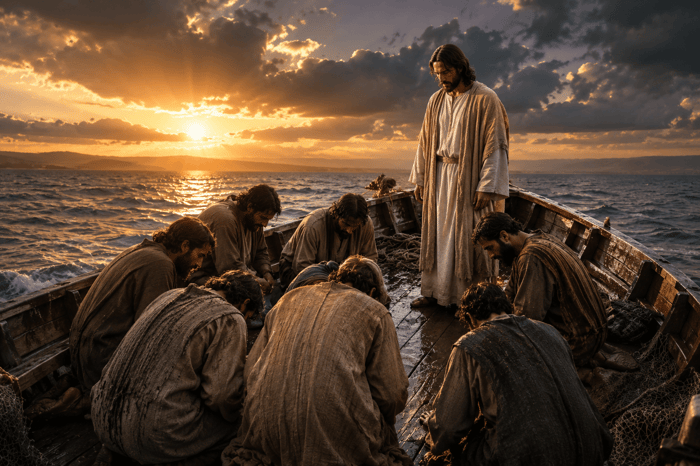
After Jesus walked on the water and calmed the wind, His disciples responded:
Those who were in the boat came and worshiped him, saying, "You are truly the Son of God!"
Matthew 14:33 (WEB)
After His resurrection, Thomas addressed Jesus with a direct confession:
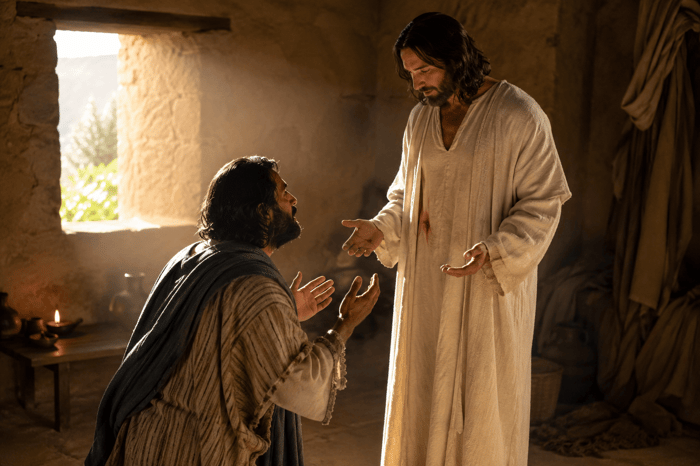
Thomas answered him, "My Lord and my God!"
John 20:28 (WEB)
Jesus did not rebuke Thomas. He accepted the confession and spoke about the faith of those who would believe without seeing Him physically.
This is one of the strongest answers to why didn't Jesus say I am God. Jesus accepted the words "My Lord and my God" as a true confession of faith.
Jesus Said He Reveals the Father
Jesus also claimed that seeing Him revealed the Father.
Jesus said to him, "Have I been with you such a long time, and do you not know me, Philip? He who has seen me has seen the Father. How do you say, 'Show us the Father'?"
John 14:9 (WEB)
Jesus was not saying that He and the Father are the same Person. He was saying that He reveals the Father's character and nature perfectly.
No mere prophet could truthfully say that seeing him was seeing the Father. Prophets revealed messages from God. Jesus reveals God in His own Person.
Why didn't Jesus say I am God? He said things that went beyond what any ordinary teacher or prophet could claim.
What Claims Did Jesus Make?
The case for the deity of Christ includes many connected truths:
| Jesus' claim or action | What it reveals |
|---|---|
| "I and the Father are one" | Unity with the Father |
| "Before Abraham existed, I AM" | Eternal existence and divine identity |
| He forgave sins | Authority belonging to God |
| He called Himself Lord of the Sabbath | Authority over God's command |
| He claimed final judgment | Divine rule over all people |
| He gives eternal life | Power over salvation and death |
| He accepted worship | Honor belonging to God |
| He said seeing Him reveals the Father | Perfect revelation of God |
Each claim should be read within its setting. Together, they form a clear and consistent picture.
Jesus did not walk through Judea repeating one slogan. He revealed His identity over time through His teaching, miracles, relationships, death, and resurrection.
Why Did Jesus Sometimes Speak Indirectly?
Jesus did not always state every truth in the most direct form possible. At times, He used parables, figures of speech, Old Testament references, and questions.
There were several reasons:
- His words revealed truth to those willing to hear.
- His claims connected with Old Testament promises.
- He exposed the motives of His listeners.
- He avoided allowing crowds to force their political ideas of kingship upon Him.
- He revealed His identity according to the Father's timing.
- His actions confirmed the truth of His words.
Jesus' teaching was not unclear because He lacked knowledge of His identity. His words demanded careful listening and a response of faith.
The question why didn't Jesus say I am God often expects Jesus to speak like a modern debate participant. But Jesus spoke as a Jewish teacher within the language and Scripture of His time.
The Father and Son Are Distinct
Christian belief does not teach that Jesus is the Father. The Father, Son, and Holy Spirit are distinct Persons who share the one divine nature.
Jesus prayed to the Father and was sent by the Father. The Father loved the Son, and the Son obeyed the Father.
This personal distinction helps explain why Jesus often referred to the Father instead of simply saying, "I am the Father."
Jesus is not a second god beside the Father. Nor is He the Father appearing under another name. He is the eternal Son who shares God's nature and glory.
Why didn't Jesus say I am God? The full biblical answer must preserve both truths:
- Jesus is fully God.
- Jesus is not God the Father.
The Resurrection Confirms Jesus' Claims
Jesus' claims cannot be separated from His resurrection.
If Jesus had remained dead, His claims would have been empty. But God raised Him from the grave, confirming His identity and victory.
Who was declared to be the Son of God with power, according to the Spirit of holiness, by the resurrection from the dead, Jesus Christ our Lord.
Romans 1:4 (WEB)
The disciples did not begin preaching Jesus as divine because they slowly turned a teacher into a legend. They proclaimed Him as the risen Lord because they believed they had seen Him alive after His crucifixion.
The resurrection gives weight to every claim Jesus made.
Why This Question Matters for Salvation
Why didn't Jesus say I am God is not only a debate question. It affects how a person responds to Jesus.
If Jesus were only a teacher, people could admire some of His ideas while rejecting His authority. But if He is the divine Son, then He deserves trust, worship, and obedience.
Sin separates every person from God. We cannot remove our guilt through good works or religious effort.
Jesus came as God the Son in human flesh. He lived without sin, died as the sacrifice for sinners, and rose from the dead.
For God so loved the world, that he gave his one and only Son, that whoever believes in him should not perish, but have eternal life.
John 3:16 (WEB)
The deity of Christ matters because only a perfect Savior can bear the judgment sinners deserve. Jesus' death has saving power because of who He is.
The right response is not merely to admit that Jesus made divine claims. It is to turn from sin and trust Him as Lord and Savior.
Did Jesus Claim to Be God? The Evidence Is Clear
Did Jesus claim to be God? He claimed unity with the Father, eternal existence, authority to forgive sin, power to give eternal life, and the right to receive divine honor.
His listeners understood these claims. Some worshiped Him. Others accused Him of blasphemy and tried to kill Him.
Why didn't Jesus say I am God in one exact sentence? Because His identity was revealed through a much richer and fuller testimony.
Jesus did not leave people with the option of treating Him as only a moral teacher. His words and works force us to decide who He is.
The evidence of Scripture points to one conclusion: Jesus is the eternal Son of God, worthy of the same honor given to the Father.
He is not merely a messenger telling us how to find God. He is the Lord who came to seek and save sinners.
FAQs
Why didn't Jesus say "I am God" in those exact words?
Jesus never spoke the exact English phrase "I am God," but He clearly revealed His divine identity through His words, actions, and authority. He spoke in a first-century Jewish setting where His audience understood His claims. Their reactions show they recognized that He was making Himself equal with God.
I and the Father are one.
John 10:30 (WEB)
The Jews answered him, "We don't stone you for a good work, but for blasphemy: because you, being a man, make yourself God."
John 10:33 (WEB)
Did Jesus claim to be God?
Yes. Although Jesus often used titles and Old Testament language instead of one direct sentence, He claimed eternal existence, authority to forgive sins, authority to judge the world, and equality with the Father. These are claims that belong to God alone.
Jesus said to them, "Most certainly, I tell you, before Abraham came into existence, I AM."
John 8:58 (WEB)
Why did Jesus speak indirectly about His identity?
Jesus often revealed truth gradually and in ways that fulfilled Old Testament prophecy. He spoke in parables, used divine titles, and appealed to Scripture so that those willing to believe could understand while exposing the unbelief of those who rejected Him.
Jesus therefore said to them, "When you have lifted up the Son of Man, then you will know that I AM, and I do nothing of myself, but as my Father taught me, I say these things."
John 8:28 (WEB)
If Jesus is God, why did He pray to the Father?
Jesus prayed because the Father and the Son are distinct Persons within the one true God. During His earthly ministry, Jesus lived in perfect obedience to the Father while remaining fully divine. His prayers demonstrate His relationship with the Father, not a denial of His deity.
Father, glorify your name!
Then a voice came out of heaven, saying, "I have both glorified it, and will glorify it again."
John 12:28 (WEB)
Did Jesus accept worship?
Yes. Unlike prophets and angels who refused worship, Jesus accepted it because it rightly belonged to Him. After His resurrection, Thomas worshiped Jesus and called Him both Lord and God, and Jesus accepted this confession.
Thomas answered him, "My Lord and my God!"
John 20:28 (WEB)
Why does the deity of Christ matter for salvation?
The question, "Why didn't Jesus say I am God," ultimately points to the Gospel. If Jesus were only a man, He could not bear the sins of the world or offer eternal life. Because He is God the Son who became fully human, His death is the perfect sacrifice for sinners, and His resurrection proves His victory over sin and death. Believing in His true identity is essential because only the divine Savior can reconcile us to God.
For God so loved the world, that he gave his one and only Son, that whoever believes in him should not perish, but have eternal life.
John 3:16 (WEB)
That if you will confess with your mouth that Jesus is Lord, and believe in your heart that God raised him from the dead, you will be saved.
Romans 10:9 (WEB)
What is the strongest evidence that Jesus is God?
No single verse stands alone. The strongest evidence comes from the combined testimony of Scripture. Jesus claimed divine authority, forgave sins, accepted worship, fulfilled Old Testament prophecy, rose from the dead, and was openly called God by His followers. Together, these truths present a consistent biblical case for the deity of Christ.
Looking for the blessed hope and appearing of the glory of our great God and Savior, Jesus Christ.
Titus 2:13 (WEB)
Who was declared to be the Son of God with power, according to the Spirit of holiness, by the resurrection from the dead, Jesus Christ our Lord.
Romans 1:4 (WEB)