Table of Contents
- How the Trinity in Revelation Is Revealed
- The Father, Son, and Spirit in Revelation's Opening Greeting
- Jesus Is Central in Revelation
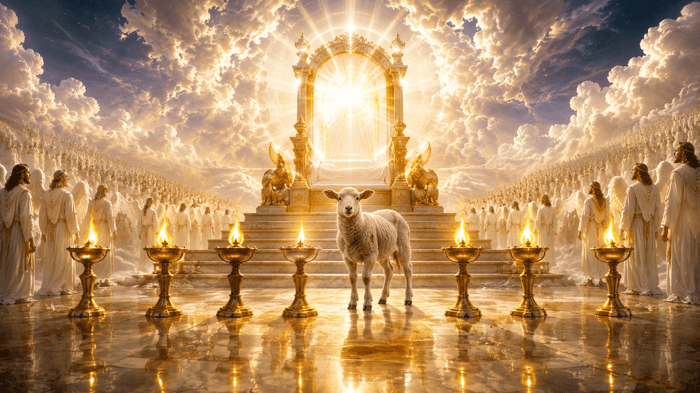
- The Lamb and God Share the Throne
- Jesus Is Worshiped in Heaven
- The Holy Spirit Speaks to the Churches
- Jesus and the Spirit Work Together in the Messages to the Churches
- The Seven Spirits and the Fullness of the Holy Spirit
- The Lamb Receives the Spirit
- The Father and Son Receive Worship Together
- The Trinity and God's Final Victory
- God and the Lamb Are at the Center of the New Creation
- The Throne of God and the Lamb
- The Spirit and the Bride Give the Final Invitation
- The Trinity in Revelation and Salvation
- Why the Trinity in Revelation Matters
- FAQs
The Trinity in Revelation is revealed through the way the Father, Son, and Holy Spirit appear throughout the Bible's final book. Revelation does not stop to give a formal definition of the Trinity. Instead, it presents God on the throne, Jesus Christ as the Lamb and risen Lord, and the Holy Spirit speaking to the churches and participating in God's final work.
The book of Revelation is filled with visions, worship, judgment, victory, and hope. Yet behind all of these themes is a clear picture of the one God who reigns and brings His plan to completion.
Reading Revelation with this Trinitarian pattern in mind helps us see that the Father, Son, and Holy Spirit remain central from the opening greeting to the final invitation of Scripture.
How the Trinity in Revelation Is Revealed
The Trinity in Revelation appears through worship, divine titles, heavenly scenes, messages to the churches, and the final victory of God.
Revelation repeatedly shows several truths together:
- God the Father reigns on the throne.
- Jesus Christ is worshiped, exalted, and identified as the Lamb.
- The Holy Spirit speaks to the churches.
- The Father and Son share divine honor.
- The Spirit participates in God's message and invitation.
- God's saving plan reaches its final fulfillment.
The book does not present these truths as unrelated.
Instead, they form one united picture of God's rule, redemption, judgment, and restoration.
The Father, Son, and Spirit in Revelation's Opening Greeting
The Trinitarian pattern appears at the very beginning of Revelation.
John writes to the seven churches:
"Grace to you and peace from God, who is and who was and who is to come; and from the seven Spirits who are before his throne; and from Jesus Christ, the faithful witness, the firstborn of the dead, and the ruler of the kings of the earth."
Revelation 1:4-5 (WEB)
This opening greeting brings together God, the Spirit, and Jesus Christ.
God is described as the One who is, who was, and who is to come.
The "seven Spirits" before the throne are commonly understood as symbolic language for the fullness of the Holy Spirit.
Jesus Christ is named as the faithful witness, the firstborn from the dead, and ruler of the kings of the earth.
The Father Son Holy Spirit Revelation pattern is present from the opening lines.
Jesus Is Central in Revelation
Jesus in Revelation is not a minor figure.
He stands at the center of the book.
John sees the risen Christ in glory.
"His head and his hair were white as white wool, like snow. His eyes were like a flame of fire."
Revelation 1:14 (WEB)
This is far different from the humble appearance of Jesus during His earthly ministry.
Revelation presents Him as the risen and glorified Lord.
Jesus also declares:
"I am the first and the last, and the Living one. I was dead, and behold, I am alive forever and ever. Amen. I have the keys of Death and of Hades."
Revelation 1:17-18 (WEB)
Jesus was dead, yet now He lives forever.
His resurrection is central to His authority.
This helps explain why Revelation gives such great honor to Christ. He is not merely a messenger from God. He is the risen Lord who shares in God's rule and receives worship.
The Lamb and God Share the Throne
One of the strongest themes in Revelation is the relationship between the Lamb and God.
Jesus is repeatedly identified as the Lamb.
This title points to His sacrificial death and saving work.
In Revelation 5, heaven worships both God and the Lamb.
"To him who sits on the throne and to the Lamb be the blessing, the honor, the glory, and the dominion, forever and ever! Amen!"
Revelation 5:13 (WEB)
The worship is directed to both "him who sits on the throne" and "the Lamb."
The distinction remains clear.
The Lamb is not the Father.
Yet the Lamb receives the same blessing, honor, glory, and dominion.
This is one of the clearest Lamb and God passages in Revelation.
Jesus Is Worshiped in Heaven
Revelation 5 gives another powerful picture of Jesus.
The heavenly beings sing to the Lamb:
"You are worthy to take the book and to open its seals, because you were killed, and bought us for God with your blood out of every tribe, language, people, and nation."
Revelation 5:9 (WEB)
Jesus is worshiped because of His saving work.
He was killed.
His blood purchased people for God.
This places redemption at the center of Revelation's worship.
The relationship between God and the Lamb is therefore not abstract. It is tied directly to salvation.
The Father reigns.
The Lamb redeems.
The book presents both within the same heavenly drama.
The Holy Spirit Speaks to the Churches
The Holy Spirit in Revelation is also active.
At the end of each message to the seven churches, Jesus says:
"He who has an ear, let him hear what the Spirit says to the assemblies."
Revelation 2:7 (WEB)
This phrase appears repeatedly.
The Spirit speaks.
The churches are commanded to listen.
This is personal language.
The Spirit is not described as merely a force or influence.
He communicates God's message to God's people.
This gives the Trinity in Revelation a practical dimension.
The Father reigns.
The Son addresses the churches.
The Spirit speaks to them.
Jesus and the Spirit Work Together in the Messages to the Churches
The messages to the churches reveal another interesting pattern.
Jesus speaks directly in each message.
Yet at the end, believers are told to hear what the Spirit says.
That means the words of Christ and the message of the Spirit are united.
Jesus speaks.
The Spirit speaks.
There is no conflict between them.
This reflects the same Trinitarian harmony found elsewhere in Scripture.
The Spirit's message does not draw people away from Jesus.
It presses them to respond to what Christ says.
The Seven Spirits and the Fullness of the Holy Spirit
Revelation uses symbolic language when speaking about the Spirit.
John refers to "the seven Spirits of God."
"There were seven lamps of fire burning before his throne, which are the seven Spirits of God."
Revelation 4:5 (WEB)
This does not mean there are seven separate Holy Spirits.
Revelation often uses the number seven to represent fullness or completeness.
The language points to the complete and perfect presence of God's Spirit.
The imagery also places the Spirit before God's throne.
This strengthens the connection between the Holy Spirit and God's heavenly rule.
The Lamb Receives the Spirit
Another important passage appears in Revelation 5.
John sees the Lamb:
"I saw in the middle of the throne and of the four living creatures, and in the middle of the elders, a Lamb standing, as though it had been slain, having seven horns and seven eyes, which are the seven Spirits of God, sent out into all the earth."
Revelation 5:6 (WEB)
The Lamb stands in the center of the heavenly throne scene.
The seven Spirits of God are connected with Him and are sent throughout the earth.
This creates another Trinitarian picture.
God is on the throne.
The Lamb stands in the midst.
The Spirit is sent throughout the earth.
The Trinity in Revelation is therefore connected to God's rule and His work in the world.
The Father and Son Receive Worship Together
Revelation repeatedly joins God and the Lamb in worship.
This is significant.
Jewish monotheism placed worship of God at the center of faith.
Yet Revelation includes Jesus within that worship.
The Father and Son do not compete for glory.
Their glory is shared.
| Person | Emphasis in Revelation |
|---|---|
| The Father | Reigns on the throne, judges, and brings His plan to completion |
| The Son | Appears as the Lamb, redeems, conquers, reigns, and receives worship |
| The Holy Spirit | Speaks, reveals, and participates in God's work among the churches |
This pattern does not divide God into separate gods.
Instead, the Trinity in Revelation reveals one divine purpose carried out through the Father, Son, and Holy Spirit.
The Trinity and God's Final Victory
The Trinity in Revelation is also connected to God's final victory.
The Father reigns over history.
The Son conquers evil.
The Spirit continues to speak and call God's people to faithfulness.
Jesus is presented as the victorious King.
"He has on his garment and on his thigh a name written, 'KING OF KINGS AND LORD OF LORDS.'"
Revelation 19:16 (WEB)
This title emphasizes Christ's supreme authority.
The Lamb who was slain is also the conquering King.
Revelation therefore joins sacrifice and victory together.
Jesus saves through His death and reigns through His resurrection and exaltation.
God and the Lamb Are at the Center of the New Creation
Near the end of Revelation, John sees the New Jerusalem.
Something surprising is missing.
There is no temple building.
John explains why:
"I saw no temple in it, for the Lord God, the Almighty, and the Lamb are its temple."
Revelation 21:22 (WEB)
God and the Lamb are the temple.
Their presence fills the city.
John also says:
"The city has no need for the sun or moon to shine, for the very glory of God illuminated it, and its lamp is the Lamb."
Revelation 21:23 (WEB)
Again, God and the Lamb are closely connected.
God's glory provides the light.
The Lamb is its lamp.
The final hope of Scripture is not simply a beautiful city.
It is life in the presence of God and the Lamb.
The Throne of God and the Lamb
Revelation becomes even more striking in the final chapter.
John writes:
"The throne of God and of the Lamb will be in it, and his servants will serve him."
Revelation 22:3 (WEB)
Notice the wording.
There is "the throne of God and of the Lamb."
The throne is shared.
God and the Lamb remain distinct, yet their rule is united.
This is one of the strongest final pictures of the Father Son Holy Spirit Revelation theme, even though the Spirit appears in the surrounding verses rather than this sentence itself.
The Father and Son reign together forever.
The Spirit and the Bride Give the Final Invitation
The Holy Spirit appears again near the very end of Scripture.
"The Spirit and the bride say, 'Come!' He who hears, let him say, 'Come!' He who is thirsty, let him come. He who desires, let him take the water of life freely."
Revelation 22:17 (WEB)
The Spirit gives the invitation.
The bride joins Him.
People are called to come and receive the water of life.
This is a fitting ending to the Holy Spirit in Revelation.
The Spirit who spoke to the churches continues to call people toward God's life and salvation.
The Trinity in Revelation and Salvation
The Trinity in Revelation is deeply connected to the Gospel.
Humanity's problem is sin.
Revelation shows the seriousness of God's judgment, but it also reveals God's saving answer.
The Lamb was slain.
His blood purchases people for God.
Jesus says:
"I am the Alpha and the Omega, the Beginning and the End. I will give freely to him who is thirsty from the spring of the water of life."
Revelation 21:6 (WEB)
Salvation is God's gift.
It is not earned by human effort.
The Father carries out His saving plan.
The Lamb gives His life and conquers death.
The Spirit calls people to come.
This is why Revelation is not only a book about judgment.
It is also a book about redemption.
The Lamb saves people from every tribe, language, people, and nation.
Why the Trinity in Revelation Matters
The Trinity is not a side doctrine in Revelation.
It helps us understand the final message of the Bible.
The Father reigns.
The Son has conquered through His death and resurrection.
The Holy Spirit speaks and calls.
Together, the Father, Son, and Holy Spirit are involved in God's final work of judgment, salvation, worship, and restoration.
The Trinity in Revelation also gives believers hope.
History does not end in chaos.
God reigns.
The Lamb wins.
The Spirit continues to speak.
The final picture is not of evil overcoming good, but of God dwelling with His people forever.
Revelation closes the Bible by showing the same God revealed throughout Scripture: the Father who reigns, the Son who redeems and rules, and the Holy Spirit who speaks and calls people to life.
FAQs
How is the Trinity in Revelation revealed?
The Trinity in Revelation is revealed through the Father who reigns, Jesus Christ who redeems and receives worship, and the Holy Spirit who speaks and participates in God's work. Revelation presents these truths through heavenly scenes, worship, messages to the churches, and God's final victory.
"Grace to you and peace from God, who is and who was and who is to come; and from the seven Spirits who are before his throne; and from Jesus Christ, the faithful witness, the firstborn of the dead, and the ruler of the kings of the earth."
Revelation 1:4-5 (WEB)
Why is Jesus called the Lamb in Revelation?
Jesus is called the Lamb because Revelation connects His identity with His sacrificial death and saving work. The Lamb was slain, yet He stands victorious and receives worship in heaven. His blood purchases people for God from every tribe, language, people, and nation.
"You are worthy to take the book and to open its seals, because you were killed, and bought us for God with your blood out of every tribe, language, people, and nation."
Revelation 5:9 (WEB)
How do God and the Lamb share divine honor in Revelation?
Revelation keeps God and the Lamb distinct while placing them together in heavenly worship. Both receive blessing, honor, glory, and dominion. Near the end of the book, God and the Lamb also share the throne, showing their united rule.
"To him who sits on the throne and to the Lamb be the blessing, the honor, the glory, and the dominion, forever and ever! Amen!"
Revelation 5:13 (WEB)
What does the Holy Spirit do in Revelation?
The Holy Spirit speaks to the churches, communicates God's message, and calls people toward God's life and salvation. The repeated command to hear what the Spirit says shows that the Spirit acts personally rather than as an impersonal force.
"He who has an ear, let him hear what the Spirit says to the assemblies."
Revelation 2:7 (WEB)
What do the seven Spirits of God mean in Revelation?
Revelation uses the symbolic expression "seven Spirits of God" to describe the fullness and completeness of God's Spirit. The number seven is used throughout Revelation to communicate fullness or completeness, so the passage does not teach that there are seven separate Holy Spirits.
"There were seven lamps of fire burning before his throne, which are the seven Spirits of God."
Revelation 4:5 (WEB)
How are God and the Lamb connected in the New Jerusalem?
God and the Lamb are at the center of the New Jerusalem. Revelation says the city does not need a temple because the Lord God Almighty and the Lamb are its temple. The final hope of God's people is life in their presence.
"I saw no temple in it, for the Lord God, the Almighty, and the Lamb are its temple."
Revelation 21:22 (WEB)
How does the Trinity in Revelation point to the Gospel and salvation?
The Trinity in Revelation shows why sinners need God's saving work and how God provides it. Humanity faces judgment because of sin, but the Father carries out His saving plan, the Lamb gives His life and conquers death, and the Spirit calls people to come and receive life. Salvation is God's gift, received through the saving work of Jesus rather than earned by human effort.
"The Spirit and the bride say, 'Come!' He who hears, let him say, 'Come!' He who is thirsty, let him come. He who desires, let him take the water of life freely."
Revelation 22:17 (WEB)
Why does the Trinity in Revelation give believers hope?
The Trinity in Revelation gives hope because history ends under God's rule rather than in chaos. The Father reigns, the Son has conquered through His death and resurrection, and the Holy Spirit continues to speak and call. Revelation ends with God and the Lamb reigning and God's people living in His presence.
"The throne of God and of the Lamb will be in it, and his servants will serve him."
Revelation 22:3 (WEB)