Table of Contents
- What Does Jehovah Rapha Mean?
- The Story Behind Exodus 15:26
- Jehovah Rapha Meaning in the Wilderness
- Does Jehovah Rapha Mean Physical Healing?
- Jehovah Rapha and Spiritual Healing
- Jehovah Rapha Meaning and Jesus Christ
- The Lord Who Heals and the Gospel
- What Jehovah Rapha Does Not Mean
- How Jehovah Rapha Reveals God's Character
- How Should Christians Respond to Jehovah Rapha?
- Jehovah Rapha and Final Restoration
- FAQs
The Jehovah Rapha meaning is "The Lord Who Heals." This name of God appears in Exodus 15:26, where God revealed Himself to Israel after bringing them out of Egypt and leading them through the Red Sea.
Jehovah Rapha shows that healing belongs to God's character. He is not distant from pain, sickness, sin, or brokenness. He sees what is wounded and has power to restore.
This name does not mean life will be free from suffering. It means the Lord who heals is faithful, holy, wise, and near to His people.
What Does Jehovah Rapha Mean?
The Jehovah Rapha meaning comes from the Hebrew words often understood as "The Lord Who Heals." The word "Rapha" carries the idea of healing, restoring, curing, or making whole.
This name is one of the important names of God because it reveals His care for people who are weak and broken. God is not only Creator and King. He is also the healer of His people.
The name Jehovah Rapha is found in Exodus 15, where God says:
saying, “If you will diligently listen to the voice of the Lord your God, and do that which is right in his eyes, and give ear to his commandments and keep all his statutes, I will put none of the diseases on you that I put on the Egyptians, for I am the Lord, your healer.”
Exodus 15:26 (ESV)
This verse gives us the Jehovah Rapha Bible meaning in its original setting. God had rescued Israel from slavery. Now He was teaching them to trust Him, obey Him, and walk with Him.
The Story Behind Exodus 15:26
To understand Jehovah Rapha, we need to look at what happened before Exodus 15:26.
Israel had just seen one of the greatest acts of deliverance in the Old Testament. God had parted the Red Sea, saved His people, and judged Pharaoh's army.
Thus the Lord saved Israel that day from the hand of the Egyptians, and Israel saw the Egyptians dead on the seashore.
Exodus 14:30 (ESV)
After this, Israel sang praise to God. They celebrated His strength, salvation, and victory.
The Lord is my strength and my song,
and he has become my salvation;
this is my God, and I will praise him,
my father's God, and I will exalt him.
Exodus 15:2 (ESV)
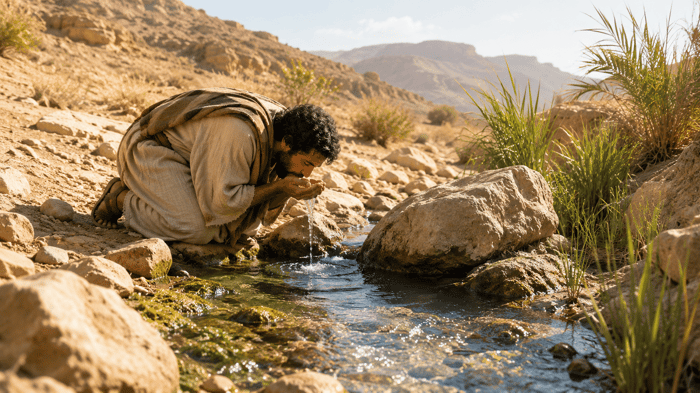
But soon after the song, the people faced thirst in the wilderness. They came to Marah, where the water was bitter and could not be consumed.
When they came to Marah, they couldn't drink the waters of Marah, for they were bitter. Therefore its name was called Marah.
Exodus 15:23 (WEB)
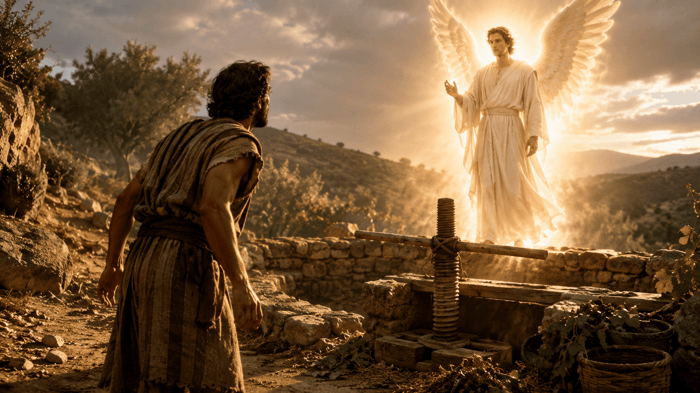
The people grumbled. Moses cried out to the Lord. God showed him a tree, and when Moses threw it into the water, the water became sweet.
And he cried to the Lord, and the Lord showed him a log, and he threw it into the water, and the water became sweet.
There the Lord made for them a statute and a rule, and there he tested them,
Exodus 15:25 (ESV)
This is the setting where God revealed Himself as Jehovah Rapha. The Jehovah Rapha meaning becomes clear as He healed the bitter water and taught Israel that He was their healer.
Jehovah Rapha Meaning in the Wilderness
The Jehovah Rapha meaning is tied to both need and trust. Israel had been saved from Egypt, but they still had to learn how to depend on God in the wilderness.
They needed water. They needed guidance. They needed faith. They also needed hearts that would listen to the Lord.
God's healing in Exodus 15 was not only about water. It was about relationship. The Lord was calling His people to hear His voice and walk in His ways.
| Part of the Story | What It Shows |
|---|---|
| Israel came to bitter water | Life after deliverance still includes testing |
| The people grumbled | Human hearts struggle to trust God |
| Moses cried out to Yahweh | Prayer brings need before the Lord |
| God showed Moses a tree | God provides what His people cannot see |
| The water became sweet | The Lord has power to heal and restore |
| God named Himself healer | Healing flows from who God is |
Jehovah Rapha teaches us that God can heal what is bitter. He can restore what is broken. He can provide grace in places that feel dry and painful.
Does Jehovah Rapha Mean Physical Healing?
Yes, Jehovah Rapha includes God's power to heal physically. The Bible shows that God has authority over sickness, weakness, and disease.
God made the body. He knows every part of it. He can heal through miracles, medicine, rest, wisdom, or care from others.
The Psalms praise God as the one who heals diseases.
He forgives all your sins. He heals all your diseases.
Psalm 103:3 (WEB)
This does not mean every sickness will be healed right away in this life. Scripture shows faithful people who still suffered. Paul had a thorn in the flesh. Timothy had stomach problems. Epaphroditus was sick and nearly died.
Yet God remained faithful. The Jehovah Rapha meaning reminds believers that God's faithfulness is not measured only by immediate physical healing.
The name Jehovah Rapha does not give us control over God. It gives us confidence to bring our needs to Him.
Jehovah Rapha and Spiritual Healing
The deepest healing we need is not physical. It is spiritual.
Sin wounds the soul. It separates us from God. It bends our desires, blinds our minds, and brings guilt before a holy God.
But your iniquities have separated you and your God, and your sins have hidden his face from you, so that he will not hear.
Isaiah 59:2 (WEB)
This is why the Jehovah Rapha meaning matters so much. God does not only heal symptoms. He deals with the root problem of sin.
The Lord who heals promised restoration for His people. He can heal the heart that has turned away from Him.
I will heal their waywardness. I will love them freely; for my anger is turned away from him.
Hosea 14:4 (WEB)
Spiritual healing begins when God brings sinners back to Himself. He forgives, cleanses, restores, and makes new.
Jehovah Rapha Meaning and Jesus Christ
The Jehovah Rapha meaning finds its fullest display in Jesus Christ. Jesus healed the sick, opened blind eyes, cleansed lepers, and raised the dead. His miracles showed His compassion and His authority as the Son of God.
Jesus went about in all Galilee, teaching in their synagogues, preaching the Good News of the Kingdom, and healing every disease and every sickness among the people.
Matthew 4:23 (WEB)
But Jesus did not come only to heal bodies. He came to save sinners.
When Jesus healed, His miracles pointed to a greater healing. They showed that God's kingdom had come near. They also pointed to the day when sin, sickness, pain, and death will be removed forever.
Isaiah spoke of the suffering servant who would bear sin and bring healing through His wounds.
But he was pierced for our transgressions. He was crushed for our iniquities. The punishment that brought our peace was on him; and by his wounds we are healed.
Isaiah 53:5 (WEB)
This healing is tied to the cross. Jesus bore the punishment sinners deserve. Through His death and resurrection, He provides forgiveness, peace with God, and new life.
Jehovah Rapha reveals that God does not ignore our deepest wound. He provides the Savior who heals the breach caused by sin.
The Lord Who Heals and the Gospel
The Gospel shows the greatest work of the Lord who heals. Every person needs more than comfort, health, or a better life. Every person needs forgiveness and reconciliation with God.
Jesus came for sinners who could not heal themselves.
When Jesus heard it, he said to them, "Those who are healthy have no need for a physician, but those who are sick. I came not to call the righteous, but sinners to repentance."
Mark 2:17 (WEB)
This verse helps explain the spiritual depth of Jehovah Rapha. Jesus is the great Physician. He does not call people to pretend they are well. He calls sinners to repent and come to Him.
The proud person hides the wound. The humble person brings it to Christ.
Through Jesus, God heals guilt with forgiveness. He heals separation by bringing us near. He heals spiritual death by giving eternal life.
What Jehovah Rapha Does Not Mean
Jehovah Rapha should not be reduced to a slogan about instant healing.
The Bible teaches us to pray with faith, but it also teaches us to trust God's wisdom. Sometimes God heals now. Sometimes He sustains us through weakness. Sometimes final healing waits until the resurrection.
| Misunderstanding | Biblical Correction |
|---|---|
| God must heal every sickness right now | God heals according to His wisdom and purpose |
| Sickness always means weak faith | Faithful believers can suffer deeply |
| Healing is only physical | The greatest healing is spiritual restoration |
| Prayer controls God | Prayer trusts God |
| Jehovah Rapha means life will be painless | Jehovah Rapha means God is faithful in pain |
Paul prayed for his thorn in the flesh to be removed. God answered by giving grace and strength in weakness.
He has said to me, "My grace is sufficient for you, for my power is made perfect in weakness." Most gladly therefore I will rather glory in my weaknesses, that the power of Christ may rest on me.
2 Corinthians 12:9 (WEB)
This is not a denial of God's healing power. It is a deeper view of it. Sometimes the Lord who heals works by strengthening us when the pain remains.
How Jehovah Rapha Reveals God's Character
Jehovah Rapha shows us that God is compassionate, holy, powerful, and faithful.
He is compassionate because He cares about human suffering. He is holy because He calls His people to listen and obey. He is powerful because He can restore what is broken. He is faithful because He does not abandon His people in weakness.
The Jehovah Rapha meaning reminds us that the Lord who heals does not treat people like problems to fix. He calls them into covenant relationship with Himself.
This matters because healing in Scripture is personal. God Himself is the healer.
He heals the broken in heart, and binds up their wounds.
Psalm 147:3 (WEB)
That verse is tender and strong. God is not harsh with broken people who come to Him. He binds wounds. He restores hearts. He gives grace.
How Should Christians Respond to Jehovah Rapha?
Christians should respond to Jehovah Rapha with prayer, trust, repentance, and hope.
We can pray for physical healing. We can ask God for wisdom in medical decisions. We can seek help from others. We can also trust God when healing does not come the way we hoped.
We should also ask God to heal what is deeper than the body.
Here are simple ways to respond:
- Bring sickness and pain to God in prayer.
- Ask God for wisdom, not just relief.
- Repent of sin instead of hiding it.
- Trust Christ as the healer of the soul.
- Comfort others with the compassion God has shown.
- Hope in the final healing promised in the resurrection.
Is any among you sick? Let him call for the elders of the assembly, and let them pray over him, anointing him with oil in the name of the Lord.
James 5:14 (WEB)
God invites His people to pray. Prayer is not a last resort. It is the right response of faith.
Jehovah Rapha and Final Restoration
Even when God heals in this life, every earthly healing is temporary. Bodies age. Pain returns. Death still comes.
That is why the final hope of Jehovah Rapha is greater than present relief. God's healing plan ends with a new creation where death and pain are gone.
He will wipe away every tear from their eyes. Death will be no more; neither will there be mourning, nor crying, nor pain any more. The first things have passed away.
Revelation 21:4 (WEB)
This is the final healing believers wait for. The Jehovah Rapha meaning ultimately points beyond temporary healing to God's complete restoration of His people. God will not leave His people partly restored forever. He will make all things new.
Until that day, Jehovah Rapha gives comfort. The Lord who heals is near in sickness, grief, weakness, and repentance. He can heal the body, restore the heart, forgive sin, and carry His people to the day when healing is complete.
Jehovah Rapha is the Lord who heals, and His greatest healing comes through Jesus Christ.
FAQs
What is the Jehovah Rapha meaning?
The Jehovah Rapha meaning is "The Lord Who Heals." God revealed this name in Exodus 15:26 after healing the bitter waters at Marah and teaching Israel that He was their healer. This name reminds us that healing flows from God's character and His faithful care for His people.
"He said, 'If you will diligently listen to Yahweh your God's voice, and will do that which is right in his eyes, and will pay attention to his commandments, and keep all his statutes, I will put none of the diseases on you which I have put on the Egyptians; for I am Yahweh who heals you.'"
Exodus 15:26 (WEB)
Where is Jehovah Rapha found in the Bible?
Jehovah Rapha appears in Exodus 15 after God delivered Israel from Egypt. When the people came to bitter water at Marah, God made the water fit to drink and then revealed Himself as "the Lord who heals."
"Then he cried to Yahweh. Yahweh showed him a tree, and he threw it into the waters, and the waters were made sweet. There he made a statute and an ordinance for them, and there he tested them."
Exodus 15:25 (WEB)
Does Jehovah Rapha only refer to physical healing?
No. God certainly has the power to heal physical sickness, but the Bible also speaks of healing broken hearts, restoring lives, and forgiving sin. Jehovah Rapha reveals God's work of making people whole according to His perfect will.
"He heals the broken in heart, and binds up their wounds."
Psalm 147:3 (WEB)
How does Jehovah Rapha point to Jesus Christ and the Gospel?
The Jehovah Rapha meaning reaches its fullest expression in Jesus Christ. Our deepest problem is not physical illness but sin, which separates us from God. Jesus came as the Great Physician to heal that broken relationship by bearing our sins on the cross. Through His death and resurrection, those who repent and trust in Him receive forgiveness, spiritual healing, and eternal life.
"But he was pierced for our transgressions. He was crushed for our iniquities. The punishment that brought our peace was on him; and by his wounds we are healed."
Isaiah 53:5 (WEB)
"When Jesus heard it, he said to them, 'Those who are healthy have no need for a physician, but those who are sick. I came not to call the righteous, but sinners to repentance.'"
Mark 2:17 (WEB)
Does Jehovah Rapha promise that every believer will be healed now?
No. God is able to heal every disease, but He does not promise immediate physical healing in every situation. Sometimes He heals miraculously, sometimes through ordinary means, and sometimes He gives grace to endure suffering while accomplishing His greater purposes.
"He has said to me, 'My grace is sufficient for you, for my power is made perfect in weakness.' Most gladly therefore I will rather glory in my weaknesses, that the power of Christ may rest on me."
2 Corinthians 12:9 (WEB)
How should Christians pray to Jehovah Rapha?
Believers should confidently bring their physical, emotional, and spiritual needs before God. We can ask Him for healing while trusting His wisdom and timing, knowing that He always does what is best.
"Is any among you sick? Let him call for the elders of the assembly, and let them pray over him, anointing him with oil in the name of the Lord."
James 5:14 (WEB)
What is the ultimate healing promised by Jehovah Rapha?
The greatest healing will come when Christ returns and makes all things new. Every believer will experience complete restoration, free from sin, suffering, pain, and death forever.
"He will wipe away every tear from their eyes. Death will be no more; neither will there be mourning, nor crying, nor pain any more. The first things have passed away."
Revelation 21:4 (WEB)