
Table of Contents
- What Is the Tetragrammaton?
- What Is YHWH?
- Why Is YHWH Called the Four-Letter Name of God?
- Why Do Many Bibles Use LORD Instead of YHWH?
- Is the Tetragrammaton the Same as Yahweh?
- Why the Yahweh Spelling Matters
- The Tetragrammaton and God's Covenant Faithfulness
- The Name of God Should Be Honored
- How the Tetragrammaton Points to Salvation
- How Should Christians Understand the Tetragrammaton?
- Final Thoughts on YHWH in the Bible
- FAQs
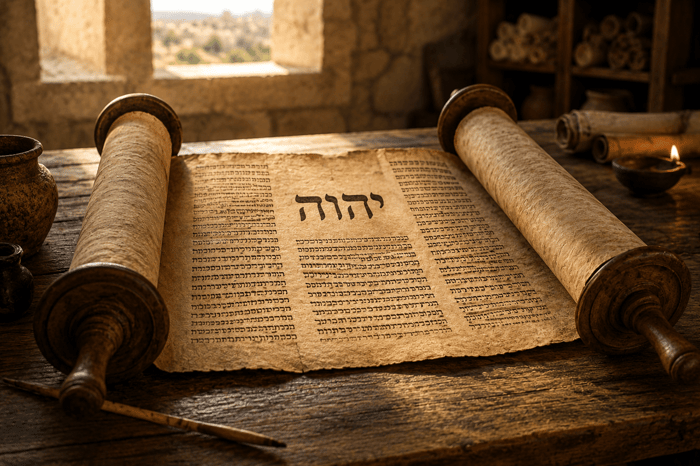
The tetragrammaton is the four-letter Hebrew name of God, often written in English as YHWH. It is one of the most important names in the Old Testament because it points to God's personal, covenant name revealed in Scripture.
Many readers first notice it when their Bible uses "LORD" in all capital letters. That capitalized word often shows where the Hebrew text contains YHWH.
This name is not a random religious word. It reveals the God who is eternal, holy, faithful, and near to His people.
God said moreover to Moses, "You shall tell the children of Israel this, 'Yahweh, the God of your fathers, the God of Abraham, the God of Isaac, and the God of Jacob, has sent me to you.' This is my name forever, and this is my memorial to all generations."
Exodus 3:15 (WEB)
What Is the Tetragrammaton?
The word tetragrammaton means "four letters." It refers to the four Hebrew consonants that form the divine name of God: YHWH.
In Hebrew, those letters are often represented in English as Yod, He, Waw, and He. Since ancient Hebrew was written mainly with consonants, the exact original pronunciation is debated.
The name is commonly pronounced "Yahweh" today, though many English Bibles use "LORD" instead.
| Term | Meaning |
|---|---|
| Tetragrammaton | The four-letter Hebrew name of God |
| YHWH | The English form of the Hebrew consonants |
| Yahweh | Common pronunciation of YHWH |
| LORD | Common English Bible rendering of YHWH |
| Jehovah | Later English form connected to YHWH |
The key point is simple: the tetragrammaton refers to God's covenant name in the Hebrew Bible.
What Is YHWH?
YHWH is the written form of God's divine name in Hebrew. It appears throughout the Old Testament and is closely tied to God's character, promises, and saving acts.
When Moses asked about God's name, God revealed Himself as "I AM WHO I AM."
God said to Moses, "I AM WHO I AM," and he said, "You shall tell the children of Israel this: 'I AM has sent me to you.'"
Exodus 3:14 (WEB)
This shows that God is self-existent. He does not depend on anyone or anything for life. He simply is.
The YHWH meaning points to the eternal God who exists by His own power and keeps His promises.
Why Is YHWH Called the Four-Letter Name of God?
YHWH is called the four-letter name of God because it is built from four Hebrew consonants. That is why the word tetragrammaton is used.
"Tetra" means four, and "grammaton" refers to letters. Together, the word means "four letters."
This name is different from titles like God, Lord, King, Shepherd, or Creator. Those titles describe what God is or what He does. YHWH is His revealed covenant name.
I am Yahweh. That is my name. I will not give my glory to another, nor my praise to engraved images.
Isaiah 42:8 (WEB)
God does not treat His name as empty. His name is tied to His glory.
Why Do Many Bibles Use LORD Instead of YHWH?
Many English Bibles use "LORD" in all capital letters where the Hebrew text has YHWH. This comes from a tradition of reverence.
Jewish readers often avoided speaking God's divine name aloud. Instead, they would say "Adonai," meaning "Lord," when reading Scripture.
English translators followed that pattern by using "LORD" to show where the Hebrew text contains YHWH.
You shall not misuse the name of Yahweh your God, for Yahweh will not hold him guiltless who misuses his name.
Exodus 20:7 (WEB)
This practice can confuse modern readers, but it also helps them see that God's name is holy and should not be treated carelessly.
Is the Tetragrammaton the Same as Yahweh?
Yes, the tetragrammaton refers to the Hebrew letters behind the name commonly pronounced Yahweh.
YHWH is the written form. Yahweh is the common pronunciation. LORD is the common English translation choice.
These are not different gods or different divine beings. They all point to the same covenant name of the one true God.
Hear, Israel: Yahweh is our God. Yahweh is one.
Deuteronomy 6:4 (WEB)
This verse is central to biblical faith. Yahweh is not one god among many. He alone is God.
Why the Yahweh Spelling Matters
The Yahweh spelling matters because it helps readers see that Scripture is speaking of God's personal covenant name, not just a general title.
When a Bible says "God," it may use a Hebrew word like Elohim. When it says "Lord," it may use Adonai. But when it says "LORD" in all capital letters, it often points to YHWH.
This helps us read the Old Testament with more care.
For example:
- "God" can speak of His divine nature and power.
- "Lord" can speak of His rule and authority.
- "YHWH" speaks of His revealed covenant name.
- "Yahweh" helps us hear that name more directly.
Each term teaches us something true, but they do not all function the same way.
The Tetragrammaton and God's Covenant Faithfulness
God's name is deeply connected to His covenant promises. When He spoke to Moses, He tied His name to His plan to rescue Israel from Egypt.
God spoke to Moses, and said to him, "I am Yahweh. I appeared to Abraham, to Isaac, and to Jacob as God Almighty; but by my name Yahweh I was not known to them."
Exodus 6:2-3 (WEB)
Therefore tell the children of Israel, "I am Yahweh, and I will bring you out from under the burdens of the Egyptians. I will rid you out of their bondage, and I will redeem you with an outstretched arm and with great judgments."
Exodus 6:6 (WEB)
God's name was not given as abstract information. He revealed His name while promising redemption.
That means the tetragrammaton points us to the God who speaks and acts. He does not merely make promises. He keeps them.
The Name of God Should Be Honored
Because God's name reveals His character, His people must honor it. This is why Scripture warns against misusing His name.
Misusing God's name is more than using it in careless speech. It includes treating God lightly, using His name falsely, or claiming His name while rejecting His ways.
Give to Yahweh the glory due to his name. Worship Yahweh in holy array.
Psalm 29:2 (WEB)
To know God's name is to be called into worship.
The name YHWH should lead us to reverence, not pride. It should make us humble, not argumentative.
How the Tetragrammaton Points to Salvation
The tetragrammaton reveals the holy God who makes Himself known. But it also reminds us of our need for mercy.
Yahweh is holy. We are sinners. Yahweh is faithful. We have broken faith. Yahweh is life, but sin brings death.
The God who revealed His covenant name also revealed His saving love. His promises find their fulfillment in Jesus Christ.
She shall give birth to a son. You shall call his name Jesus, for it is he who shall save his people from their sins.
Matthew 1:21 (WEB)
There is salvation in no one else, for there is no other name under heaven that is given among men by which we must be saved!
Acts 4:12 (WEB)
Knowing how to spell or pronounce YHWH cannot save anyone. Salvation comes through Jesus Christ, who brings sinners back to God.
How Should Christians Understand the Tetragrammaton?
Christians should understand the tetragrammaton with both truth and reverence.
It is right to study what YHWH means. It is good to understand why some Bibles say LORD. It is helpful to know why Yahweh is a common pronunciation.
But knowledge should lead to worship.
Here are simple ways to respond:
- Read God's name with reverence.
- Notice when your Bible uses "LORD" in all capital letters.
- Remember that God's name reveals His character.
- Trust the God who keeps covenant.
- Worship Him as holy and faithful.
- Look to Christ as the Savior God has given.
Those who know your name will put their trust in you, for you, Yahweh, have not forsaken those who seek you.
Psalm 9:10 (WEB)
God's name is not a puzzle to solve and then set aside. It is a gift that calls us to trust Him.
Final Thoughts on YHWH in the Bible
The tetragrammaton is the four-letter Hebrew name of God, written as YHWH. It points to the Lord's personal covenant name, His eternal nature, and His faithful love.
Many Bibles render it as LORD. Many Christians pronounce it as Yahweh. Some know the later English form Jehovah.
The most important thing is not winning a pronunciation debate. It is knowing the God who revealed His name, trusting His promises, and worshiping Him with reverence.
For I, Yahweh, don't change; therefore you, sons of Jacob, are not consumed.
Malachi 3:6 (WEB)
The God who spoke to Moses is still faithful. His name still calls people to trust, worship, and receive His saving mercy in Christ.
FAQs
What is the tetragrammaton?
The tetragrammaton is the four-letter Hebrew name of God, written as YHWH. The word comes from Greek and means "four letters." Throughout the Old Testament, this name identifies the one true God who made a covenant with His people.
God said moreover to Moses, "You shall tell the children of Israel this, 'Yahweh, the God of your fathers, the God of Abraham, the God of Isaac, and the God of Jacob, has sent me to you.' This is my name forever, and this is my memorial to all generations."
Exodus 3:15 (WEB)
What does YHWH mean?
YHWH is God's personal covenant name. It is closely connected to God's declaration, "I AM WHO I AM," revealing that He is eternal, self-existent, and unchanging. Unlike created beings, God depends on no one for His existence.
God said to Moses, "I AM WHO I AM," and he said, "You shall tell the children of Israel this: 'I AM has sent me to you.'"
Exodus 3:14 (WEB)
Why do many Bibles use "LORD" instead of YHWH?
Many English Bible translations replace YHWH with "LORD" in all capital letters. This follows the long-standing Jewish practice of saying "Adonai" ("Lord") instead of speaking God's covenant name aloud out of reverence.
You shall not misuse the name of Yahweh your God, for Yahweh will not hold him guiltless who misuses his name.
Exodus 20:7 (WEB)
Is the tetragrammaton the same as Yahweh?
Yes. The tetragrammaton refers to the four Hebrew letters YHWH, while "Yahweh" is the pronunciation most scholars believe is closest to the original Hebrew. They refer to the same divine name revealed in the Old Testament.
I am Yahweh. That is my name. I will not give my glory to another, nor my praise to engraved images.
Isaiah 42:8 (WEB)
Should Christians use the name Yahweh?
Christians may respectfully use the name Yahweh when studying Scripture, while also recognizing that many faithful Bible translations use "LORD." More important than pronunciation is honoring God with faith, worship, and obedience.
Those who know your name will put their trust in you, for you, Yahweh, have not forsaken those who seek you.
Psalm 9:10 (WEB)
How does the tetragrammaton point to the Gospel?
The tetragrammaton reveals the holy God who entered into covenant with His people. That same God also provided the way for sinners to be reconciled to Him through Jesus Christ.
God's covenant name reminds us that He always keeps His promises, and His greatest promise was fulfilled when He sent His Son to save those who trust in Him.
She shall give birth to a son. You shall call his name Jesus, for it is he who shall save his people from their sins.
Matthew 1:21 (WEB)
There is salvation in no one else, for there is no other name under heaven that is given among men by which we must be saved!
Acts 4:12 (WEB)
Does the New Testament use the tetragrammaton?
The New Testament was written in Greek rather than Hebrew, so it does not normally write the four Hebrew letters YHWH. Instead, it commonly uses the Greek word for "Lord." Even so, the New Testament repeatedly quotes Old Testament passages about Yahweh and applies them to Jesus, demonstrating the unity of God's revelation.
that at the name of Jesus every knee should bow, of those in heaven, those on earth, and those under the earth, and that every tongue should confess that Jesus Christ is Lord, to the glory of God the Father.
Philippians 2:10-11 (WEB)
Why is God's covenant name important?
God's covenant name reveals His character. It reminds us that He is eternal, faithful, holy, and unchanging. Learning about the tetragrammaton should deepen our trust in God's promises and lead us to worship Him with reverence.
For I, Yahweh, don't change; therefore you, sons of Jacob, are not consumed.
Malachi 3:6 (WEB)