
Table of Contents
- John 16:13-15 Meaning in Its Biblical Context
- The Spirit of Truth Guides Into Truth
- What Does "He Will Not Speak From Himself" Mean?
- The Holy Spirit Glorifies Jesus
- What Does "He Will Take From What Is Mine" Mean?
- Father, Son, and Holy Spirit in John 16:13-15
- The Spirit Does Not Compete With Jesus
- How the Holy Spirit Helps Believers Know Jesus
- John 16:13-15 Meaning and the Gospel
- What John 16:13-15 Teaches About the Trinity
- Why John 16:13-15 Matters
- FAQs
The John 16:13-15 meaning centers on the Holy Spirit's work of guiding believers into truth, glorifying Jesus Christ, and revealing what belongs to the Son. Jesus describes a close and perfect relationship between the Father, the Son, and the Holy Spirit. The Spirit does not compete with Christ. He makes Christ known.
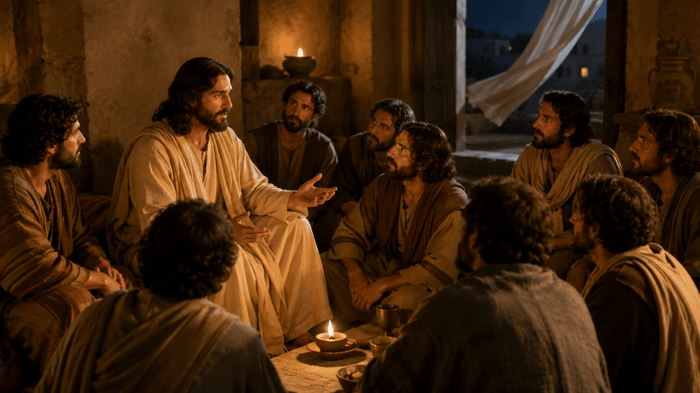
These verses come from Jesus' final teaching to His disciples before the crucifixion. The disciples were troubled because Jesus had told them He was going away. Yet Jesus promised that His departure would not leave them without God's help. The Spirit of truth would come and continue God's work among them.
John 16:13-15 gives us a clear picture of how the Father, Son, and Holy Spirit work together. The Father possesses all things, the Son shares what belongs to the Father, and the Spirit receives from the Son and declares it to Christ's followers.
"However when he, the Spirit of truth, has come, he will guide you into all truth, for he will not speak from himself; but whatever he hears, he will speak. He will declare to you things that are coming. He will glorify me, for he will take from what is mine and will declare it to you. All things that the Father has are mine; therefore I said that he takes of mine and will declare it to you."
John 16:13-15 (WEB)
John 16:13-15 Meaning in Its Biblical Context
To understand the John 16:13-15 meaning, we need to look at what Jesus had just told His disciples. Jesus said it was to their advantage that He would go away because the Counselor would come to them.
"Nevertheless I tell you the truth: It is to your advantage that I go away, for if I don't go away, the Counselor won't come to you. But if I go, I will send him to you."
John 16:7 (WEB)
Jesus was preparing His disciples for life after His death, resurrection, and ascension. They would soon bear witness to Him in a hostile world. They would need more than memory, courage, or human wisdom. They would need the Holy Spirit.
The promise in John 16:13-15 was first spoken to the apostles. The Spirit would guide them into truth and enable them to bear faithful witness to Jesus.
The passage also shows believers today what the Spirit's ministry is like. He leads people toward God's truth, centers attention on Christ, and works in perfect harmony with the Father and the Son.
The Spirit of Truth Guides Into Truth
A major part of the John 16:13-15 meaning is Jesus' title for the Holy Spirit: "the Spirit of truth." Truth is not something the Spirit invents. He communicates what is true because He works in unity with the Father and the Son.
Jesus had already used this title earlier.
"I will pray to the Father, and he will give you another Counselor, that he may be with you forever: the Spirit of truth, whom the world can't receive; for it doesn't see him and doesn't know him. You know him, for he lives with you and will be in you."
John 14:16-17 (WEB)
When Jesus says the Spirit "will guide you into all truth," He is not promising that Christians will automatically know every fact about every subject. The context concerns the truth Jesus revealed and the truth His apostles would need to understand and proclaim about Him.
The Spirit's guidance is Christ-centered. He helps people understand God's revelation rather than leading them away from Scripture into private spiritual ideas.
The Holy Spirit and God's written Word do not compete. The Spirit of truth does not contradict the truth God has revealed.
What Does "He Will Not Speak From Himself" Mean?
The John 16:13-15 meaning becomes clearer when Jesus says the Spirit "will not speak from himself." This does not mean the Holy Spirit lacks authority or knowledge. It means His message is never separate from the Father and the Son.
Jesus used similar language about His own teaching.
"Jesus therefore answered them, 'My teaching is not mine, but his who sent me.'"
John 7:16 (WEB)
Jesus was not denying His divine nature. He was showing the unity of His mission with the Father. In the same way, the Spirit does not bring a competing message.
The Father, Son, and Holy Spirit are united in truth and purpose.
This helps us avoid thinking of the Trinity as three gods with different plans. Scripture shows distinction between the three Persons without division in God's truth, character, or saving purpose.
The Holy Spirit Glorifies Jesus
One of the strongest statements in the John 16:13-15 meaning is Jesus' declaration, "He will glorify me."
The Holy Spirit glorifies Jesus by making His identity, teaching, work, death, resurrection, and saving significance known. The Spirit does not draw attention away from Christ. His ministry leads people to recognize who Jesus truly is.
Jesus made a similar promise in the previous chapter.
"When the Counselor has come, whom I will send to you from the Father, the Spirit of truth, who proceeds from the Father, he will testify about me."
John 15:26 (WEB)
The Holy Spirit glorifies Jesus because His mission is centered on revealing Christ.
This gives Christians an important test for spiritual teaching. Teaching that reflects the Spirit's ministry will honor Jesus rather than push Him to the side.
The Spirit's work produces a deeper understanding of Christ, not a replacement for Him. He helps believers see Christ's glory and respond with faith, worship, obedience, and love.
What Does "He Will Take From What Is Mine" Mean?
Another important part of the John 16:13-15 meaning is Jesus' statement that the Spirit "will take from what is mine and will declare it to you."
This shows a remarkable relationship of shared divine truth. The Spirit receives and declares what belongs to Christ.
Jesus then explains why He can say this:
"All things that the Father has are mine; therefore I said that he takes of mine and will declare it to you."
John 16:15 (WEB)
Jesus does not say that only some things belonging to the Father are His. He says, "All things that the Father has are mine."
That statement reveals the unique relationship between the Father and the Son.
Jesus spoke in similar terms elsewhere.
"All things have been delivered to me by my Father. No one knows the Son, except the Father; neither does anyone know the Father, except the Son, and he to whom the Son desires to reveal him."
Matthew 11:27 (WEB)
The Father, Son, and Holy Spirit are distinct, yet their work is united. The Father possesses all things, the Son possesses what belongs to the Father, and the Spirit declares what belongs to the Son.
Father, Son, and Holy Spirit in John 16:13-15
The John 16:13-15 meaning gives us a compact picture of the Father, Son, Holy Spirit relationship.
The word "Trinity" does not appear in the passage, but the relationships described here form part of the biblical foundation for the doctrine of the Trinity.
| Person | What John 16:13-15 Says | What It Shows |
|---|---|---|
| The Father | "All things that the Father has are mine" | What belongs to the Father also belongs to the Son |
| The Son | "He will glorify me" | Jesus is the focus of the Spirit's witness |
| The Holy Spirit | "He will take from what is mine and will declare it to you" | The Spirit communicates the truth of Christ |
The passage does not confuse the three Persons. The Father is not the Son. The Son is not the Spirit. The Spirit is not the Father.
Yet Jesus describes complete unity between them.
This same pattern appears in the Great Commission.
"Go and make disciples of all nations, baptizing them in the name of the Father and of the Son and of the Holy Spirit."
Matthew 28:19 (WEB)
Jesus names the Father, Son, and Holy Spirit distinctly while joining them under one "name." John 16 adds to this biblical picture by showing how the three work together in revealing divine truth.
The Spirit Does Not Compete With Jesus
The John 16:13-15 meaning also guards against a common misunderstanding. Some people speak as though focusing on the Holy Spirit means moving beyond Jesus.
Jesus teaches the opposite.
The Spirit:
- guides into truth,
- testifies about Jesus,
- glorifies Jesus,
- declares what belongs to Jesus,
- and helps Christ's followers understand His teaching.
The Spirit of truth does not move believers away from the Son. He brings them into a clearer understanding of the Son.
Paul describes a similar connection between the Spirit, Christ's glory, and Christian transformation.
"But we all, with unveiled face seeing the glory of the Lord as in a mirror, are transformed into the same image from glory to glory, even as from the Lord, the Spirit."
2 Corinthians 3:18 (WEB)
The Spirit's work leads believers toward Christlikeness. Spiritual growth should therefore become more centered on Jesus, not less.
How the Holy Spirit Helps Believers Know Jesus
The John 16:13-15 meaning has practical value for every Christian. Believers depend on the Holy Spirit to understand and live according to the truth of Christ.
Jesus had already promised that the Spirit would teach His followers and remind them of His words.
"But the Counselor, the Holy Spirit, whom the Father will send in my name, he will teach you all things, and will remind you of all that I said to you."
John 14:26 (WEB)
The Holy Spirit helps believers see Jesus more clearly through God's truth. He does not remove the need to study Scripture. His ministry gives believers confidence that they do not approach God's Word apart from His work.
As Christians study Scripture, the Spirit helps shape their understanding, desires, and actions according to Christ.
Knowledge should lead to transformation. Seeing Christ more clearly should lead us toward trusting Him, obeying Him, and becoming more like Him.
John 16:13-15 Meaning and the Gospel
The John 16:13-15 meaning points toward the Gospel because the Holy Spirit's work is to glorify the Son.
Humanity needs more than information about God. Sin separates us from God, and we cannot restore that relationship through our own goodness. God provided salvation through His Son.
Jesus came into the world, died for sin, and rose from the dead. Eternal life is given to those who place their faith in Him.
"For God so loved the world, that he gave his one and only Son, that whoever believes in him should not perish, but have eternal life."
John 3:16 (WEB)
The Holy Spirit does not present another Savior or another Gospel. He bears witness to Jesus.
The Gospel itself reveals the united work of the Father, Son, Holy Spirit. The Father sends the Son. The Son accomplishes redemption. The Spirit glorifies the Son and makes God's truth known.
The Spirit of truth opens our understanding to the glory of Christ so that we may trust Him.
What John 16:13-15 Teaches About the Trinity
Several important truths emerge from the John 16:13-15 meaning.
First, the Father, Son, and Holy Spirit are personally distinct. Jesus speaks about the Father and the Spirit as Persons other than Himself.
Second, they work in perfect unity. The Spirit speaks what He hears, glorifies the Son, and declares what belongs to the Son. The Son says everything belonging to the Father is also His.
Third, God's revelation has a Trinitarian pattern. The Father, Son, and Spirit work together so that people may know divine truth.
Fourth, the Spirit's ministry is centered on Jesus. Any view of the Spirit that makes Christ less important does not match Jesus' description in this passage.
Fifth, divine truth should change us. The Spirit does not reveal Christ merely to fill our minds with facts. He leads believers toward faith, worship, obedience, and Christlike living.
Why John 16:13-15 Matters
The John 16:13-15 meaning shows that Christians do not have to choose between knowing the Holy Spirit and knowing Jesus. The Spirit's work is to make Jesus known and glorify Him.
The passage also shows why the Trinity is not an abstract idea added to Scripture. The relationships between Father, Son, and Holy Spirit appear within Jesus' own teaching. Each Person is distinct, yet their truth, purpose, and work are united.
When the Spirit of truth guides God's people, He does not lead them into a message that replaces Christ. He brings them deeper into the truth God has revealed through Christ.
Jesus remains at the center. The Spirit glorifies Him. Everything belonging to the Father belongs to Him. And through the Spirit's work, believers come to know, trust, worship, and follow the Son.
FAQs
What is the main meaning of John 16:13-15?
John 16:13-15 teaches that the Holy Spirit guides Christ's followers into truth, glorifies Jesus, and declares what belongs to the Son. The passage also shows the unity of the Father, Son, and Holy Spirit. The Spirit does not bring a message that competes with Christ. His ministry makes Christ known.
"However when he, the Spirit of truth, has come, he will guide you into all truth, for he will not speak from himself; but whatever he hears, he will speak. He will declare to you things that are coming. He will glorify me, for he will take from what is mine and will declare it to you. All things that the Father has are mine; therefore I said that he takes of mine and will declare it to you."
John 16:13-15 (WEB)
What does Jesus mean when He calls the Holy Spirit the Spirit of truth?
Jesus calls the Holy Spirit the Spirit of truth because the Spirit communicates God's truth in complete unity with the Father and the Son. He does not invent a separate message or lead believers away from what God has revealed. His guidance is centered on Christ and God's truth.
"I will pray to the Father, and he will give you another Counselor, that he may be with you forever: the Spirit of truth, whom the world can't receive; for it doesn't see him and doesn't know him. You know him, for he lives with you and will be in you."
John 14:16-17 (WEB)
What does it mean that the Holy Spirit will guide you into all truth?
In context, Jesus was preparing His apostles to understand and proclaim the truth He had revealed. "All truth" does not mean Christians will automatically know every fact about every subject. The Spirit would guide the apostles in their witness to Christ, and His ministry continues to lead believers toward the truth God has revealed rather than away from it.
"But the Counselor, the Holy Spirit, whom the Father will send in my name, he will teach you all things, and will remind you of all that I said to you."
John 14:26 (WEB)
What does John 16:13 mean when it says the Spirit will not speak from Himself?
This does not mean the Holy Spirit lacks authority or knowledge. It shows that His message is never independent of or opposed to the Father and the Son. Just as Jesus described His teaching as coming from the Father who sent Him, the Spirit communicates divine truth in perfect unity with the Father and the Son.
"Jesus therefore answered them, 'My teaching is not mine, but his who sent me.'"
John 7:16 (WEB)
How does the Holy Spirit glorify Jesus?
The Holy Spirit glorifies Jesus by making Christ known and bearing witness to who He is. He directs attention toward Jesus' identity, teaching, saving work, death, and resurrection. The Spirit's ministry does not replace Christ. It leads people to recognize Christ's glory and respond to Him with faith, worship, obedience, and love.
"When the Counselor has come, whom I will send to you from the Father, the Spirit of truth, who proceeds from the Father, he will testify about me."
John 15:26 (WEB)
What does Jesus mean when He says the Spirit will take from what is His?
Jesus says the Spirit will receive what belongs to Him and declare it to His followers. Jesus then explains that all things belonging to the Father are His. This shows the close unity of Father, Son, and Holy Spirit in revealing divine truth while keeping the three Persons distinct.
"All things that the Father has are mine; therefore I said that he takes of mine and will declare it to you."
John 16:15 (WEB)
How does John 16:13-15 support the biblical teaching of the Trinity?
John 16:13-15 distinguishes the Father, Son, and Holy Spirit while showing their perfect unity. The Spirit glorifies the Son and declares what belongs to Him, while the Son says that everything belonging to the Father is His. The passage does not teach three competing gods, but distinct Persons united in divine truth and purpose.
"Go and make disciples of all nations, baptizing them in the name of the Father and of the Son and of the Holy Spirit."
Matthew 28:19 (WEB)
How does the John 16:13-15 meaning point to salvation through Jesus?
The John 16:13-15 meaning points directly toward the Gospel because Jesus says the Holy Spirit will glorify Him. Humanity is separated from God by sin and cannot restore that relationship through human goodness. The Spirit of truth does not point people toward another Savior. He bears witness to Jesus, the Son whom the Father gave so that those who believe in Him may receive eternal life.
"For God so loved the world, that he gave his one and only Son, that whoever believes in him should not perish, but have eternal life."
John 3:16 (WEB)