Table of Contents
- Acts 2:32-33 Meaning in Context
- "This Jesus God Raised Up"
- What Does "Exalted by the Right Hand of God" Mean?
- Jesus Received the Promise of the Holy Spirit From the Father
- What Is the Promise of the Holy Spirit?
- Jesus Poured Out the Holy Spirit
- Father, Son, and Holy Spirit in Acts 2:32-33
- Pentecost Reveals the Exalted Christ
- The Right Hand of God and Jesus' Authority
- Acts 2:32-33 Meaning and the Gospel
- What Acts 2:32-33 Teaches About the Trinity
- Why Acts 2:32-33 Matters
- FAQs
The Acts 2:32-33 meaning centers on the risen Jesus, His exaltation at the right hand of God, and the outpouring of the Holy Spirit. Peter explains that Jesus was raised from the dead, exalted by God, received the promise of the Holy Spirit from the Father, and then poured out the Spirit upon His followers.
These verses come from Peter's sermon on the Day of Pentecost. The crowd had seen and heard something unusual as the Holy Spirit came upon the believers. Peter explained that what they were witnessing was connected directly to Jesus' resurrection and exaltation.
Acts 2:32-33 gives a powerful picture of the Father, Son, and Holy Spirit working together. The Father exalts the Son. The Son receives the promised Spirit from the Father. Then the exalted Son pours out the Holy Spirit.
"This Jesus God raised up, to which we all are witnesses. Being therefore exalted by the right hand of God, and having received from the Father the promise of the Holy Spirit, he has poured out this which you now see and hear."
Acts 2:32-33 (WEB)
Acts 2:32-33 Meaning in Context
To understand the Acts 2:32-33 meaning, we need to look at what was happening in Jerusalem.
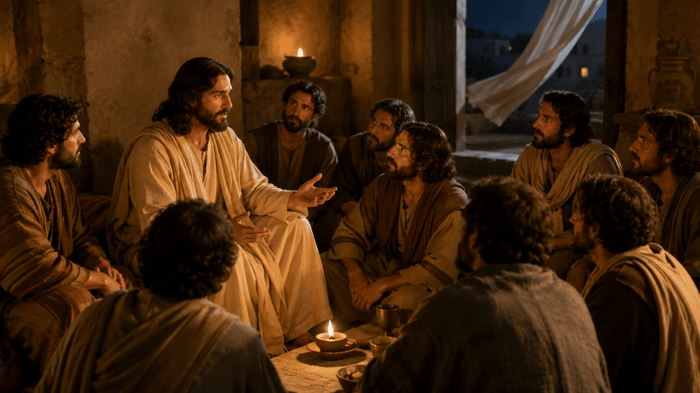
Jesus had been crucified, raised from the dead, and had ascended into heaven. His followers were gathered together when the Holy Spirit came upon them with visible and audible signs.
Earlier in Acts, Jesus had told them to wait for the Spirit.
"For John indeed baptized in water, but you will be baptized in the Holy Spirit not many days from now."
Acts 1:5 (WEB)
Then, on the Day of Pentecost, the promise was fulfilled.
"They were all filled with the Holy Spirit and began to speak with other languages, as the Spirit gave them the ability to speak."
Acts 2:4 (WEB)
The crowd was amazed and confused. Peter stood up to explain what had happened.
His explanation centered on Jesus.
Pentecost was not an isolated spiritual event. It was evidence that the crucified Jesus had risen, been exalted, and poured out the promised Holy Spirit.
"This Jesus God Raised Up"
Peter begins Acts 2:32 by saying, "This Jesus God raised up."
The resurrection is central to the Acts 2:32-33 meaning. Christianity does not rest on the memory of a dead teacher. Peter preached that Jesus was alive.
The apostles claimed to be witnesses of His resurrection.
"This Jesus God raised up, to which we all are witnesses."
Acts 2:32 (WEB)
Peter had already told the crowd that death could not hold Jesus.
"Whom God raised up, having freed him from the agony of death, because it was not possible that he should be held by it."
Acts 2:24 (WEB)
The resurrection shows the Father's approval of the Son and the victory of Christ over death.
Jesus had been rejected and crucified by men, but God raised Him from the dead.
Peter's message does not end with the resurrection, however. The risen Christ was also exalted.
What Does "Exalted by the Right Hand of God" Mean?
Acts 2:33 says Jesus was "exalted by the right hand of God."
The phrase right hand of God is a biblical image of honor, authority, and royal power. It does not mean God the Father has a physical body with a literal throne beside Him.
It means Jesus has been given the highest place of authority.
Peter supports this by quoting Psalm 110.
"For David didn't ascend into the heavens, but he says himself, 'The Lord said to my Lord, "Sit by my right hand until I make your enemies a footstool for your feet."'"
Acts 2:34-35 (WEB)
Peter applies this passage to Jesus.
Jesus, once mocked and crucified, is now exalted in glory.
The one whom people rejected is the one God has honored.
This is why Peter later says:
"Let all the house of Israel therefore know certainly that God has made him both Lord and Christ, this Jesus whom you crucified."
Acts 2:36 (WEB)
The Jesus exalted theme is essential to Acts 2. Pentecost is evidence that Jesus now reigns as the risen and exalted Lord.
Jesus Received the Promise of the Holy Spirit From the Father
Acts 2:33 contains another important statement.
Jesus, having been exalted, "received from the Father the promise of the Holy Spirit."
This reveals a clear distinction between the Father, Son, and Holy Spirit.
The Father is the One from whom the promise comes.
The Son receives the promised Spirit.
The Spirit is then poured out.
This matches what Jesus had promised before His death.
"I will pray to the Father, and he will give you another Counselor, that he may be with you forever."
John 14:16 (WEB)
Jesus had also said that the Father would send the Holy Spirit in His name.
"But the Counselor, the Holy Spirit, whom the Father will send in my name, he will teach you all things, and will remind you of all that I said to you."
John 14:26 (WEB)
Acts 2 shows these promises being fulfilled.
The Father, Son, and Holy Spirit are not confused with one another. Each Person is distinct, yet they work together in perfect unity.
What Is the Promise of the Holy Spirit?
The promise of the Holy Spirit refers to God's promised gift of the Spirit to His people.
Peter had already connected Pentecost with the prophecy of Joel.
"It will be in the last days, says God, that I will pour out my Spirit on all flesh."
Acts 2:17 (WEB)
Jesus also told His disciples to wait for what the Father had promised.
"Behold, I send out the promise of my Father on you. But wait in the city of Jerusalem until you are clothed with power from on high."
Luke 24:49 (WEB)
The promise was not merely about dramatic signs. It concerned God's presence and power among His people.
The Holy Spirit would empower Christ's followers to bear witness to Jesus.
"But you will receive power when the Holy Spirit has come upon you. You will be witnesses to me in Jerusalem, in all Judea and Samaria, and to the uttermost parts of the earth."
Acts 1:8 (WEB)
Pentecost therefore marks a major moment in God's saving work. The promised Spirit comes upon Christ's people so that the Gospel can be proclaimed.
Jesus Poured Out the Holy Spirit
One of the strongest statements in the Acts 2:32-33 meaning is that Jesus "has poured out this which you now see and hear."
The exalted Jesus is the One who poured out the Holy Spirit.
This means Pentecost was evidence of Christ's heavenly authority.
The crowd could not see Jesus seated at God's right hand. But they could see and hear the effects of the Spirit's coming.
Peter's argument is simple:
- Jesus was raised.
- Jesus was exalted.
- Jesus received the promised Spirit from the Father.
- Jesus poured out the Spirit.
- What the crowd witnessed proved that Jesus was alive and reigning.
This makes Pentecost a Christ-centered event.
The Holy Spirit's coming points people back to Jesus.
Father, Son, and Holy Spirit in Acts 2:32-33
The Acts 2:32-33 meaning provides strong biblical evidence for the relationship of Father, Son, and Holy Spirit.
| Person | What Acts 2:32-33 Says | What It Shows |
|---|---|---|
| God the Father | Raises and exalts Jesus and gives the promised Spirit | The Father acts in the resurrection and exaltation of the Son |
| Jesus the Son | Is raised, exalted, receives the Spirit, and pours Him out | The Son possesses heavenly authority and acts in giving the Spirit |
| The Holy Spirit | Is promised by the Father and poured out by the Son | The Spirit is personally distinct and active among God's people |
The passage does not say the Father, Son, and Spirit are the same Person.
At the same time, it does not present three unrelated divine beings.
The Father, Son, and Holy Spirit act together in one saving purpose.
This is why Acts 2 is important for understanding the Trinity in Acts.
Pentecost Reveals the Exalted Christ
Pentecost is often associated mainly with the Holy Spirit, but Peter's sermon places Jesus at the center.
The outpouring of the Spirit reveals that Jesus has been exalted.
This is an important connection.
The Spirit's presence is evidence of the Son's reign.
Jesus had promised that He would send the Spirit.
"When the Counselor has come, whom I will send to you from the Father, the Spirit of truth, who proceeds from the Father, he will testify about me."
John 15:26 (WEB)
Acts 2 shows that promise fulfilled.
The Spirit's work does not replace Jesus. It testifies to Him.
The coming of the Spirit announces that the crucified Jesus is alive, exalted, and reigning.
The Right Hand of God and Jesus' Authority
The phrase right hand of God also helps explain why Jesus can pour out the Spirit.
He is not acting as a powerless messenger.
He has been exalted.
The New Testament repeatedly uses this language for Jesus.
"Who is at the right hand of God, having gone into heaven, angels and authorities and powers being made subject to him."
1 Peter 3:22 (WEB)
Jesus' exaltation means He possesses royal authority.
This makes Peter's Pentecost message even more striking. The man who had been crucified only weeks earlier is now proclaimed as Lord.
The outpouring of the Spirit confirms His exalted position.
Acts 2:32-33 Meaning and the Gospel
The Acts 2:32-33 meaning points directly to the Gospel.
Jesus was crucified, but God raised Him from the dead. He was exalted to the right hand of God. From that position of authority, He poured out the promised Holy Spirit.
Peter's sermon called the crowd to respond to this truth.
When the people realized what they had done, they asked what they should do.
Peter answered:
"Repent, and be baptized, every one of you, in the name of Jesus Christ for the forgiveness of sins, and you will receive the gift of the Holy Spirit."
Acts 2:38 (WEB)
The Gospel calls sinners to turn from sin and place their trust in Jesus Christ.
The same Jesus who was crucified is now risen and exalted.
Salvation is found in Him.
The gift of the Holy Spirit is connected with belonging to the risen Christ. The Spirit is not given as a reward for human goodness. He is part of God's gracious saving work in those who come to Christ.
What Acts 2:32-33 Teaches About the Trinity
Several important truths stand out from the Acts 2:32-33 meaning.
First, the Father, Son, and Holy Spirit are distinct. The Father gives the Spirit to the exalted Son, and the Son pours out the Spirit.
Second, Jesus is truly exalted. He is at the right hand of God and acts with divine authority.
Third, the Holy Spirit is not an impersonal force. He is the promised Spirit who comes from God and works among Christ's people.
Fourth, the Father and Son work together in sending the Spirit.
Fifth, Pentecost is centered on Christ. The coming of the Spirit proves that Jesus is risen and reigning.
Sixth, God's saving work has a Trinitarian shape. The Father raises and exalts the Son, the Son pours out the Spirit, and the Spirit empowers believers to bear witness to Christ.
Why Acts 2:32-33 Matters
The Acts 2:32-33 meaning shows that Pentecost cannot be separated from the resurrection and exaltation of Jesus.
The Spirit was poured out because Jesus had risen and been exalted to the right hand of God.
Father, Son, and Holy Spirit appear together in one of the most important moments in the book of Acts.
The Father fulfills His promise. The Son reigns in authority. The Holy Spirit comes upon God's people.
And the result is clear: the risen Jesus is proclaimed to the world.
FAQs
What is the main meaning of Acts 2:32-33?
Acts 2:32-33 teaches that God raised Jesus from the dead and exalted Him to His right hand. Jesus then received the promised Holy Spirit from the Father and poured out the Spirit upon His followers. Peter used Pentecost as evidence that the crucified Jesus is alive, exalted, and reigning.
"This Jesus God raised up, to which we all are witnesses. Being therefore exalted by the right hand of God, and having received from the Father the promise of the Holy Spirit, he has poured out this which you now see and hear."
Acts 2:32-33 (WEB)
What does it mean that Jesus was exalted at the right hand of God?
Being exalted at the right hand of God means that Jesus has the place of supreme honor, authority, and royal power. Peter explains that the Jesus who was rejected and crucified is now the risen Lord and Christ. His exaltation also explains why He has authority to pour out the promised Holy Spirit.
"Let all the house of Israel therefore know certainly that God has made him both Lord and Christ, this Jesus whom you crucified."
Acts 2:36 (WEB)
What is the promise of the Holy Spirit in Acts 2:33?
The promise of the Holy Spirit is God's promised gift of His Spirit to His people. Jesus told His disciples to wait for this promise, and Pentecost marked its fulfillment. The Spirit would give Christ's followers power to bear witness to Jesus as the Gospel spread.
"But you will receive power when the Holy Spirit has come upon you. You will be witnesses to me in Jerusalem, in all Judea and Samaria, and to the uttermost parts of the earth."
Acts 1:8 (WEB)
What does it mean that Jesus poured out the Holy Spirit?
Acts 2:33 says the exalted Jesus poured out what the crowd could see and hear at Pentecost. The outpouring of the Holy Spirit showed that Jesus had risen and received heavenly authority. Pentecost was therefore not an event separate from Christ. It was evidence that Jesus was alive and reigning.
"It will be in the last days, says God, that I will pour out my Spirit on all flesh."
Acts 2:17 (WEB)
How does Acts 2:32-33 show the Father, Son, and Holy Spirit together?
Acts 2:32-33 distinguishes the Father, Son, and Holy Spirit while showing them working in unity. God raises and exalts Jesus. The Son receives the promised Spirit from the Father. The exalted Son then pours out the Spirit. Their roles are distinct, yet they act together in one saving purpose.
"I will pray to the Father, and he will give you another Counselor, that he may be with you forever."
John 14:16 (WEB)
Why is Pentecost evidence that Jesus is risen and exalted?
Peter explains that the visible and audible events of Pentecost resulted from Jesus pouring out the Holy Spirit. The crowd could not see Christ seated at God's right hand, but they could witness the effects of the promised Spirit's coming. Pentecost therefore testified that Jesus had risen and been exalted.
"They were all filled with the Holy Spirit and began to speak with other languages, as the Spirit gave them the ability to speak."
Acts 2:4 (WEB)
How does the Holy Spirit point people to Jesus in Acts 2?
The coming of the Holy Spirit led directly to the proclamation of Jesus. Peter did not treat Pentecost as an experience that replaced Christ. He explained the Spirit's coming by preaching Jesus' death, resurrection, exaltation, and lordship. The Spirit empowered Christ's followers to bear witness to Him.
"When the Counselor has come, whom I will send to you from the Father, the Spirit of truth, who proceeds from the Father, he will testify about me."
John 15:26 (WEB)
How does the Acts 2:32-33 meaning point to salvation through Jesus?
The Acts 2:32-33 meaning points to the Gospel by showing that the Jesus who was crucified has been raised and exalted as Lord. Sin leaves people needing forgiveness and reconciliation with God. Peter called his hearers to repent and turn to Jesus Christ for forgiveness, showing that salvation is found in the risen and exalted Christ rather than through human goodness.
"Repent, and be baptized, every one of you, in the name of Jesus Christ for the forgiveness of sins, and you will receive the gift of the Holy Spirit."
Acts 2:38 (WEB)