Table of Contents
- John 10:30 Meaning in Its Biblical Context
- Jesus Gives Eternal Life
- What Does "I and the Father Are One" Mean?
- Did Jesus Claim to Be God?
- Jesus and the Father Are Distinct Persons
- Jesus and the Father Share Divine Power
- The Father and Son Are One in Purpose
- Does "One" Mean One Person?
- How John 10:30 Supports the Trinity
- Why Jesus' Works Matter
- The Good Shepherd and the Father
- John 10:30 and the Gospel
- What John 10:30 Reveals About Jesus
- FAQs
The John 10:30 meaning becomes clear when we read Jesus' words in their full setting. When Jesus said, "I and the Father are one," He was not saying that He and the Father are the same person. He was claiming a unique unity with the Father in power, purpose, and divine nature.
The people who heard Jesus understood that His words went far beyond simple agreement with God.
They picked up stones because they believed He had made Himself equal with God. The surrounding verses show that John 10:30 is one of the strongest passages supporting the deity of Christ and the biblical foundation of the Trinity.
John 10:30 Meaning in Its Biblical Context
Jesus spoke these words during a discussion in Jerusalem at the Feast of the Dedication.
Some people surrounded Him and demanded a clear answer about whether He was the Christ. Jesus responded that His works already testified about His identity.
Jesus answered them, "I told you, and you don't believe. The works that I do in my Father's name, these testify about me."
John 10:25 (WEB)
Jesus did not act independently from the Father. His works revealed the Father's authority and confirmed that He had been sent by the Father.
Jesus then explained that those who belonged to Him heard His voice.
My sheep hear my voice, and I know them, and they follow me.
John 10:27 (WEB)
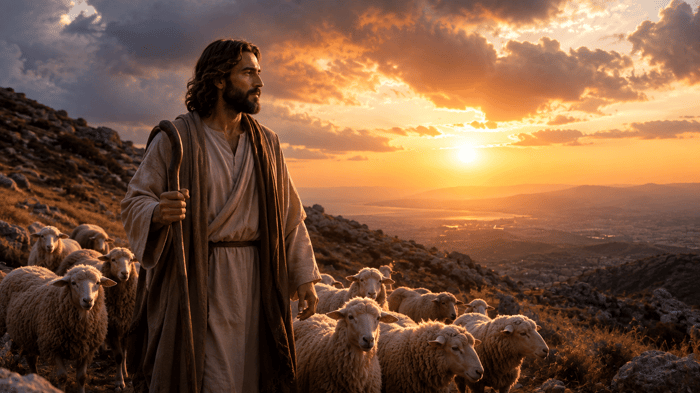
Jesus described Himself as the Shepherd who knows, leads, and protects His people.
The John 10:30 meaning is connected directly to this promise of protection.
Jesus Gives Eternal Life
Before Jesus said, "I and the Father are one," He made a remarkable claim.
I give eternal life to them. They will never perish, and no one will snatch them out of my hand.
John 10:28 (WEB)
Jesus did not say that He merely teaches people how to find eternal life. He said, "I give eternal life."
Only God has authority over eternal life.
Jesus also promised that no one could take His sheep out of His hand. This is a claim of divine power and complete security.
He continued by speaking about the Father's protection.
My Father, who has given them to me, is greater than all. No one is able to snatch them out of my Father's hand.
John 10:29 (WEB)
Jesus' sheep are secure in His hand and in the Father's hand.
Then Jesus said:
I and the Father are one.
John 10:30 (WEB)
The Father and Son perform the same divine work of preserving God's people. No power can defeat the Son, and no power can defeat the Father.
This shared power helps explain the John 10:30 Meaning and shows why Jesus' claim points to His unity with the Father in divine power and authority.
What Does "I and the Father Are One" Mean?
Jesus' statement contains both distinction and unity.
He said, "I and the Father," showing that He and the Father are personally distinct. He did not say, "I am the Father."
He then said, "are one," showing a deep unity between them.
| Words in John 10:30 | What They Reveal |
|---|---|
| "I" | Jesus is a distinct person |
| "The Father" | The Father is a distinct person |
| "Are" | Jesus speaks of two persons |
| "One" | The Father and Son share divine unity |
The Father and Son are not one person. They are one in divine nature, power, purpose, and action.
The John 10:30 meaning therefore supports the Trinity rather than denying it.
The Trinity teaches that there is one God who eternally exists as three distinct persons: Father, Son, and Holy Spirit.
Did Jesus Claim to Be God?
The reaction of Jesus' listeners shows how they understood His statement.
Therefore Jews took up stones again to stone him.
John 10:31 (WEB)
They did not reach for stones because Jesus claimed to agree with God. Faithful prophets and teachers also agreed with God.
They believed Jesus had committed blasphemy.
Jesus asked them why they wanted to stone Him.
Jesus answered them, "I have shown you many good works from my Father. For which of those works do you stone me?"
John 10:32 (WEB)
Their answer was direct.
The Jews answered him, "We don't stone you for a good work, but for blasphemy: because you, being a man, make yourself God."
John 10:33 (WEB)
The people understood that Jesus claimed more than unity of purpose, which is why the John 10:30 Meaning cannot be reduced to simple agreement with the Father.
They believed Jesus claimed equality with God.
Jesus did not respond by saying, "You misunderstood me. I am only a human messenger." Instead, He continued defending His unique relationship with the Father.
The John 10:30 meaning includes a real claim to deity.
Jesus and the Father Are Distinct Persons
John 10:30 does not teach that Jesus is the Father.
Throughout John's Gospel, Jesus speaks to the Father, is sent by the Father, loves the Father, and obeys the Father.
Even if I judge, my judgment is true, for I am not alone, but I am with the Father who sent me.
John 8:16 (WEB)
The Father sent the Son. The Son did not send Himself as the Father.
Jesus also prayed to the Father.
Now, Father, glorify me with your own self with the glory which I had with you before the world existed.
John 17:5 (WEB)
The Son shared glory with the Father before creation. This shows both eternal relationship and personal distinction.
The Father and Son are not two roles played by one person. They are eternally distinct persons who share the one divine nature.
Jesus and the Father Share Divine Power
In John 10, Jesus claimed the same power to preserve believers that belongs to the Father.
No one can snatch Christ's sheep out of His hand. No one can snatch them out of the Father's hand.
This shared work is not a competition between the Father and Son. Their actions are perfectly united.
Jesus made a similar statement earlier in John's Gospel.
Jesus therefore answered them, "Most certainly, I tell you, the Son can do nothing of himself, but what he sees the Father doing. For whatever things he does, these the Son also does likewise."
John 5:19 (WEB)
Jesus did not mean that He lacked power.
He meant that He never acts independently or in conflict with the Father. The Son's work perfectly expresses the Father's will.
The statement "whatever things he does, these the Son also does likewise" is another strong claim.
Jesus does the works of God because He shares the divine nature.
The Father and Son Are One in Purpose
The Father and Son are fully united in their saving purpose.
The Father sent the Son into the world. The Son willingly carried out the Father's plan. Both seek the salvation and protection of God's people.
For I have come down from heaven, not to do my own will, but the will of him who sent me.
John 6:38 (WEB)
Jesus' obedience does not mean He is less divine than the Father.
The Son willingly carries out the Father's will because the Father and Son are united in love, purpose, and nature.
They do not disagree about salvation. They do not work against each other.
The John 10:30 meaning includes this perfect unity of purpose, but it goes beyond shared purpose alone. Jesus' listeners understood Him to be making a claim about His divine identity.
Does "One" Mean One Person?
The word "one" does not mean that the Father and Son are one person.
Jesus sometimes prayed that His followers would be one.
that they may all be one; even as you, Father, are in me, and I in you, that they also may be one in us; that the world may believe that you sent me.
John 17:21 (WEB)
Believers do not become one person. They are united in faith, love, truth, and mission.
However, the unity between the Father and Son is greater than the unity shared by believers.
Jesus and the Father share divine glory, divine power, divine works, and the divine nature. Believers do not become God.
The context determines the meaning.
In John 10, Jesus gives eternal life and offers the same divine protection as the Father. His claim to oneness therefore includes more than teamwork or agreement.
How John 10:30 Supports the Trinity
John 10:30 gives two important foundations for the doctrine of the Trinity.
First, the Father and Son are distinct.
Jesus says, "I and the Father." He speaks of two persons in relationship.
Second, the Father and Son are one.
They share divine power and nature without becoming the same person.
Other passages include the Holy Spirit in this divine identity.
"Go and make disciples of all nations, baptizing them in the name of the Father and of the Son and of the Holy Spirit."
Matthew 28:19 (WEB)
The Father, Son, and Holy Spirit are distinct persons, yet they share one divine name.
The John 10:30 meaning contributes to this biblical foundation by showing how the Father and Son can be distinct while fully sharing the unity of God.
Why Jesus' Works Matter
Jesus pointed to His works as evidence of His identity.
If I don't do the works of my Father, don't believe me. But if I do them, though you don't believe me, believe the works, that you may know and believe that the Father is in me, and I in the Father.
John 10:37-38 (WEB)
Jesus' miracles were not entertainment. They were signs revealing who He is.
He healed the sick, gave sight to the blind, commanded storms, multiplied food, and raised the dead.
These works showed divine authority.
Jesus told His listeners to examine the evidence. His works demonstrated that the Father was in Him and that He was in the Father.
This language points to a unique relationship that no ordinary prophet could claim.
The Good Shepherd and the Father
John 10 presents Jesus as the Good Shepherd.
Earlier in the chapter, Jesus explained that the Good Shepherd lays down His life for the sheep.
I am the good shepherd. The good shepherd lays down his life for the sheep.
John 10:11 (WEB)
In the Old Testament, God is often described as the Shepherd of His people.
The Lord is my shepherd; I shall not want.
Psalm 23:1 (ESV)
By calling Himself the Good Shepherd, Jesus applied a divine image to Himself.
He does what God does. He knows His sheep, protects them, gives them eternal life, and lays down His life to save them.
The Father and Son are one in caring for God's people.
John 10:30 and the Gospel
The John 10:30 meaning points directly to the Gospel because it reveals the identity of the Savior.
Humanity has sinned against God. Sin brings guilt, death, and separation from Him. People cannot rescue themselves through good works or religious effort.
Jesus came as the divine Son and Good Shepherd.
He laid down His life for His sheep. On the cross, He bore the judgment sinners deserved. He rose from the dead and now gives eternal life to everyone who trusts in Him.
I give eternal life to them. They will never perish, and no one will snatch them out of my hand.
John 10:28 (WEB)
Jesus can give eternal life because He is not merely a human teacher.
He shares the Father's divine power and nature.
Salvation is secure because the Son and Father are perfectly united in saving and keeping those who believe.
A sinner does not need to earn a place in Christ's flock. Eternal life is received through faith in Jesus Christ.
What John 10:30 Reveals About Jesus
John 10:30 reveals several important truths:
- Jesus is personally distinct from the Father.
- Jesus and the Father share divine unity.
- Jesus possesses the power to give eternal life.
- Jesus protects believers with divine authority.
- Jesus performs the works of the Father.
- Jesus claimed more than agreement with God.
- Jesus' listeners understood His words as a claim to deity.
The statement "I and the Father are one" should not be weakened into a claim that Jesus and the Father simply shared the same goals.
They do share the same purpose, but the context reveals much more.
Jesus gives eternal life. He holds believers securely in His hand. He performs the works of the Father. He exists in the Father, and the Father exists in Him.
The John 10:30 meaning is that Jesus and the Father are distinct persons who share the one divine nature, power, and saving work.
Jesus is not the Father, yet He is fully God.
Because the Father and Son are one, everyone who trusts in Christ can rest in His power, follow His voice, and receive the eternal life that only God can give.
FAQs
What is the meaning of John 10:30?
John 10:30 teaches that Jesus and the Father are distinct persons who share one divine nature, power, and purpose. Jesus was not claiming to be the Father but revealing His unity with the Father.
I and the Father are one.
John 10:30 (WEB)
Did Jesus claim to be God in John 10:30?
Yes. The people listening understood that Jesus was claiming equality with God, which is why they accused Him of blasphemy. Jesus did not deny their understanding but continued defending His unique relationship with the Father.
The Jews answered him, "We don't stone you for a good work, but for blasphemy: because you, being a man, make yourself God."
John 10:33 (WEB)
Does John 10:30 teach that Jesus is the Father?
No. Jesus clearly distinguishes Himself from the Father while declaring that they are one. This verse supports the biblical teaching that the Father and the Son are distinct persons who share the one divine nature.
Now, Father, glorify me with your own self with the glory which I had with you before the world existed.
John 17:5 (WEB)
How does John 10:30 support the Trinity?
John 10:30 shows both distinction and unity. Jesus and the Father are distinct persons, yet they are one in divine nature, power, and saving work, forming an important foundation for the doctrine of the Trinity.
"Go and make disciples of all nations, baptizing them in the name of the Father and of the Son and of the Holy Spirit."
Matthew 28:19 (WEB)
How does the John 10:30 Meaning point to the Gospel?
The John 10:30 Meaning reveals that Jesus is the divine Son who gives eternal life and lays down His life for His sheep. Because He is one with the Father in divine power and purpose, His death and resurrection provide complete salvation for everyone who trusts in Him.
I give eternal life to them. They will never perish, and no one will snatch them out of my hand.
John 10:28 (WEB)
Why is Jesus called the Good Shepherd?
Jesus is the Good Shepherd because He knows His sheep, protects them, gives them eternal life, and willingly laid down His life to save them. His care reflects the Father's perfect love and authority.
I am the good shepherd. The good shepherd lays down his life for the sheep.
John 10:11 (WEB)