Table of Contents
- Council of Nicaea and the Trinity: What Happened in AD 325?
- Was the Trinity Invented at Nicaea?
- The Deity of Jesus Did Not Begin at Nicaea
- What Arius Taught
- What Did the Council of Nicaea Actually Decide?
- Why Did Nicaea Use the Word "Homoousios"?
- The Father and Son Were Already Distinct in Scripture
- The Holy Spirit Was Not Added to Christianity at Nicaea
- Did Constantine Invent the Trinity at Nicaea?
- Did Nicaea Create the Nicene Creed We Use Today?
- The Origin of the Trinity Doctrine Is Rooted in Scripture
- Why the Council of Nicaea Still Matters
- Nicaea and the Gospel
- Was the Trinity Invented at Nicaea? A Biblical and Historical Answer
- FAQs
The Council of Nicaea and the Trinity are often connected in claims that church leaders invented The Council of Nicaea did not create this combination of ideas. Scripture created the need to explain how those truths belong together.the doctrine of the Trinity in AD 325. According to this view, Christians originally believed something simpler about God, and bishops gathered at Nicaea later created the idea that Jesus is fully divine. The historical record does not support that claim.
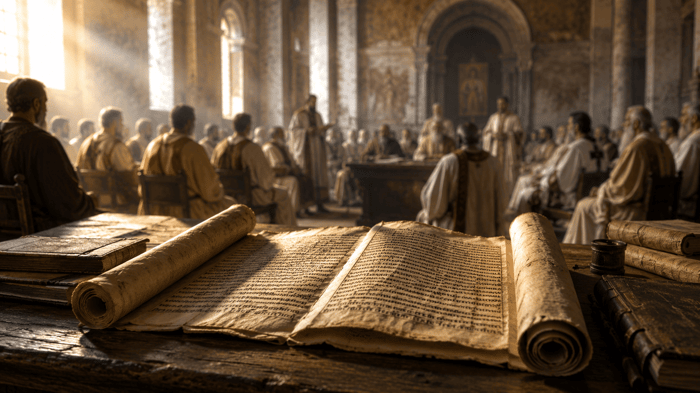
The Council of Nicaea did meet in AD 325 during a major dispute about the identity of Jesus Christ. But the council did not begin with a blank page and invent a new God. Its central controversy concerned Arius and his teaching that the Son was a creature who did not eternally exist. The bishops responded by formally defending the Son's true deity and His relationship to the Father. newadvent.org
More important, the basic truths behind the doctrine were already present in the New Testament centuries before Nicaea. Christians already confessed one God, worshiped Jesus as Lord and God, distinguished the Son from the Father, and spoke of the Father, Son, and Holy Spirit together.
Council of Nicaea and the Trinity: What Happened in AD 325?
The First Council of Nicaea met in AD 325 because a major dispute had spread through the church concerning Arius, a presbyter from Alexandria. Arius taught that the Son of God was not eternal in the same sense as the Father. According to the surviving descriptions of the controversy, Arius taught that the Son was created and that there had been a time when the Son did not exist. newadvent.org
That created a serious question:
Who is Jesus Christ?
Is He a creature made by God, even if He is greater than every other creature?
Or is He truly and eternally divine?
The Council of Nicaea answered that the Son is not a creature. The Nicene Creed described the Son as "begotten, not made" and as being of the same substance with the Father. The council specifically rejected the idea that there was a time when the Son did not exist. newadvent.org
So the Nicaea Trinity controversy was not primarily about inventing a three-Person formula from nothing. It centered on protecting the deity of the Son against a teaching that treated Him as created.
Was the Trinity Invented at Nicaea?
No. The historical council gave precise language to a controversy, but the biblical truths it was trying to defend were much older.
Long before AD 325, the New Testament taught that there is one God.
Hear, Israel: Yahweh is our God. Yahweh is one.
Deuteronomy 6:4 (WEB)
Jesus Himself affirmed this confession.
Jesus answered, "The greatest is, 'Hear, Israel, the Lord our God, the Lord is one:'"
Mark 12:29 (WEB)
Christianity did not begin by worshiping several gods and later combine them into one Trinity.
Biblical monotheism was already foundational.
At the same time, the New Testament said things about Jesus that required Christians to take His deity seriously.
John opens his Gospel by saying:
In the beginning was the Word, and the Word was with God, and the Word was God.
John 1:1 (WEB)
Two truths appear together.
The Word was "with God," showing distinction.
The Word "was God," showing deity.
Those words were written long before any bishop traveled to Nicaea.
The Deity of Jesus Did Not Begin at Nicaea
One of the strongest answers to the question "was the Trinity invented at Nicaea" is simply to read how the New Testament describes Jesus.
Thomas addressed the risen Christ:
Thomas answered him, "My Lord and my God!"
John 20:28 (WEB)
Paul also speaks about Christ in terms that place Him within God's work of creation.
yet to us there is one God, the Father, of whom are all things, and we for him; and one Lord, Jesus Christ, through whom are all things, and we live through him.
1 Corinthians 8:6 (WEB)
The Council of Nicaea did not write these passages.
The bishops involved in the Council of Nicaea and the Trinity controversy were responding to the question of how Christians should faithfully express what Scripture already said about Christ.
This distinction is important when considering the origin of the Trinity doctrine. A later doctrinal statement can use more precise vocabulary without inventing the biblical truths that vocabulary is meant to protect.
What Arius Taught
Understanding Arius helps explain why the council was necessary.
Arius did not simply say that the Father and Son are distinct Persons. Scripture already teaches their distinction.
The dispute concerned whether the Son eternally shared the divine nature or whether He was created.
Accounts of the council report that Arius and his followers used statements such as "there was a time when he was not" and described the Son as a creature. The council explicitly rejected those claims. newadvent.org
The New Testament presents a different picture.
Jesus prayed:
Now, Father, glorify me with your own self with the glory which I had with you before the world existed.
John 17:5 (WEB)
Jesus speaks about glory He possessed with the Father before the creation of the world.
John goes even further when describing the Son's relationship to creation.
All things were made through him. Without him was not anything made that has been made.
John 1:3 (WEB)
If all created things came into existence through the Word, the Word cannot simply belong to the category of created things.
That biblical issue stood behind the conflict with Arius and the later Council of Nicaea and the Trinity debate.
What Did the Council of Nicaea Actually Decide?
The council produced a creed designed to make its position clear.
Its central affirmations about Christ included that He was:
- the Son of God,
- begotten rather than made,
- truly divine,
- of the same substance with the Father,
- the One through whom all things were made.
The creed also confessed belief in the Holy Spirit, although the much fuller language about the Spirit familiar from the later Nicene-Constantinopolitan Creed came from later fourth-century developments. newadvent.org
That distinction matters historically.
The Council of Nicaea Trinity debate was especially focused on the relationship between the Father and the Son.
It was not a meeting where bishops suddenly invented every later sentence Christians would use to explain the Trinity.
Why Did Nicaea Use the Word "Homoousios"?
One important word associated with Nicaea is the Greek word homoousios.
It is often translated "of the same substance" or "of one substance."
The word was used to express that the Son does not belong to a different or lesser kind of existence than the Father. It was meant to guard the confession that the Son truly shares the divine nature rather than being a creature. newadvent.org
The word itself does not appear in the Bible.
That fact sometimes causes confusion.
But Christians regularly use words not found in Scripture to summarize ideas taught in Scripture. The important question is not whether a theological term appears as a vocabulary word in the Bible.
The important question is whether it faithfully summarizes biblical teaching.
For the Council of Nicaea and the Trinity debate, the concern was whether language could clearly exclude the claim that Jesus was created.
The Father and Son Were Already Distinct in Scripture
The doctrine defended at Nicaea did not erase the distinction between the Father and Son.
Jesus speaks to the Father.
I came out from the Father, and have come into the world. Again, I leave the world, and go to the Father.
John 16:28 (WEB)
The Son is not the Father.
Yet the Son also speaks of divine unity.
I and the Father are one.
John 10:30 (WEB)
Christians therefore had to preserve both biblical truths.
The Father and Son are distinct.
The Son is truly divine.
There is one God.
The Council of Nicaea and the Trinity debate did not create this combination of ideas. Scripture created the need to explain how those truths belong together.
The Holy Spirit Was Not Added to Christianity at Nicaea
The Holy Spirit also appears throughout the New Testament long before the fourth-century councils.
Jesus said:
I will pray to the Father, and he will give you another Counselor, that he may be with you forever.
John 14:16 (WEB)
The Son speaks.
The Father gives.
The Counselor comes.
Jesus also commanded His disciples:
Go and make disciples of all nations, baptizing them in the name of the Father and of the Son and of the Holy Spirit,
Matthew 28:19 (WEB)
This verse places Father, Son, and Holy Spirit together in Christian baptism.
Nicaea did not create that pattern.
The original Nicene Creed ended its principal confession with belief in the Holy Spirit, while fuller disputes about the Spirit's deity would become especially important later in the fourth century. newadvent.org
Did Constantine Invent the Trinity at Nicaea?
Emperor Constantine summoned the council and was present at Nicaea. Historical accounts describe him as deeply concerned about restoring unity during a controversy that had spread through the church. newadvent.org
But Constantine's involvement does not mean he invented the doctrine being debated.
The dispute between Arius and his opponents existed before the council. Sources place the controversy years before AD 325, and church leaders had already taken action concerning Arius before Constantine gathered the larger council. newadvent.org
The theological question behind the Council of Nicaea and the Trinity was therefore not created by Constantine.
Nor does the surviving creed read like an emperor inventing a new religion. Its language shows that the Council of Nicaea and the Trinity debate directly addressed the existing dispute over whether the Son was created or truly divine.
That makes the historical sequence important:
| Event | What It Shows |
|---|---|
| New Testament writings | Father, Son, and Holy Spirit are already present in Christian belief |
| Arian controversy begins | Christians debate how to understand the Son's deity |
| Council of Nicaea, AD 325 | Bishops formally reject the claim that the Son is a creature |
| Later fourth-century debate | Trinitarian terminology continues to become more precise |
The Council of Nicaea and the Trinity controversy brought greater doctrinal clarity. The council did not create the biblical material that caused the controversy.
Did Nicaea Create the Nicene Creed We Use Today?
There is another historical detail worth keeping clear.
The creed produced at Nicaea in AD 325 was not identical in every line to the form commonly called the Nicene Creed today.
The original creed strongly emphasized the Father and the Son and concluded with a brief confession of belief in the Holy Spirit. The later Council of Constantinople in AD 381 is associated with the fuller language about the Holy Spirit found in the creed widely used afterward. newadvent.org
This actually strengthens the historical picture.
Trinitarian language became more precise as Christians faced new questions and disputes.
Development of theological vocabulary is not the same thing as invention of the underlying belief.
The Origin of the Trinity Doctrine Is Rooted in Scripture
If someone asks about the origin of the Trinity doctrine, it helps to distinguish between biblical revelation and later theological terminology.
The Bible provides the foundational truths:
- There is one God.
- The Father is God.
- The Son is God.
- The Holy Spirit is God.
- The Father, Son, and Holy Spirit are personally distinct.
For example, Peter confronted Ananias about lying to the Holy Spirit.
But Peter said, "Ananias, why has Satan filled your heart to lie to the Holy Spirit and to keep back part of the price of the land?"
Acts 5:3 (WEB)
Peter then says:
You haven't lied to men, but to God.
Acts 5:4 (WEB)
The later church had to find language capable of expressing all these biblical truths without denying one to protect another.
That is where councils and theological vocabulary entered the story.
Why the Council of Nicaea Still Matters
The Council of Nicaea matters because the identity of Jesus matters.
If Jesus were merely the highest created being, the New Testament's claims about Him would have to be understood very differently.
But Scripture presents the Son as the One through whom creation came into being, the One Thomas calls God, and the One who shared glory with the Father before the world existed.
The Council of Nicaea and the Trinity controversy centered on protecting those claims against the assertion that the Son was created.
Its purpose was therefore not to replace Scripture with a fourth-century theory.
It was to state clearly what the bishops believed Scripture required them to confess about Christ.
Nicaea and the Gospel
The Council of Nicaea and the Trinity also matter because the identity of Jesus is tied directly to the Gospel.
The Father did not send merely another creature to solve humanity's problem with sin.
Scripture says:
For God so loved the world, that he gave his one and only Son, that whoever believes in him should not perish, but have eternal life.
John 3:16 (WEB)
The Son came into the world to save sinners.
The Nicene controversy asked whether this Son belongs on the Creator's side of reality or the creature's side.
Nicaea answered that He is not made. The Son truly shares the divine nature of the Father. newadvent.org
That matters because Christian faith rests on who Jesus really is, not merely on what happened at a church council.
Was the Trinity Invented at Nicaea? A Biblical and Historical Answer
The answer is no.
The Council of Nicaea did not invent belief in one God, the deity of Jesus, the distinction between the Father and Son, or the presence of the Holy Spirit. Those teachings appear in Scripture long before AD 325.
What Nicaea did was confront a specific controversy about whether the Son was created. The council rejected Arius' teaching and used precise language to confess that the Son is truly divine and of the same substance as the Father. newadvent.org
The distinction is important.
Scripture supplied the truths. Controversy created the need for precision. The council supplied formal language.
So the Council of Nicaea and the Trinity should not be understood as the moment Christianity invented a new doctrine about God. Nicaea is better understood as a major moment when Christians formally defended what they believed Scripture already revealed about Jesus Christ.
FAQs
Was the Trinity invented at the Council of Nicaea?
No. The Council of Nicaea did not invent belief in one God, the deity of Jesus, or the distinction between the Father and Son. Those truths appear in Scripture long before AD 325. Nicaea addressed a later dispute about whether the Son was created and used precise language to defend what the bishops believed Scripture already taught about Christ.
In the beginning was the Word, and the Word was with God, and the Word was God.
John 1:1 (WEB)
What issue did the Council of Nicaea address?
The central controversy concerned whether the Son of God was eternally divine or a created being. Arius taught that the Son was created. The council rejected that claim and affirmed that the Son is begotten rather than made and truly shares the divine nature of the Father.
All things were made through him. Without him was not anything made that has been made.
John 1:3 (WEB)
Did Christians believe Jesus was God before Nicaea?
Yes. The New Testament identifies Jesus as divine centuries before the Council of Nicaea. Thomas addressed the risen Jesus as his Lord and God, and other passages describe the Son as existing before creation and participating in God's work of creation.
Thomas answered him, "My Lord and my God!"
John 20:28 (WEB)
Did the Council of Nicaea deny that the Father and Son are distinct?
No. The council's defense of the Son's deity did not mean that the Father and Son are the same Person. Scripture presents them as personally distinct while also teaching the Son's divine identity. Jesus speaks of coming from the Father and returning to the Father.
I came out from the Father, and have come into the world. Again, I leave the world, and go to the Father.
John 16:28 (WEB)
Was the Holy Spirit added to Christianity at Nicaea?
No. The Holy Spirit appears throughout the New Testament before the fourth-century councils. Jesus spoke of the Father, Son, and Holy Spirit together, and He described the Father sending another Counselor. The original Nicene Creed confessed belief in the Holy Spirit, while later fourth-century debates produced fuller language about the Spirit.
I will pray to the Father, and he will give you another Counselor, that he may be with you forever.
John 14:16 (WEB)
Did Constantine invent the Trinity at the Council of Nicaea?
No. Constantine summoned the council, but the theological dispute existed before the bishops gathered at Nicaea. The controversy arose from competing claims about the identity of the Son. The biblical teaching that Father, Son, and Holy Spirit are named together also existed centuries before Constantine.
Go and make disciples of all nations, baptizing them in the name of the Father and of the Son and of the Holy Spirit,
Matthew 28:19 (WEB)
Why did the Council of Nicaea use theological language not found word-for-word in the Bible?
The council used precise theological language to summarize and protect what it believed Scripture taught. The key question was not whether every theological term appeared as a Bible vocabulary word, but whether the language faithfully expressed biblical truth and clearly rejected the claim that Jesus was created.
Now, Father, glorify me with your own self with the glory which I had with you before the world existed.
John 17:5 (WEB)
How do the Council of Nicaea and the Trinity connect to the Gospel?
The Council of Nicaea and the Trinity matter to the Gospel because the dispute centered on who Jesus truly is. Humanity needs salvation from sin, and the Gospel announces that the Father gave His Son so that those who believe in Him may have eternal life. Nicaea defended the confession that this saving Son is not merely another creature but truly shares the divine nature of the Father. Faith in the Gospel therefore rests on the true identity of Jesus Christ.
For God so loved the world, that he gave his one and only Son, that whoever believes in him should not perish, but have eternal life.
John 3:16 (WEB)