Table of Contents
- What Does Before the Foundation of the World Mean?
- Was Redemption Planned Before Creation?
- God's Eternal Plan Was Not a Reaction
- What Did the Father Plan Before the Foundation of the World?
- What Does It Mean to Be Chosen Before Creation?
- The Father Planned Our Adoption
- The Eternal Purpose of God Centers on Christ
- How Did Jesus Fulfill God's Eternal Plan?
- Did the Father Plan the Cross?
- Why Did God Reveal His Plan Gradually?
- Does God's Eternal Plan Remove Human Responsibility?
- Why Does This Truth Matter for Believers?
- How Does God's Eternal Plan Lead Us to Salvation?
- God's Plan Will Be Completed
- FAQs
The phrase before the foundation of the world reveals that God's plan of redemption did not begin after humanity sinned. Before creation existed, the Father had already determined to save a people through His Son, Jesus Christ.
The cross was not an emergency response to an unexpected failure. God was never surprised by the Fall, confused by human rebellion, or forced to invent a rescue plan.
Scripture shows that redemption flows from God's eternal wisdom, love, and purpose. The Father planned it, the Son accomplished it, and the Holy Spirit applies it to those who believe.
What Does Before the Foundation of the World Mean?
The phrase before the foundation of the world refers to the time before God created the heavens and the earth. There was no universe, no humanity, and no history as we know it.
Only God existed.
God did not develop His plans as events unfolded. He eternally knew what He would do and why He would do it.
Jesus used this phrase when speaking about the love He shared with the Father before creation.
Father, I desire that they also whom you have given me be with me where I am, that they may see my glory, which you have given me, for you loved me before the foundation of the world.
John 17:24 (WEB)
This verse shows that the Father's relationship with the Son did not begin at Bethlehem. The Father loved the Son before anything was created.
Redemption begins within this eternal relationship of love. The Father sent the Son whom He had always loved, and the Son willingly came to accomplish the Father's will.
Was Redemption Planned Before Creation?
Yes. Scripture teaches that Christ's saving work was known and appointed before the foundation of the world.
He was foreknown indeed before the foundation of the world, but was revealed in this last age for your sake.
1 Peter 1:20 (WEB)
Jesus appeared in history at a particular time, but His role as Redeemer was not new. He was appointed for this work before creation.
This means Calvary was part of God's eternal plan. The cross happened in history, but its purpose had already been established in eternity.
God knew humanity would fall into sin. He also knew that salvation would require the sacrifice of His Son.
The Father did not create the world without knowing the cost of redemption. He created while fully knowing that the Son would enter the world, suffer, die, and rise again.
God's Eternal Plan Was Not a Reaction
Human plans often change because something unexpected happens. We make one decision, discover a problem, and then create a new plan.
God does not work that way.
Nothing takes Him by surprise. He knows the end from the beginning, and His purposes cannot be defeated.
Remember the former things of old: for I am God, and there is no other. I am God, and there is none like me. I declare the end from the beginning, and from ancient times things that are not yet done. I say: My counsel will stand, and I will do all that I please.
Isaiah 46:9-10 (WEB)
The Fall was a real act of human rebellion. God did not cause Adam and Eve to sin, and He was not responsible for their disobedience.
Yet their sin did not destroy God's eternal purpose.
The Father had already determined that Jesus Christ would become the center of redemption. Sin entered the world through Adam, but grace and life would come through Christ.
What Did the Father Plan Before the Foundation of the World?
Scripture reveals several parts of God's eternal plan. These truths are closely connected, but each shows a different part of the Father's purpose.
| Part of God's plan | What it means |
|---|---|
| Christ would become the Redeemer | Jesus would give His life for sinners |
| Believers would be chosen in Christ | Salvation would rest on God's grace |
| God's people would be adopted | Believers would become members of God's family |
| Christ would unite all things | Jesus would rule over the restored creation |
| God's grace would display His glory | Redemption would reveal God's character |
Paul brings several of these truths together in Ephesians.
Even as he chose us in him before the foundation of the world, that we would be holy and without defect before him in love.
Ephesians 1:4 (WEB)
To be chosen before the foundation of the world means that salvation began with God's gracious purpose, not human effort.
God did not wait to see who would live a good enough life. He planned to save sinners through union with Christ.
What Does It Mean to Be Chosen Before Creation?
The phrase chosen before creation can raise difficult questions. It should first lead believers to humility, worship, and gratitude.
Paul says that God's people were chosen "in him." The focus is not on human worth but on Jesus Christ.
No one is saved because they were wiser, kinder, stronger, or more deserving than others. Salvation is entirely a gift of grace.
Who saved us and called us with a holy calling, not according to our works, but according to his own purpose and grace, which was given to us in Christ Jesus before times eternal.
2 Timothy 1:9 (WEB)
God's choice does not remove the need to repent and believe. Scripture calls every person to turn from sin and trust in Christ.
Those who come to Jesus discover that their salvation rests on a purpose older than creation itself. Their faith is real, but beneath their response is the grace of God.
Being chosen before creation also gives believers security. God's saving purpose does not depend on changing emotions or perfect performance.
The Father Planned Our Adoption
God's eternal plan was not only to forgive guilty people. He also planned to bring them into His family.
Having predestined us for adoption as children through Jesus Christ to himself, according to the good pleasure of his desire.
Ephesians 1:5 (WEB)
Adoption means that believers receive a new relationship with God. He becomes their Father, and they become His children through Jesus Christ.
This was not a secondary benefit added later. Adoption was part of God's eternal plan.
Before the world existed, the Father intended to bring redeemed sinners near to Himself. He planned for them to know His love, receive an inheritance, and share in the life of His family.
This shows that salvation is deeply personal. God does not merely cancel a legal debt and send believers away.
He forgives them, welcomes them, and calls them His own.
The Eternal Purpose of God Centers on Christ
The eternal purpose of God is centered on Jesus Christ. Every part of redemption finds its meaning in Him.
Christ is not one piece of God's plan. He is the center of it.
Making known to us the mystery of his will, according to his good pleasure which he purposed in him to an administration of the fullness of the times, to sum up all things in Christ, the things in the heavens and the things on the earth, in him.
Ephesians 1:9-10 (WEB)
God's plan reaches beyond the forgiveness of individual sinners. He intends to bring all things under the rightful rule of Christ.
Sin brought disorder, separation, suffering, and death. Christ brings reconciliation, restoration, and peace.
The Father's plan is moving history toward a final goal. Jesus will be openly recognized as Lord, evil will be judged, and creation will be renewed.
How Did Jesus Fulfill God's Eternal Plan?
Jesus fulfilled God's eternal plan through His perfect life, sacrificial death, and bodily resurrection.
He came willingly to do the Father's will.
For I have come down from heaven, not to do my own will, but the will of him who sent me.
John 6:38 (WEB)
Jesus obeyed where Adam failed. He resisted temptation, fulfilled God's law, and remained without sin.
At the cross, He bore the judgment sinners deserved. His death was not a tragic accident or merely the result of human hatred.
It occurred according to God's determined purpose.
Him, being delivered up by the determined counsel and foreknowledge of God, you have taken by the hand of lawless men, crucified and killed.
Acts 2:23 (WEB)
Human beings were responsible for crucifying Jesus. Yet God used their sinful actions to accomplish redemption.
The cross shows both human guilt and divine sovereignty. Evil men acted freely, but they could not escape the larger purpose of God.
Did the Father Plan the Cross?
Yes. The cross stood at the heart of God's plan before the foundation of the world.
This does not mean the Father took pleasure in the suffering itself. It means He lovingly purposed to save sinners through the sacrifice of His Son.
Jesus also chose to lay down His life. The Father did not force an unwilling Son to die.
The Father and Son acted in perfect agreement.
Therefore the Father loves me, because I lay down my life, that I may take it again. No one takes it away from me, but I lay it down by myself.
John 10:17-18 (WEB)
The Son willingly obeyed the Father, and the Father raised Him from the dead.
The cross therefore reveals the united saving purpose of God. The Father's love, the Son's sacrifice, and the Spirit's power work together in redemption.
Why Did God Reveal His Plan Gradually?
Although God's plan existed before creation, He revealed it gradually through history.
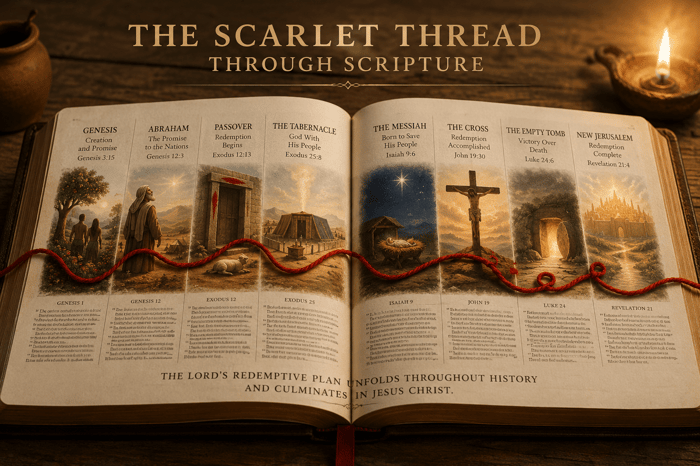
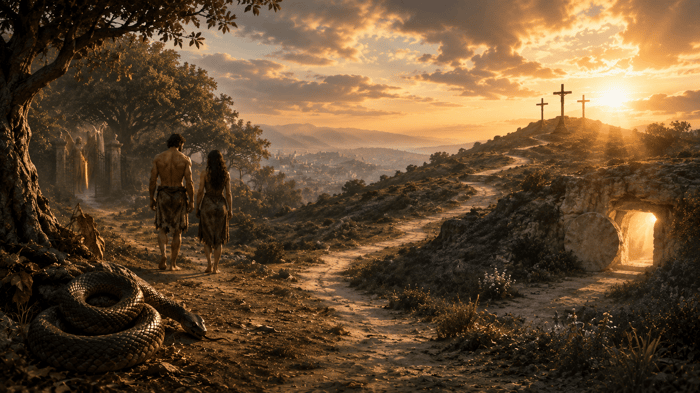
He promised victory over the serpent in Eden. He promised blessing through Abraham. He promised a royal Son through David. He spoke through the prophets about a suffering Servant and a coming King.
Each promise added another part of the picture.
When Jesus came, the hidden purpose became clear.
But when the fullness of the time came, God sent out his Son, born to a woman, born under the law, that he might redeem those who were under the law, that we might receive the adoption of children.
Galatians 4:4-5 (WEB)
The phrase "fullness of the time" means that Jesus came at the exact moment appointed by God.
History was not moving without direction. God was preparing the world for the arrival of His Son.
Does God's Eternal Plan Remove Human Responsibility?
No. God's sovereignty and human responsibility are both taught in Scripture.
God has an eternal purpose, yet people still make real choices and are accountable for them.
Those who crucified Jesus fulfilled what God had planned, but their actions were still evil. In the same way, every person is responsible for how they respond to the Gospel.
God commands people everywhere to repent.
The truth that salvation was planned before the foundation of the world does not make evangelism unnecessary. It gives believers confidence that God saves through the preaching of Christ.
The Gospel invitation is genuine. Everyone who comes to Jesus in faith will be received.
Why Does This Truth Matter for Believers?
Knowing that salvation was planned before the foundation of the world gives believers a firm foundation for faith.
God's love did not begin when they first believed. His saving purpose reaches back before creation.
This truth gives several kinds of assurance:
- Salvation rests on God's grace rather than human achievement.
- God's purpose is stronger than a believer's weakness.
- Suffering cannot cancel what God has planned.
- Christ will complete the work He began.
- History is moving toward God's appointed goal.
Believers may struggle, doubt, or feel overwhelmed. Yet God's eternal purpose remains secure.
The God who planned redemption is the same God who preserves His people.
How Does God's Eternal Plan Lead Us to Salvation?
The truth that God planned redemption before the foundation of the world reveals both the seriousness of sin and the greatness of grace.
If human effort could save us, the Son of God would not have needed to come. If good works could remove guilt, the cross would not have been necessary.
God's eternal plan shows that sinners need a perfect Savior.
Jesus lived without sin, died in the place of sinners, and rose from the grave. He now offers forgiveness and eternal life to everyone who repents and believes.
For God so loved the world, that he gave his one and only Son, that whoever believes in him should not perish, but have eternal life.
John 3:16 (WEB)
The right response is not merely to admire God's plan. It is to trust the Savior at the center of that plan.
Those who come to Christ are forgiven, adopted, and given new life. They become part of the people God purposed to redeem before creation.
God's Plan Will Be Completed
Before the first light shone, before Adam was formed, and before sin entered the world, the Father had already purposed to redeem a people through His Son.
The plan formed before the foundation of the world has unfolded through history and reached its decisive victory in the death and resurrection of Jesus Christ.
God's eternal plan is still moving toward completion. Christ will return, evil will be judged, creation will be restored, and God's redeemed people will live with Him forever.
What God planned in eternity, He will faithfully complete.
FAQs
What does "before the foundation of the world" mean?
The phrase before the foundation of the world refers to the time before God created the universe. It teaches that God's plan of redemption through Jesus Christ was established in eternity, not invented after humanity sinned.
Father, I desire that they also whom you have given me be with me where I am, that they may see my glory, which you have given me, for you loved me before the foundation of the world.
John 17:24 (WEB)
Did God know people would sin before creating the world?
Yes. God is all-knowing and was never surprised by humanity's fall into sin. Scripture teaches that Christ was appointed as the Redeemer before creation, showing that God's eternal plan already included salvation.
He was foreknown indeed before the foundation of the world, but was revealed in this last age for your sake.
1 Peter 1:20 (WEB)
What does it mean that believers were chosen before creation?
Being chosen before creation means that God's plan to save His people began with His grace rather than human effort. Salvation rests on His eternal purpose and is accomplished through Jesus Christ.
Even as he chose us in him before the foundation of the world, that we would be holy and without defect before him in love.
Ephesians 1:4 (WEB)
Was the cross always part of God's plan?
Yes. The death and resurrection of Jesus were not a backup plan after Adam and Eve sinned. The Father purposed redemption before the world began, and Jesus willingly came to fulfill that plan at the appointed time.
Him, being delivered up by the determined counsel and foreknowledge of God, you have taken by the hand of lawless men, crucified and killed.
Acts 2:23 (WEB)
Does God's eternal plan remove our responsibility to believe?
No. Although God has an eternal purpose, every person is still responsible to repent and trust in Jesus Christ. The Bible teaches both God's sovereignty and humanity's responsibility to respond to the Gospel.
The times of ignorance therefore God overlooked. But now he commands that all people everywhere should repent.
Acts 17:30 (WEB)
Why is God's eternal plan centered on Jesus?
Jesus is the center of God's eternal purpose because He alone could accomplish redemption. Through His perfect life, sacrificial death, and resurrection, He fulfilled everything the Father planned before creation.
Making known to us the mystery of his will, according to his good pleasure which he purposed in him to an administration of the fullness of the times, to sum up all things in Christ, the things in the heavens and the things on the earth, in him.
Ephesians 1:9-10 (WEB)
How does "before the foundation of the world" point to salvation?
The truth that redemption was planned before the foundation of the world reveals that salvation has always depended on God's grace, not human works. Before creation, the Father purposed to send His Son to bear the penalty for sin so that guilty people could be forgiven. Jesus fulfilled that eternal plan by dying on the cross and rising again. Everyone who repents of sin and trusts in Christ receives forgiveness, adoption into God's family, and eternal life.
Who saved us and called us with a holy calling, not according to our works, but according to his own purpose and grace, which was given to us in Christ Jesus before times eternal.
2 Timothy 1:9 (WEB)