
Table of Contents
- Acts 10:38 Meaning in Its Context
- What Does "God Anointed Jesus" Mean?
- Why Is Jesus Called "Jesus of Nazareth"?
- What Does "Anointed With the Holy Spirit and Power" Mean?
- Acts 10:38 Meaning and the Trinity
- Does Acts 10:38 Teach That Jesus Is Less Than God?
- Why Did Jesus Need the Holy Spirit?
- What Does "For God Was With Him" Mean?
- Jesus Went About Doing Good
- Jesus Healed Those Oppressed by the Devil
- The Trinity in Acts
- Acts 10:38 and the Gospel
- Why Acts 10:38 Matters
- FAQs
Acts 10:38 meaning becomes clearer when we read Peter's words in their setting. Peter was explaining who Jesus is and what God did through Him. In one verse, Peter speaks about God, Jesus of Nazareth, and the Holy Spirit.
This makes Acts 10:38 an important passage for understanding the relationship between the Father, Son, and Holy Spirit. The verse does not give a full definition of the Trinity, but it shows three distinct persons working together.
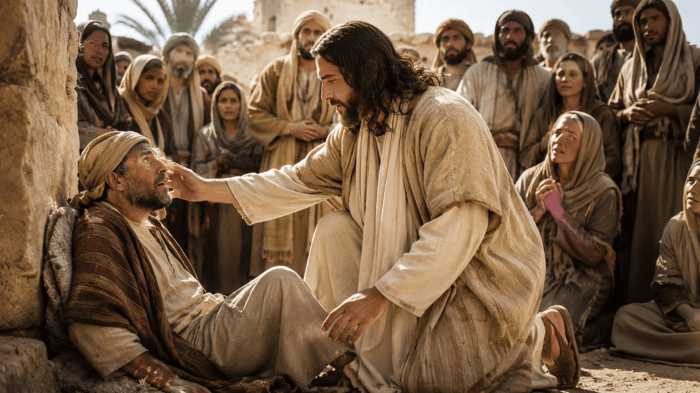
It also helps us understand Jesus' earthly ministry. Peter says that God anointed Jesus with the Holy Spirit and power, and Jesus went about doing good and healing those oppressed by the devil.
Acts 10:38 Meaning in Its Context
Acts 10 records Peter's visit to the home of Cornelius, a Roman centurion. God had prepared both Peter and Cornelius for this meeting.
Peter began to explain the good news about Jesus Christ. He spoke about Jesus' ministry, death, and resurrection.
"The word which he sent to the children of Israel, preaching good news of peace by Jesus Christ - he is Lord of all."
Acts 10:36 (WEB)
Peter then described how Jesus' public ministry began.
"Even Jesus of Nazareth, how God anointed him with the Holy Spirit and with power, who went about doing good and healing all who were oppressed by the devil, for God was with him."
Acts 10:38 (WEB)
This verse contains several important truths:
- Jesus is identified as Jesus of Nazareth.
- God anointed Jesus.
- Jesus was anointed with the Holy Spirit and power.
- Jesus did good and healed the oppressed.
- God was with Him.
These details help explain both Jesus' earthly ministry and the biblical foundation for the Trinity.
What Does "God Anointed Jesus" Mean?
The phrase "God anointed Jesus" does not mean Jesus became the Son of God at that moment.
In the Bible, anointing often marked someone as chosen and set apart for a special purpose. Kings, priests, and others could be anointed for service.
Jesus is the promised Messiah, and "Messiah" means "Anointed One."
Peter is describing the beginning of Jesus' public ministry and the way God publicly empowered and appointed Him for the work He came to do.
At Jesus' baptism, the Father spoke from heaven and the Holy Spirit descended upon Him.
"Jesus, when he was baptized, went up directly from the water. Behold, the heavens were opened to him. He saw the Spirit of God descending as a dove and coming on him. Behold, a voice out of the heavens said, 'This is my beloved Son, with whom I am well pleased.'"
Matthew 3:16-17 (WEB)
This event helps explain Acts 10:38 meaning. The Father identifies Jesus as His beloved Son, while the Spirit comes upon Him.
Jesus does not become God's Son at His baptism. The Father calls Him His Son.
The anointing marks the beginning of His public ministry and helps us understand the Acts 10:38 meaning of God anointing Jesus with the Holy Spirit and power.
Why Is Jesus Called "Jesus of Nazareth"?
Peter calls Him Jesus of Nazareth.
This name reminds us that Jesus lived a real human life in a real place. Nazareth was the town where He grew up.
The title does not deny Jesus' divine identity. Instead, it emphasizes His true humanity.
The eternal Son entered human history.
John explains:
"The Word became flesh and lived among us. We saw his glory, glory as of the one and only Son of the Father, full of grace and truth."
John 1:14 (WEB)
Jesus did not merely appear to be human. He truly became flesh.
That matters when reading Acts 10:38. Peter is speaking about the earthly ministry of the Son of God as Jesus of Nazareth.
What Does "Anointed With the Holy Spirit and Power" Mean?
Peter says Jesus was anointed by the Holy Spirit and with power.
This language points to the Holy Spirit's work in Jesus' earthly ministry.
After Jesus' baptism, Luke says:
"Jesus, full of the Holy Spirit, returned from the Jordan, and was led by the Spirit into the wilderness."
Luke 4:1 (WEB)
Later, Jesus entered a synagogue in Nazareth and read from Isaiah.
"The Spirit of the Lord is on me, because he has anointed me to preach good news to the poor. He has sent me to heal the broken hearted, to proclaim release to the captives, recovering of sight to the blind, to deliver those who are crushed."
Luke 4:18 (WEB)
Jesus applied this prophecy to Himself.
The connection is clear. Jesus' ministry was carried out in the power of the Holy Spirit.
This Spirit-empowered ministry is an important part of Acts 10:38 meaning because Peter connects Jesus' works directly with God's anointing and the Holy Spirit's power.
This does not mean Jesus lacked divine power in Himself. Rather, Scripture shows the Son carrying out His earthly mission in perfect dependence upon the Father and in the power of the Holy Spirit.
Acts 10:38 Meaning and the Trinity
Acts 10:38 meaning is important when studying the biblical evidence for the Trinity because the verse places God, Jesus, and the Holy Spirit together in one sentence.
| Person | Description in Acts 10:38 | Role in the Verse |
|---|---|---|
| God | "God anointed him" | Anoints Jesus |
| Jesus | "Jesus of Nazareth" | Carries out the ministry |
| Holy Spirit | "with the Holy Spirit" | Empowers Jesus' ministry |
The three are not confused with one another.
God anoints Jesus.
Jesus is the one who is anointed.
The Holy Spirit is the one with whom Jesus is anointed.
This distinction matters.
If "God," "Jesus," and "Holy Spirit" were simply three names for the same person, Peter's sentence would make little sense.
Instead, the verse shows personal distinction while also showing unity in God's work.
Does Acts 10:38 Teach That Jesus Is Less Than God?
Some people may read "God anointed Jesus" and conclude that Jesus must therefore be less than God.
That conclusion goes beyond what the verse teaches.
Acts 10:38 focuses on Jesus' mission as the Messiah. It does not attempt to explain everything about His divine nature.
Other passages make clear that Jesus is divine.
John writes:
"In the beginning was the Word, and the Word was with God, and the Word was God."
John 1:1 (WEB)
The New Testament presents Jesus as both truly divine and truly human.
In His earthly ministry, the Son willingly carried out the Father's will.
Jesus Himself said:
"For I have come down from heaven, not to do my own will, but the will of him who sent me."
John 6:38 (WEB)
Submission in role does not mean inferiority in nature.
The Son's obedience reveals the loving unity within God's saving work.
Why Did Jesus Need the Holy Spirit?
The wording of Acts 10:38 can raise an important question: If Jesus is the Son of God, why was He anointed by the Holy Spirit?
The answer is connected to His true humanity and His mission as Messiah.
Jesus entered fully into human life, yet without sin. He lived in perfect obedience to the Father and carried out His ministry in the power of the Spirit.
Luke describes this pattern again after Jesus returned from the wilderness.
"Jesus returned in the power of the Spirit into Galilee, and news about him spread through all the surrounding area."
Luke 4:14 (WEB)
Jesus' Spirit-empowered ministry shows us the perfect cooperation of the Father, Son, and Holy Spirit. This relationship is central to Acts 10:38 meaning because Peter distinguishes all three while describing their united work.
The Father sends and anoints.
The Son obeys and serves.
The Spirit empowers.
What Does "For God Was With Him" Mean?
Acts 10:38 ends with the words, "for God was with him."
Peter is not suggesting that Jesus was merely a normal person who happened to receive God's help.
Instead, he is explaining why Jesus' ministry displayed such extraordinary power.
Jesus acted in complete unity with the Father.
Earlier, Jesus said:
"Don't you believe that I am in the Father, and the Father in me? The words that I tell you, I speak not from myself; but the Father who lives in me does his works."
John 14:10 (WEB)
The Father and Son are distinct, yet their work is united.
Acts 10:38 presents this unity in simple language: God was with Jesus.
Jesus Went About Doing Good
Peter does not speak only about doctrine. He also describes what Jesus did.
Jesus "went about doing good."
His works revealed God's compassion and kingdom.
Jesus healed the sick, helped the suffering, welcomed the rejected, and showed mercy to people in need.
His works were not random displays of power. They revealed His identity and mission.
When John the Baptist asked whether Jesus was truly the promised One, Jesus pointed to what was happening through His ministry.
"Go and tell John the things which you hear and see: the blind receive their sight, the lame walk, the lepers are cleansed, the deaf hear, the dead are raised up, and the poor have good news preached to them."
Matthew 11:4-5 (WEB)
Jesus' works showed that God's promised Messiah had come.
Jesus Healed Those Oppressed by the Devil
Peter also says Jesus healed those "who were oppressed by the devil."
This points to the spiritual conflict present in Jesus' ministry.
Jesus did not merely teach moral lessons. He confronted the effects of evil and demonstrated authority over Satan's kingdom.
John writes:
"To this end the Son of God was revealed: that he might destroy the works of the devil."
1 John 3:8 (WEB)
Jesus' miracles pointed beyond physical healing.
They showed that God's kingdom had entered the world through the Messiah.
His authority over demons, disease, and death revealed that the promised King had come.
The Trinity in Acts
Acts 10:38 is part of a larger pattern of the Trinity in Acts.
The book repeatedly presents the Father, Son, and Holy Spirit as distinct while united in God's saving work.
Before Jesus ascended, He told His disciples:
"But you will receive power when the Holy Spirit has come upon you. You will be witnesses to me in Jerusalem, in all Judea and Samaria, and to the uttermost parts of the earth."
Acts 1:8 (WEB)
Jesus promises that the Holy Spirit will empower His followers to bear witness to Him.
Later, Peter says that Jesus received the promised Holy Spirit from the Father.
"Being therefore exalted by the right hand of God, and having received from the Father the promise of the Holy Spirit, he has poured out this which you now see and hear."
Acts 2:33 (WEB)
Again, the Father, Son, and Holy Spirit appear together.
Acts 10:38 fits this larger biblical pattern.
Acts 10:38 and the Gospel
Acts 10:38 meaning becomes even more important when we continue reading Peter's message.
Peter did not stop with Jesus' miracles.
He went on to explain that Jesus was killed and then raised from the dead.
"We are witnesses of everything he did both in the country of the Jews, and in Jerusalem; whom they also killed, hanging him on a tree. God raised him up the third day, and gave him to be revealed."
Acts 10:39-40 (WEB)
The Spirit-anointed ministry of Jesus leads toward the cross and resurrection.
This is central to the Gospel.
Humanity's deepest problem is not sickness, poverty, or suffering alone. Our deepest problem is sin.
We have rebelled against God and need forgiveness.
Peter soon told Cornelius:
"All the prophets testify about him, that through his name everyone who believes in him will receive remission of sins."
Acts 10:43 (WEB)
This is where Acts 10:38 leads.
The Acts 10:38 meaning becomes complete within Peter's larger message when we see that the Jesus whom God anointed with the Holy Spirit and power is the same Jesus who died, rose again, and offers forgiveness to everyone who believes in Him.
Why Acts 10:38 Matters
Acts 10:38 meaning gives us a clear picture of the Father, Son, and Holy Spirit working together during Jesus' earthly ministry.
God anointed Jesus.
Jesus carried out His mission.
The Holy Spirit empowered His ministry.
Peter's words show distinction without division. The Father, Son, and Spirit are not the same person, yet they work in perfect unity.
The verse also points beyond Jesus' miracles to His greater mission. Jesus of Nazareth, anointed with the Holy Spirit and power, came not only to heal but to save.
His ministry revealed who He is. His death dealt with sin. His resurrection proved His victory.
Acts 10:38 therefore stands as an important biblical witness to both the Trinity and the Gospel: the Father sends, the Son serves and saves, and the Holy Spirit empowers God's work.
FAQs
What does Acts 10:38 mean?
Acts 10:38 describes Jesus' earthly ministry and shows God, Jesus, and the Holy Spirit working together. God anointed Jesus of Nazareth with the Holy Spirit and power, and Jesus went about doing good and healing those oppressed by the devil. The verse shows personal distinction between the Father, Son, and Holy Spirit while also showing their unity in God's work.
"Even Jesus of Nazareth, how God anointed him with the Holy Spirit and with power, who went about doing good and healing all who were oppressed by the devil, for God was with him."
Acts 10:38 (WEB)
What does it mean that God anointed Jesus?
God anointing Jesus refers to Jesus being publicly appointed and empowered for His work as the promised Messiah. It does not mean Jesus became the Son of God at His baptism. At His baptism, the Father identified Jesus as His beloved Son while the Holy Spirit descended upon Him, marking the beginning of His public ministry.
"Jesus, when he was baptized, went up directly from the water. Behold, the heavens were opened to him. He saw the Spirit of God descending as a dove and coming on him. Behold, a voice out of the heavens said, 'This is my beloved Son, with whom I am well pleased.'"
Matthew 3:16-17 (WEB)
What does it mean that Jesus was anointed with the Holy Spirit and power?
Jesus being anointed with the Holy Spirit and power points to the Holy Spirit's work in His earthly ministry. Jesus carried out His mission in perfect obedience to the Father and in the power of the Spirit. His preaching, works of compassion, and miracles displayed the mission He had been sent to accomplish.
"Jesus returned in the power of the Spirit into Galilee, and news about him spread through all the surrounding area."
Luke 4:14 (WEB)
How does Acts 10:38 point to the Trinity?
Acts 10:38 points to the Trinity by distinguishing God, Jesus, and the Holy Spirit within one divine work. God anoints Jesus, Jesus carries out His ministry, and the Holy Spirit empowers that ministry. They are not presented as three names for the same person. Instead, the verse shows distinction while also revealing their united work.
"Being therefore exalted by the right hand of God, and having received from the Father the promise of the Holy Spirit, he has poured out this which you now see and hear."
Acts 2:33 (WEB)
Does Acts 10:38 mean Jesus is less than God?
No. Acts 10:38 focuses on Jesus' mission as the Messiah rather than giving a complete explanation of His divine nature. The New Testament teaches that Jesus is truly divine and truly human. During His earthly ministry, the Son willingly carried out the Father's will. His obedience in His mission does not mean He is inferior in nature.
"In the beginning was the Word, and the Word was with God, and the Word was God."
John 1:1 (WEB)
Why did Jesus need the Holy Spirit if He is the Son of God?
Jesus' anointing by the Holy Spirit is connected to His true humanity and His mission as the Messiah. He entered fully into human life, lived without sin, obeyed the Father perfectly, and carried out His earthly ministry in the power of the Spirit. This reveals the perfect cooperation of the Father, Son, and Holy Spirit.
"Jesus, full of the Holy Spirit, returned from the Jordan, and was led by the Spirit into the wilderness."
Luke 4:1 (WEB)
Why does Acts 10:38 say Jesus went about doing good and healing?
Peter points to Jesus' good works and healings because they revealed His identity and mission. Jesus showed compassion to suffering people and demonstrated authority over sickness and spiritual oppression. His works were not random displays of power. They showed that God's promised Messiah had come.
"Go and tell John the things which you hear and see: the blind receive their sight, the lame walk, the lepers are cleansed, the deaf hear, the dead are raised up, and the poor have good news preached to them."
Matthew 11:4-5 (WEB)
How does Acts 10:38 meaning point to the Gospel and salvation?
Acts 10:38 meaning points to the Gospel because Peter's description of Jesus' Spirit-anointed ministry leads directly to Jesus' death, resurrection, and offer of forgiveness. Humanity's deepest problem is sin, and doing good cannot restore our relationship with God. The Jesus whom God anointed with the Holy Spirit and power died and rose again, and Peter says everyone who believes in Him receives forgiveness of sins.
"All the prophets testify about him, that through his name everyone who believes in him will receive remission of sins."
Acts 10:43 (WEB)