Table of Contents
- Why Did Jesus Pray to the Father If He Is God?
- Jesus Is the Son, Not the Father
- Jesus Prayed Because He Became Fully Human
- Jesus Prayed to Show His Dependence on the Father
- Jesus Prayed Before Important Decisions
- Jesus Prayed During Times of Pressure
- Jesus Prayed in Gethsemane
- Did Jesus Have a Different Will Than the Father?
- Jesus Prayed for His Disciples
- Jesus Still Intercedes for Believers
- What Jesus' Prayers Reveal About the Father
- How Jesus' Prayers Connect to Salvation
- Did Jesus Teach His Followers to Pray to the Father?
- What Can Christians Learn From Jesus' Prayer Life?
- Understanding Why Jesus Prayed to the Father
- FAQs
Why did Jesus pray to the Father if Jesus is God? This question can confuse people because the Bible teaches that Jesus is fully divine, yet it also shows Him praying often.
Jesus prayed because He is the eternal Son who lives in loving relationship with the Father. He also became fully human and lived in perfect dependence upon God.
Jesus' prayers do not prove that He was less divine than the Father. They reveal the relationship between the Father and the Son, the reality of Jesus' humanity, and the perfect obedience He showed throughout His earthly life.
Why Did Jesus Pray to the Father If He Is God?
The Bible teaches that there is one God who exists eternally as three distinct Persons: the Father, the Son, and the Holy Spirit.
Jesus is not the Father. He is the eternal Son of God. Because the Father and Son are distinct Persons, Jesus could speak to the Father, love the Father, obey the Father, and pray to the Father.
John 17:1 (WEB)
Jesus said these things, and lifting up his eyes to heaven, he said, "Father, the time has come. Glorify your Son, that your Son may also glorify you."
This prayer shows both distinction and unity. Jesus addresses the Father as another Person, yet He also speaks of sharing divine glory with Him.
Why did Jesus pray to the Father? He prayed because prayer is part of the eternal Son's loving relationship with His Father, expressed through His genuine human life.
Jesus Is the Son, Not the Father
Some people assume that if Jesus is God, He must be the same Person as the Father. The Bible does not teach that.
The Father sent the Son into the world. The Son willingly came to reveal the Father and accomplish salvation.
John 3:16-17 (WEB)
For God so loved the world, that he gave his one and only Son, that whoever believes in him should not perish, but have eternal life.
John 3:17 (WEB)
For God didn't send his Son into the world to judge the world, but that the world should be saved through him.
The Father is the sender, and Jesus is the Son who is sent. Their roles are distinct, but their purpose is completely united.
Jesus praying to the Father confirms that the Father and Son are not the same Person. It does not deny that both share the one divine nature.
Jesus Prayed Because He Became Fully Human
Jesus did not merely appear to be human. He truly became human while remaining fully God.
As a man, Jesus experienced hunger, tiredness, sorrow, temptation, physical pain, and the need for prayer. He lived the kind of life humanity was always meant to live—a life of trust and dependence upon God.
Hebrews 2:17 (WEB)
Therefore he was obligated in all things to be made like his brothers, that he might become a merciful and faithful high priest in things pertaining to God, to make atonement for the sins of the people.
Jesus did not stop being God when He became human. He added a true human nature without giving up His divine nature.
Why did Jesus pray to the Father? One reason is that He lived as the perfect man, depending upon the Father rather than acting with sinful independence.
Jesus Prayed to Show His Dependence on the Father
Jesus repeatedly said that He came to do the Father's will. His prayers showed His trust in the Father and His commitment to obey Him.
John 5:30 (WEB)
I can of myself do nothing. As I hear, I judge, and my judgment is righteous, because I don't seek my own will, but the will of my Father who sent me.
Jesus was not saying that He lacked divine power. He was explaining that He never acted independently from the Father.
The Father and Son always work in perfect unity. Jesus' dependence was not weakness. It was the expression of perfect love, trust, and obedience.
When Christians ask why Jesus prayed, they should see His prayers as evidence of a faithful relationship, not evidence that He was merely a created being.
Jesus Prayed Before Important Decisions
The Gospels often show Jesus praying before major moments in His ministry.
Before choosing the twelve apostles, Jesus spent the night in prayer.
Luke 6:12-13 (WEB)
In these days, he went out to the mountain to pray, and he continued all night in prayer to God.
Luke 6:13 (WEB)
When it was day, he called his disciples, and from them he chose twelve, whom he also named apostles.
Jesus did not make important decisions carelessly. He sought the Father in prayer.
This teaches believers that prayer is not only for emergencies. Prayer should shape decisions, relationships, ministry, and daily obedience.
Why did Jesus pray to the Father before choosing the apostles? He was showing that His mission was carried out in complete fellowship with the Father.
Jesus Prayed During Times of Pressure
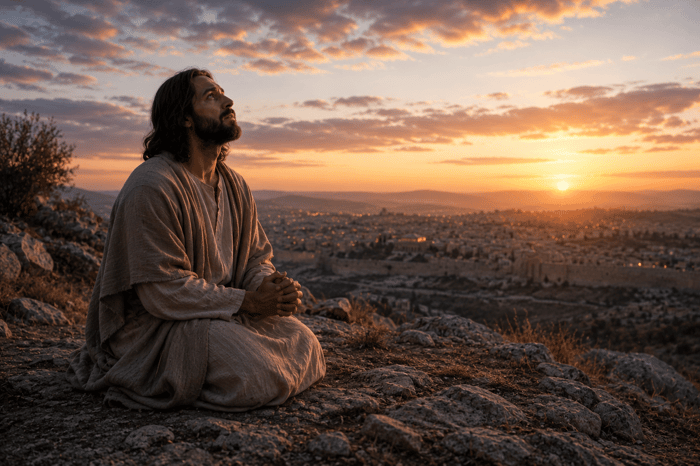
Jesus often withdrew from crowds to pray. Even when people needed Him, He made time to be alone with the Father.
Luke 5:15-16 (WEB)
But the report concerning him spread much more, and great multitudes came together to hear and to be healed by him of their infirmities.
Luke 5:16 (WEB)
But he withdrew himself into the desert and prayed.
Jesus did not allow popularity, busyness, or constant demands to replace prayer.
His example shows that spiritual strength does not come from activity alone. Even good work can become unhealthy when it is separated from fellowship with God.
Jesus praying to the Father reminds believers that prayer is necessary when life becomes crowded, stressful, or demanding.
Jesus Prayed in Gethsemane
One of the clearest answers to why did Jesus pray to the Father appears in the Garden of Gethsemane.
Jesus knew that He would soon be betrayed, arrested, mocked, beaten, and crucified. He also knew He would bear the judgment that sinners deserved.
Luke 22:41-42 (WEB)
He was withdrawn from them about a stone's throw, and he knelt down and prayed.
Luke 22:42 (WEB)
Saying, "Father, if you are willing, remove this cup from me. Nevertheless, not my will, but yours, be done."
Jesus did not resist the Father's saving plan. He honestly expressed the agony before Him while submitting fully to the Father's will.
His prayer reveals real human suffering and perfect obedience.
The phrase "not my will, but yours, be done" does not mean that Jesus and the Father had opposing moral purposes. It shows that Jesus' natural human desire to avoid suffering was fully submitted to the divine plan of salvation.
Did Jesus Have a Different Will Than the Father?
Jesus has both a divine nature and a human nature. Because He is truly human, He possesses a genuine human will.
His human will was never sinful. It was always obedient to the Father.
In Gethsemane, Jesus did not rebel. He brought His suffering and anguish before the Father and chose the path of obedience.
Philippians 2:8 (WEB)
And being found in human form, he humbled himself, becoming obedient to death, yes, the death of the cross.
The Father and Son remained united in the plan of redemption. Jesus willingly gave Himself for sinners.
Why did Jesus pray to the Father? His prayers showed that His obedience was real, personal, and costly.
Jesus Prayed for His Disciples
Jesus did not pray only for Himself. He prayed for His followers.
In John 17, Jesus asked the Father to protect His disciples, sanctify them in truth, and keep them united.
John 17:15-17 (WEB)
I pray not that you would take them from the world, but that you would keep them from the evil one.
John 17:16 (WEB)
They are not of the world, even as I am not of the world.
John 17:17 (WEB)
Sanctify them in your truth. Your word is truth.
Jesus knew that His followers would face temptation, persecution, false teaching, and division.
His prayer reveals the Father's care for His children. The Son brings their needs before the Father, and the Father keeps them through His truth and power.
Jesus Still Intercedes for Believers
Jesus' earthly prayers were not the end of His intercession.
After rising from the dead and ascending to heaven, Jesus continued to represent His people before the Father.
Hebrews 7:25 (WEB)
Therefore he is also able to save to the uttermost those who draw near to God through him, seeing he lives forever to make intercession for them.
Jesus is not trying to convince an unwilling Father to love believers. The Father already loves them and sent the Son for their salvation.
The Father and Son are united in saving God's people. Christ's intercession means that believers have a perfect High Priest who continually represents them.
This helps answer why did Jesus pray to the Father. His prayers are part of His work as the mediator between God and humanity.
What Jesus' Prayers Reveal About the Father
Jesus' prayers teach us several truths about God the Father:
- The Father loves the Son.
- The Father hears prayer.
- The Father guides and strengthens His people.
- The Father desires obedience rather than empty religion.
- The Father protects His children.
- The Father carries out His saving plan.
- The Father welcomes believers who come through the Son.
Jesus did not speak to a distant or uncaring God. He prayed to His loving Father.
Mark 14:36 (WEB)
He said, "Abba, Father, all things are possible to you. Please remove this cup from me. However, not what I desire, but what you desire."
"Abba" expresses closeness, trust, and loving relationship.
Through faith in Jesus, believers are adopted and may also call God their Father.
How Jesus' Prayers Connect to Salvation
Understanding why did Jesus pray to the Father helps us understand the Gospel.
Humanity has sinned against God and cannot restore the broken relationship through good works. Jesus came as the obedient Son to do what sinful people could not do.
He trusted the Father perfectly, obeyed the Father's will, lived without sin, and willingly went to the cross.
Isaiah 53:5 (WEB)
But he was pierced for our transgressions. He was crushed for our iniquities. The punishment that brought our peace was on him; and by his wounds we are healed.
Jesus died for sinners and rose again. Everyone who repents and believes in Him receives forgiveness and eternal life.
His prayers show the cost of that obedience. In Gethsemane, Jesus understood the suffering ahead and still submitted to the Father's saving plan.
The proper response is not merely to admire Jesus' prayer life. It is to trust the Savior who prayed, obeyed, died, and rose again so sinners could be reconciled to the Father.
Did Jesus Teach His Followers to Pray to the Father?
Yes. Jesus taught His disciples to address God as Father.
Matthew 6:9 (WEB)
Pray like this: "Our Father in heaven, may your name be kept holy."
Christians may pray to the Father because Jesus has opened the way to Him.
They do not come because they are naturally worthy. They come through Christ, trusting His righteousness and sacrifice.
Ephesians 2:18 (WEB)
For through him we both have our access in one Spirit to the Father.
Christian prayer reflects the work of the Trinity. Believers pray to the Father, through the Son, and with the help of the Holy Spirit.
What Can Christians Learn From Jesus' Prayer Life?
Jesus' example gives believers a clear pattern to follow.
Christians should:
- Pray before making important decisions.
- Seek time alone with God.
- Pray during suffering and pressure.
- Speak honestly to the Father.
- Submit personal desires to God's will.
- Pray for other believers.
- Depend on Scripture and the Holy Spirit.
- Trust the Father's love even when obedience is costly.
Jesus never treated prayer as a religious performance. Prayer was an expression of real fellowship with the Father.
Why did Jesus pray to the Father? He prayed because He loved the Father, trusted Him, and lived in complete obedience to Him.
Understanding Why Jesus Prayed to the Father
The answer to why did Jesus pray to the Father begins with the Trinity and the incarnation. Jesus is the eternal Son, distinct from the Father yet fully God. He also became fully human and lived in perfect dependence upon the Father.
His prayers reveal love, trust, obedience, sorrow, intercession, and commitment to the Father's saving will.
Jesus' prayer life should deepen our confidence in who He is. He is the divine Son, the perfect man, the obedient Savior, and the faithful High Priest who brings believers into a restored relationship with God the Father.
FAQs
Why did Jesus pray to the Father if He is God?
Jesus prayed because He is the eternal Son of God who has always lived in perfect relationship with the Father. When He became fully human, He also modeled complete dependence, trust, and obedience to the Father without ever ceasing to be God.
John 17:1 (WEB)
Jesus said these things, and lifting up his eyes to heaven, he said, "Father, the time has come. Glorify your Son, that your Son may also glorify you."
Was Jesus praying because He was weaker than the Father?
No. Jesus' prayers do not show that He was less divine than the Father. Instead, they reveal the loving relationship between the Father and the Son and Jesus' willing submission to the Father's plan during His earthly ministry.
John 5:19 (WEB)
Jesus therefore answered them, "Most certainly, I tell you, the Son can do nothing of himself, but what he sees the Father doing. For whatever things he does, these the Son also does likewise."
Why did Jesus pray so often?
Jesus regularly withdrew to pray because He lived a life of continual fellowship with the Father. He prayed before major decisions, during times of ministry, and in moments of great difficulty, providing a perfect example for believers.
Luke 5:16 (WEB)
But he withdrew himself into the desert and prayed.
Why did Jesus pray in the Garden of Gethsemane?
In Gethsemane, Jesus prayed as He prepared to bear the sins of the world. His prayer showed the reality of His human suffering while demonstrating perfect obedience to the Father's will.
Luke 22:41 (WEB)
He was withdrawn from them about a stone's throw, and he knelt down and prayed.
Luke 22:42 (WEB)
Saying, "Father, if you are willing, remove this cup from me. Nevertheless, not my will, but yours, be done."
Does Jesus still pray for believers today?
Yes. After His resurrection and ascension, Jesus continues to intercede for everyone who belongs to Him. As our great High Priest, He represents believers before the Father.
Hebrews 7:25 (WEB)
Therefore he is also able to save to the uttermost those who draw near to God through him, seeing he lives forever to make intercession for them.
How does understanding why Jesus prayed to the Father relate to salvation?
Understanding why did Jesus pray to the Father helps us see the Gospel more clearly. Jesus came as the perfectly obedient Son, living the sinless life we could never live. He willingly submitted to the Father's plan, went to the cross to bear our sins, and rose again so that everyone who repents and trusts in Him can be forgiven and adopted into God's family. His prayers reveal that our salvation is accomplished through His perfect obedience as well as His sacrificial death and resurrection.
Philippians 2:8 (WEB)
And being found in human form, he humbled himself, becoming obedient to death, yes, the death of the cross.
Did Jesus teach His followers to pray to the Father?
Yes. Jesus taught His disciples to pray directly to the Father, recognizing Him as a loving heavenly Father who hears His children's prayers.
Matthew 6:9 (WEB)
Pray like this: "Our Father in heaven, may your name be kept holy."
What can Christians learn from Jesus' prayer life?
Jesus teaches believers to pray regularly, trust the Father completely, seek God's will above their own, and remain faithful even during hardship. His example encourages Christians to make prayer a daily part of their walk with God.
Mark 14:36 (WEB)
He said, "Abba, Father, all things are possible to you. Please remove this cup from me. However, not what I desire, but what you desire."