Table of Contents
- What Does the Trinity in Mark's Gospel Reveal?
- Father, Son, and Holy Spirit at Jesus' Baptism
- The Holy Spirit Sends Jesus Into the Wilderness
- Jesus Announces the Kingdom of God
- Jesus and the Father in Mark
- The Father Again Identifies Jesus as His Son
- The Holy Spirit and the Warning Against Blasphemy
- Jesus Serves and Gives His Life
- Jesus Obeys the Father Even Unto Death
- The Son's Identity Is Recognized at the Cross
- How the Trinity Shapes Mark's Gospel
- What the Trinity in Mark's Gospel Teaches About Salvation
- Why the Trinity in Mark Matters for Christians Today
- FAQs
The Trinity in Mark's Gospel appears through the words and actions of the Father, Son, and Holy Spirit as Jesus carries out His mission. Mark does not give a formal explanation of the Trinity. Instead, he shows the three persons acting within the same saving work of God.
Mark moves fast. Jesus is introduced, baptized, tested, sent into ministry, opposed by religious leaders, crucified, and raised from the dead. Along the way, the Father speaks about the Son, the Holy Spirit rests upon Jesus, and Jesus speaks and acts with divine authority.
This makes Mark especially important for understanding how the Trinity is revealed through Jesus' servant mission. The Gospel shows the Son serving, suffering, and giving His life, while the Father and Holy Spirit remain active in God's unfolding plan.
What Does the Trinity in Mark's Gospel Reveal?
The Trinity in Mark's Gospel is not presented through abstract language. Mark reveals Father, Son, and Holy Spirit through events.
Several patterns appear:
- The Father identifies Jesus as His beloved Son.
- The Holy Spirit descends upon Jesus at His baptism.
- The Spirit drives Jesus into the wilderness.
- Jesus speaks of doing the Father's will.
- Jesus warns against blaspheming the Holy Spirit.
- The Son gives His life as a ransom for many.
- The Father vindicates the Son through His mission and resurrection.
These themes work together.
The Trinity in Mark is therefore tied to Jesus' identity and mission. Mark wants readers to see who Jesus is, why He came, and how God's saving purpose unfolds through Him.
Father, Son, and Holy Spirit at Jesus' Baptism
One of the clearest Mark Trinity verses appears near the beginning of the Gospel.
Jesus comes to John and is baptized in the Jordan River.
"Immediately coming up from the water, he saw the heavens parting and the Spirit descending on him like a dove. A voice came out of the sky, 'You are my beloved Son, in whom I am well pleased.'"
Mark 1:10-11 (WEB)
All three persons are present.
Jesus the Son is baptized. The Spirit descends upon Him. The Father speaks from heaven.
This scene is important because the Father, Son, and Holy Spirit are not being presented as the same person appearing in three different ways. They are shown in relationship with one another.
The Father loves the Son.
The Spirit rests upon the Son.
The Son begins His public mission.
The Trinity in Mark's Gospel therefore appears from the start of Jesus' ministry.
The Holy Spirit Sends Jesus Into the Wilderness
The Holy Spirit does not disappear after Jesus' baptism.
Mark immediately connects the Spirit with the next stage of Jesus' mission.
"Immediately the Spirit drove him out into the wilderness."
Mark 1:12 (WEB)
The wording is strong. The Spirit directs Jesus into the wilderness, where He is tempted by Satan.
Jesus does not begin His ministry apart from the Spirit.
This helps us understand the Holy Spirit in Mark. The Spirit is active in guiding Jesus as His mission begins.
Jesus enters the wilderness as the Father's beloved Son and returns ready to proclaim God's Kingdom.
Jesus Announces the Kingdom of God
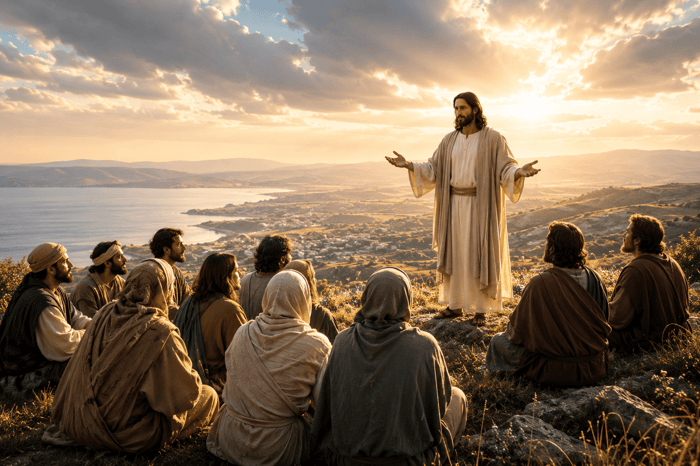
After John is arrested, Jesus begins preaching.
"Now after John was taken into custody, Jesus came into Galilee, preaching the Good News of God's Kingdom, and saying, 'The time is fulfilled, and God's Kingdom is at hand! Repent, and believe in the Good News.'"
Mark 1:14-15 (WEB)
This announcement sets the direction for Mark's Gospel.
Jesus does not come merely to teach moral lessons. He announces that God's Kingdom has drawn near.
The Father Son Holy Spirit Mark presents are united within this kingdom mission. The Father sends and identifies the Son. The Spirit rests upon and directs Him. The Son proclaims and demonstrates God's reign.
The Trinity is therefore connected to the arrival of God's saving rule.
Jesus and the Father in Mark
The relationship between Jesus and the Father in Mark appears at several key moments.
Jesus prays to God and speaks of His Father's will.
In the Garden of Gethsemane, Jesus faces the suffering that lies ahead.
"He said, 'Abba, Father, all things are possible to you. Please remove this cup from me. However, not what I desire, but what you desire.'"
Mark 14:36 (WEB)
This verse shows both distinction and unity.
Jesus is not the Father. He speaks to the Father.
Yet Jesus willingly submits Himself to the Father's saving purpose.
The Son's obedience is central to His servant mission.
Jesus does not go to the cross because events move beyond His control. He knowingly accepts the path set before Him.
The Father Again Identifies Jesus as His Son
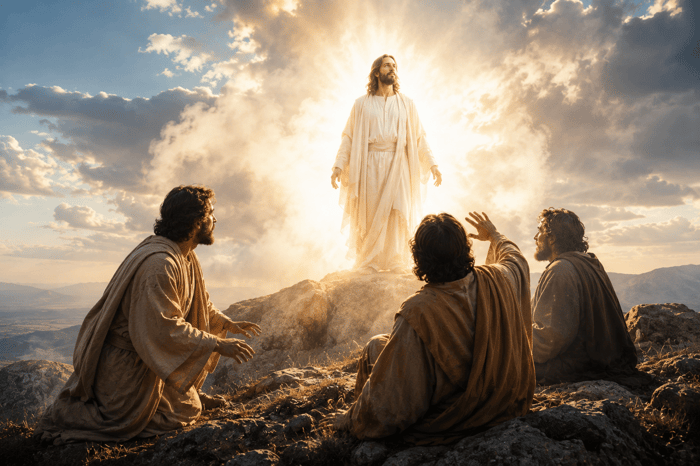
The Father's voice appears again during the transfiguration.
Jesus is revealed in glory before Peter, James, and John.
"A cloud came, overshadowing them, and a voice came out of the cloud, 'This is my beloved Son. Listen to him.'"
Mark 9:7 (WEB)
The Father again identifies Jesus as His Son.
But this time He adds a command: "Listen to him."
This tells readers how they should respond to Jesus.
Jesus is not merely one teacher among many. The Father Himself directs people to hear and obey the Son.
This strengthens the picture of the Trinity in Mark's Gospel because the Father's testimony points directly to Jesus' authority.
The Holy Spirit and the Warning Against Blasphemy
Mark also records one of Jesus' strongest statements about the Holy Spirit.
Religious leaders accuse Jesus of working through demonic power. Jesus responds by warning them about blasphemy against the Holy Spirit.
"Most certainly I tell you, all sins of the descendants of man will be forgiven, including their blasphemies with which they may blaspheme; but whoever may blaspheme against the Holy Spirit never has forgiveness, but is subject to eternal condemnation."
Mark 3:28-29 (WEB)
Jesus' warning shows the seriousness of rejecting the Spirit's work.
The leaders see God's power at work through Jesus and call it evil.
This passage also reveals that the Holy Spirit in Mark is not treated as an impersonal force. Jesus speaks of sin committed specifically against the Holy Spirit.
The verse belongs within Mark's broader picture of God's work through Jesus.
Jesus Serves and Gives His Life
Mark presents Jesus as the servant who gives Himself for others.
One verse captures this mission in a few words.
"For the Son of Man also came not to be served, but to serve, and to give his life as a ransom for many."
Mark 10:45 (WEB)
This is one of the most important verses in Mark.
Jesus explains both His way of life and the purpose of His death.
He came to serve.
He came to give His life.
He came to provide a ransom.
The Trinity in Mark's Gospel must therefore be understood in connection with salvation. The Son's mission is not separate from the Father's will or the Spirit's work.
God's saving plan reaches its climax at the cross.
Jesus Obeys the Father Even Unto Death
As Jesus approaches the cross, His obedience becomes even clearer.
In Gethsemane, He submits Himself to the Father's will.
At the cross, Mark records Jesus' cry:
"At the ninth hour Jesus cried with a loud voice, saying, 'Eloi, Eloi, lama sabachthani?' which is, being interpreted, 'My God, my God, why have you forsaken me?'"
Mark 15:34 (WEB)
Jesus' suffering is real.
The Son bears the weight of His mission and experiences the horror of the cross.
Yet Mark has already shown that Jesus willingly walks this path. He gives His life as a ransom for many.
The cross is not an interruption of Jesus' mission.
It is central to it.
The Son's Identity Is Recognized at the Cross
A Roman centurion witnesses Jesus' death and makes a remarkable confession.
"When the centurion, who stood by opposite him, saw that he cried out like this and breathed his last, he said, 'Truly this man was the Son of God!'"
Mark 15:39 (WEB)
Mark's Gospel begins by identifying Jesus as the Son of God, and near the end, a Gentile soldier recognizes Him as such.
This is important.
Jesus' identity as the Son is revealed not only through His miracles and glory, but also through His suffering.
The servant King is the Son of God.
How the Trinity Shapes Mark's Gospel
The major passages form a clear pattern.
| Event | Father | Son | Holy Spirit |
|---|---|---|---|
| Baptism | Declares Jesus His beloved Son | Is baptized | Descends upon Jesus |
| Wilderness | His mission continues | Faces temptation | Drives Jesus into the wilderness |
| Ministry | His Kingdom is proclaimed | Preaches and serves | God's work is revealed through Jesus |
| Transfiguration | Speaks from the cloud | Revealed as the beloved Son | God's presence surrounds the event |
| Gethsemane | Receives the Son's prayer | Submits to the Father's will | The saving mission moves toward the cross |
| Cross | His redemptive purpose is fulfilled | Gives His life as a ransom | God's saving work reaches its climax |
Mark does not explain every detail of Trinitarian doctrine.
Instead, he shows the Father, Son, and Holy Spirit within the story of salvation.
What the Trinity in Mark's Gospel Teaches About Salvation
The Trinity in Mark's Gospel leads readers toward the Gospel.
The Father identifies Jesus as His beloved Son. The Holy Spirit rests upon Him and directs His mission. The Son serves, suffers, and gives His life as a ransom.
That ransom is necessary because humanity is trapped in sin and cannot rescue itself.
Jesus' own words explain why He came.
"For the Son of Man also came not to be served, but to serve, and to give his life as a ransom for many."
Mark 10:45 (WEB)
The Gospel is not about people earning their way to God.
It is about God acting to save.
Jesus gives Himself in the place of sinners. His death is not merely an example of sacrifice. It is the saving act at the center of His mission.
The proper response is the same response Jesus announced at the beginning of His ministry: repent and believe the Good News.
Why the Trinity in Mark Matters for Christians Today
The Trinity in Mark's Gospel teaches believers to look at Jesus' mission through the full work of God.
The Father sends and identifies the Son.
The Spirit rests upon and directs Jesus.
The Son obeys, serves, suffers, and gives His life.
This also shapes Christian discipleship.
Jesus tells His followers that greatness is not found in power or status. It is found in service.
"Whoever wants to become great among you shall be your servant. Whoever of you wants to become first among you shall be bondservant of all."
Mark 10:43-44 (WEB)
The servant mission of Jesus becomes a pattern for His followers.
Christians do not merely study the Trinity as a doctrine to understand. They worship the God who has revealed Himself and follow the Son who gave His life for them.
The Trinity in Mark's Gospel therefore points toward both truth and transformation.
The Father reveals the Son. The Holy Spirit works through the Son's mission. Jesus gives His life as a ransom and calls people to repent, believe, and follow Him.
Mark's message is simple and powerful: the Son of God came not to be served, but to serve.
FAQs
Where is the Trinity revealed in Mark's Gospel?
The Trinity in Mark's Gospel is revealed through the Father, Son, and Holy Spirit acting within Jesus' mission. One of the clearest scenes is Jesus' baptism: the Son is baptized, the Spirit descends upon Him, and the Father speaks from heaven.
"Immediately coming up from the water, he saw the heavens parting and the Spirit descending on him like a dove. A voice came out of the sky, 'You are my beloved Son, in whom I am well pleased.'"
Mark 1:10-11 (WEB)
What does Jesus' baptism teach about the Trinity in Mark?
Jesus' baptism shows the Father, Son, and Holy Spirit as distinct while acting together. Jesus the Son stands in the Jordan, the Holy Spirit descends upon Him, and the Father declares His love for the Son as Jesus begins His public mission.
"Immediately coming up from the water, he saw the heavens parting and the Spirit descending on him like a dove. A voice came out of the sky, 'You are my beloved Son, in whom I am well pleased.'"
Mark 1:10-11 (WEB)
What role does the Holy Spirit have in Mark's Gospel?
The Holy Spirit is active at the beginning of Jesus' ministry. The Spirit descends upon Jesus at His baptism and immediately drives Him into the wilderness, showing that Jesus begins His servant mission under the Spirit's direction.
"Immediately the Spirit drove him out into the wilderness."
Mark 1:12 (WEB)
How does Mark describe the relationship between Jesus and the Father?
Mark shows Jesus as the beloved Son who speaks to and willingly obeys the Father. In Gethsemane, Jesus brings His suffering before the Father but submits Himself to the Father's will, showing both their distinction and the Son's obedience within God's saving purpose.
"He said, 'Abba, Father, all things are possible to you. Please remove this cup from me. However, not what I desire, but what you desire.'"
Mark 14:36 (WEB)
Why is the transfiguration important for understanding Jesus in Mark?
At the transfiguration, the Father again identifies Jesus as His beloved Son and commands the disciples to listen to Him. The scene confirms Jesus' unique identity and authority as the Son even as His mission moves toward suffering and the cross.
"A cloud came, overshadowing them, and a voice came out of the cloud, 'This is my beloved Son. Listen to him.'"
Mark 9:7 (WEB)
How does the Trinity in Mark's Gospel point to salvation?
The Trinity in Mark's Gospel points directly to the Gospel through Jesus' saving mission. The Father identifies Jesus as His beloved Son, the Holy Spirit rests upon and directs Him, and the Son willingly gives His life as a ransom. Humanity cannot rescue itself from sin, so Jesus serves sinners by giving His life for them and calls people to repent and believe the Good News.
"For the Son of Man also came not to be served, but to serve, and to give his life as a ransom for many."
Mark 10:45 (WEB)
What does Mark teach about the Holy Spirit and blasphemy?
Mark records Jesus warning religious leaders who saw God's work through Him and called it evil. Jesus treats rejection of the Holy Spirit's work with great seriousness and specifically warns against blasphemy against the Holy Spirit.
"Most certainly I tell you, all sins of the descendants of man will be forgiven, including their blasphemies with which they may blaspheme; but whoever may blaspheme against the Holy Spirit never has forgiveness, but is subject to eternal condemnation."
Mark 3:28-29 (WEB)
How should the Trinity in Mark's Gospel shape Christian discipleship?
The Trinity in Mark's Gospel shows the Father identifying the Son, the Spirit directing Jesus' mission, and the Son serving and giving His life. Jesus' servant mission becomes a pattern for His followers, who are called to reject the pursuit of status and serve others.
"Whoever wants to become great among you shall be your servant. Whoever of you wants to become first among you shall be bondservant of all."
Mark 10:43-44 (WEB)